
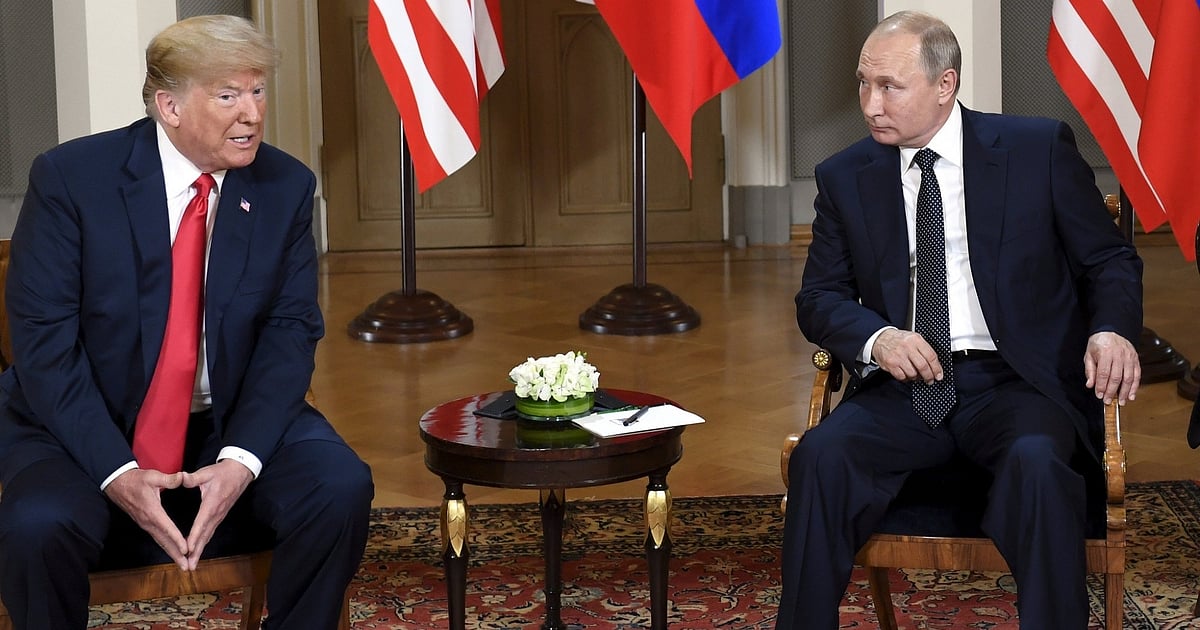
US President Donald Trump said Vladimir Putin appears more willing than Volodymyr Zelenskyy to reach a peace agreement. Trump told reporters, "I think, actually, Putin wants to make a deal more than Zelenskyy." While Kyiv accuses Moscow of violating energy infrastructure, Trump insists both sides support his ceasefire initiative.
Donald Trump says Vladimir Putin appears more willing than Volodymyr Zelenskyy to reach a peace agreement, insisting both sides support an energy ceasefire
Zelenskyy says Ukraine is ready for a reciprocal truce but accuses Russia of continuing attacks on Ukrainian energy infrastructure, urging Washington to pressure Moscow
Trump acknowledges reports of violations but says he needs to review them. Questions remain over enforcement, accountability and prospects for a lasting peace deal
US President Donald Trump has said Russian President Vladimir Putin appears more willing than Ukrainian President Volodymyr Zelenskyy to reach a peace agreement, even as Kyiv accuses Moscow of violating a proposed ceasefire on attacks against energy infrastructure. Zelenskyy, meanwhile, has expressed willingness to support an energy truce but insisted that Russia must reciprocate and halt its attacks.
Trump made the remarks while speaking to reporters at the White House before departing for a political rally in Ohio. His comments came amid renewed diplomatic efforts to end the war, alongside questions over the status of the proposed ceasefire and reports of continued Russian strikes on Ukrainian energy facilities.
"I think, actually, Putin wants to make a deal more than Zelenskyy," Trump told reporters, offering his assessment of the two leaders' willingness to negotiate an end to the conflict.
However, Zelenskyy's position has been that Ukraine is prepared to accept a ceasefire if Russia honours the same conditions. The Ukrainian president has also called on Washington to put pressure on Moscow to ensure that any proposed truce is implemented in practice.
Trump maintained that both Russia and Ukraine supported his initiative to halt attacks on energy infrastructure, despite questions from reporters about whether Putin had publicly committed to the proposed arrangement.
"I think they both support it. I think they want to make a deal, but they don't know how. But we're going to get them to make a deal," Trump said.
When asked how he intended to persuade Putin to abide by the proposed ceasefire, Trump again emphasised the need to secure Zelenskyy's willingness to negotiate.
"Well, I think what's happening is he wants to make a deal, and we have to get Zelenskyy to want to make a deal," the President said.
Trump also defended his assertion that both countries had agreed to the ceasefire, saying, "They agreed because I said they agreed and that thing has to get settled."
.Ukraine grapples with troop shortage as war enters 5th year. He did not, however, provide details of a formal agreement signed by both governments or explain how compliance would be monitored and enforced.
Zelenskyy has maintained that Ukraine is willing to stop attacks on Russian energy infrastructure if Moscow agrees to observe the same restrictions. However, he has expressed concern over continued Russian attacks on Ukrainian facilities following Trump's announcement of an energy ceasefire.
The Ukrainian president said the announcement had come as a surprise to Kyiv and stressed that Ukraine would support a truce only if Russia also complied. He called on Trump to use his influence to secure Moscow's commitment rather than treating the ceasefire as an agreement already implemented by both sides.
Zelenskyy's response reflects Kyiv's position that a ceasefire must be reciprocal and verifiable. Ukraine has reported continued Russian attacks on energy facilities and civilian areas, arguing that such strikes undermine efforts to establish a meaningful pause in hostilities.
Following further reported attacks, Zelenskyy said it was becoming increasingly clear that Russia did not want an energy ceasefire. Ukraine reported strikes against multiple energy infrastructure targets, while Zelenskyy maintained that Kyiv had refrained from attacking Russian refineries in keeping with the proposed arrangement.
Trump was questioned about reports that Russia had violated the proposed ceasefire by attacking Ukraine overnight. He said he would need to examine the circumstances before drawing a conclusion.
"I'm not sure about that and we'll take a look," he said.
He subsequently suggested that violations had occurred on both sides of the conflict.
"Well, I'd have to look at it and see because there's been violations on both sides," Trump added.
His remarks did not identify the specific incidents he was referring to or clarify whether the reported attacks had been assessed against agreed ceasefire terms.
The exchange highlighted the gap between Trump's assertion that both sides support a truce and Ukraine's claims that Russian attacks have continued. The lack of publicly established details about the arrangement has also raised questions about how violations would be investigated and what consequences either side might face for non-compliance.
Trump also pointed to the heavy human cost of the war, arguing that the continued loss of life made a negotiated settlement urgent.
"This month, they lost 32,000 people in that war, and it's ridiculous. So, they have to get together and get it done," he said.
He later repeated the figure, describing those killed as predominantly young soldiers. However, he did not identify the source of the estimate or provide a breakdown of casualties between Russian and Ukrainian forces. The figure could not be independently verified from his remarks.
The President reiterated his confidence that an agreement could eventually be reached, saying, "Well, we're going to see what happens. We'll get it done."
Zelenskyy, meanwhile, has emphasised that any ceasefire must be followed by concrete steps towards a lasting settlement. Kyiv has argued that a temporary halt to attacks cannot be effective unless both sides observe its terms and the arrangement provides a credible foundation for further negotiations.
Russia launched its full-scale invasion of Ukraine in February 2022, triggering a prolonged war that has caused widespread destruction, displaced civilians and resulted in substantial military and civilian casualties.
Energy infrastructure has remained a major target during the conflict, with attacks on power plants, gas facilities and other critical installations threatening electricity supplies and essential services. Both Moscow and Kyiv have accused each other of carrying out attacks, while competing claims about military losses and battlefield developments have complicated efforts to establish an independently verified picture of the conflict.
A halt to attacks on energy infrastructure could offer a limited step towards reducing damage to essential services and creating space for broader negotiations. However, its effectiveness depends on clearly defined terms, reciprocal commitments and a credible mechanism for monitoring compliance.
Trump continues to project confidence in his ability to broker an agreement between Moscow and Kyiv. Zelenskyy's response, however, underscores Ukraine's insistence that Russia must demonstrate its commitment through action rather than statements alone.
With allegations of continued attacks unresolved and the scope of the proposed ceasefire still uncertain, the prospects for a lasting settlement will depend on whether both governments can agree on enforceable terms and translate diplomatic declarations into a sustained reduction in hostilities.
With agency inputs
.Zelenskyy says Russia continues energy strikes despite Trump's ceasefire claim. Join our official telegram channel ( @nationalherald ) and stay updated with the latest headlines