
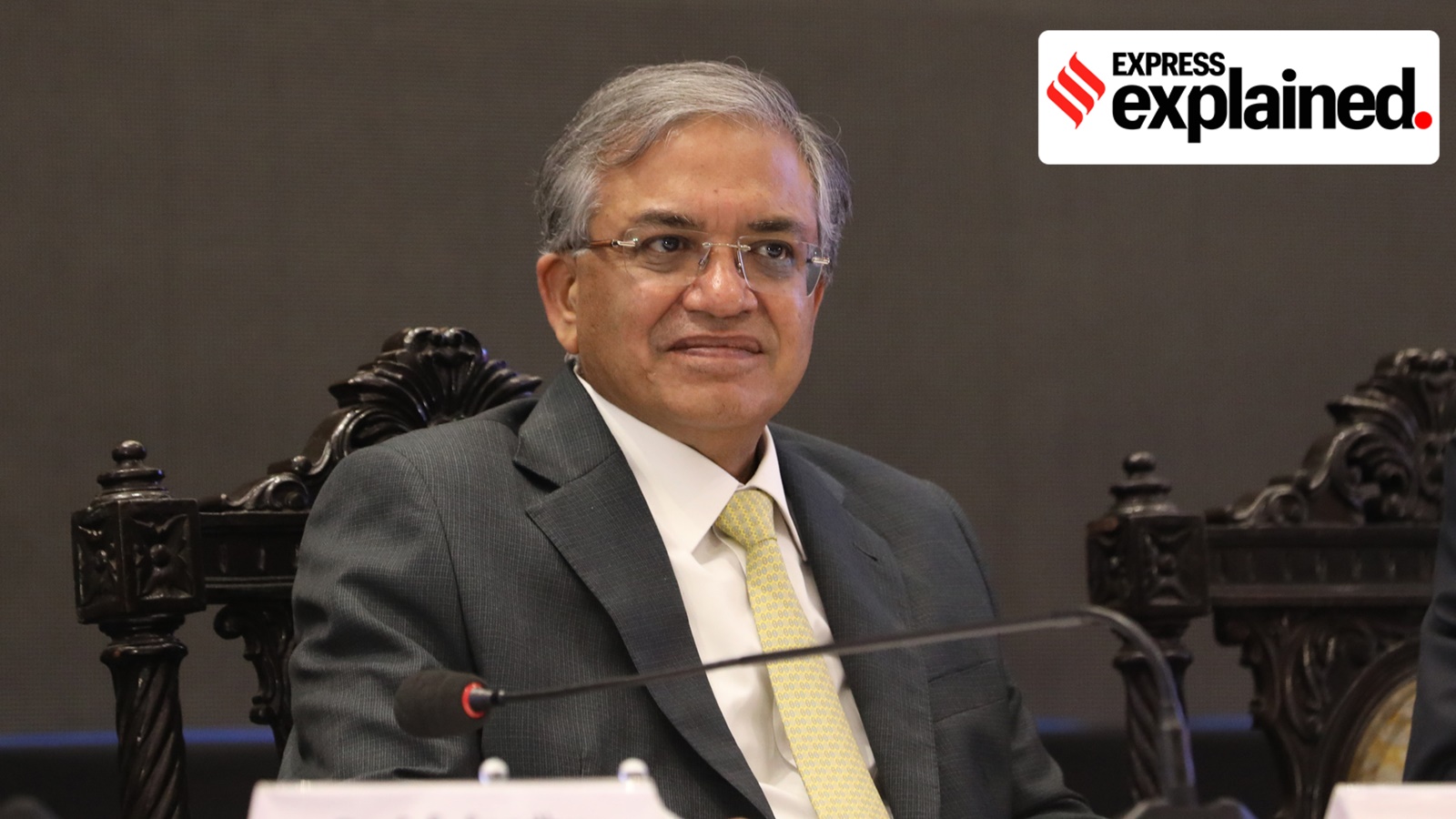
Keralam’s government directed the Vigilance and Anti-Corruption Bureau on Sunday, October 4, to reopen a 2006 bribery probe against Chief Election Commissioner Gyanesh Kumar. The case involves a road project from his time as a state official. Congress leaders now demand his resignation, citing irregularities in recent electoral roll revisions.
Keralam's Congress-led government on Sunday (October 4) directed the state's Vigilance and Anti-Corruption Bureau to reopen a 2006 probe into an alleged bribery allegation against Chief Election Commissioner of India Gyanesh Kumar.
It comes as Congress leaders, including Lok Sabha Leader of Opposition Rahul Gandhi, have demanded the CEC's resignation over allegations of irregularities in the revision of electoral rolls under the Special Intensive Revision (SIR) process.
At the time, Kumar, a 1988-batch IAS officer of the Keralam cadre, served as Secretary of the state Public Works Department (PWD). The bribery allegation stemmed from the alleged suicide note of a Malaysian engineer, who was part of a World Bank-aided road work project executed by a Malaysian and Indian joint venture called PATI-BEL.
What was the project?
The Kerala State Transport Project (KSTP) has been a flagship project of the state PWD. Costing Rs 1,600 crore, it was envisaged to modernise and renovate select major roads under the PWD with the help of a World Bank loan.
Initial discussions were completed during the last lap of the CPI(M)-led government from 1996 to 2001. P J Joseph, the leader of the breakaway faction Kerala Congress (Joseph), was then the PWD minister. Joseph, then part of the Left Democratic Front (LDF) alliance, is now with the ruling United Democratic Front (UDF) alliance.
What went wrong?
KSTP was the first project in the state to be associated with an overseas contractor firm, with the Keralam-based Bhageeratha Engineering and Malaysian firm PATI joining hands for the bidding. The joint venture took up works worth Rs 216 crore, mainly involving the modernisation of the main central road from the state capital of Thiruvananthapuram in the south to Angamaly in Central Keralam. The project would build the state's first road designed with novel surfacing techniques.
PATI-BEL began their work in December 2002 after entering into a final agreement with the then Congress-led government. However, the government had handed over the project to the contractor without acquiring the land for road development. The notification for land acquisition was issued only in 2004. In October 2006, the contractor informed the government that they could not complete the work within the original deadline, citing the delay in land acquisition.
As construction costs escalated, PATI-BEL demanded a 30% increase in the contract amount. The finance department, led by Thomas Isaac under the CPI(M) government, refused the demand and sought the World Bank's permission to re-tender the work.
What was the suicide case?
Lee See Been, 54, was the chief project manager of the works executed by PATI-BEL. In 2006, the company submitted bills worth Rs 18 crore for payment. According to the Legislative Assembly documents from 2007, PATI-BEL officials visited the ministers several times to seek payment.
As the chief project manager, Lee was reportedly under pressure from subcontractors and construction material vendors who sought their dues. As the work got delayed, the Congress-led Opposition also put pressure on the CPI(M) government, although it was the former alliance that had awarded the work to the venture.
Assembly documents show Congress had demanded the company be blacklisted, following the CPI(M) government conceding to PATI-BEL's demand for a 30% increase in project cost. As pressure mounted from various quarters in Keralam, Lee, who had by then returned to Malaysia, died by suicide on November 11, 2006, in Kuala Lumpur. It was reported that he had left a suicide note addressed to the company director and his wife, alleging that PWD officials had sought bribes for clearing the bills.
It was also reported that the suicide note had included the name of then PWD secretary Gyanesh Kumar. The note was never made public.
What did the vigilance probe find?
The death spotlighted issues including bureaucratic hurdles, corruption and delays in executing public works. A month after Lee's death, the CPI(M) government removed Kumar from his post. The government also ordered a probe by the Vigilance Bureau to examine the allegations. In a related development, the government decided to cancel the contract with PATI-BEL, as the work could not be completed within the deadline. Subsequently, the government re-tendered the work.
However, the probe did not proceed. According to Congress leader Malayinkeezhu Vengopal, on whose petition Home Minister Ramesh Chennithala ordered reopening the probe last week, the earlier investigation was torpedoed midway. Kumar, who was removed as the PWD secretary in December 2006, was not given any fresh posting in the state. He then went on central deputation to New Delhi, when the Congress-led UPA was in power. CPI(M) had also supported the UPA-I.
What happened to the road work?
In early 2007, the CPI(M) government cancelled the contract with PATI-BEL on the grounds that the delay in completion would invite action from the World Bank, which had funded the KSTP. Despite re-tendering, no entity came forward to bid for it. A year later, the government agreed to renew the contract with PATI-BEL itself. PATI-BEL took over the project again after the government allotted an additional Rs 72 crore apart from the original Rs 216 crore.
Congress, then in Opposition, had asked the CPIM government to explain why the work was awarded to PATI-BEL when a probe was ongoing. Opposition leader Oommen Chandy had then demanded Finance Minister Thomas Isaac clarify the circumstances of the renewal, given that Isaac had demanded blacklisting of PATI-BEL when the work was delayed.