
The Delhi Chief Electoral Officer said Monday that over 60% of 33 lakh SIR cases got disposed of. Officials resolved 20 lakh notices after a slow start. They used more staff and strict targets to speed up the work. The final electoral rolls for Delhi will be published on December 4.
The cases of 20 lakh electors -- more than 60% -- out of the 33 lakh who had received notices to prove their eligibility to stay on the electoral roll in Delhi have been resolved, the office of the Delhi Chief Electoral Officer (CEO) said Monday.
The CEO's office still has more than 50 days until December 4 to publish the final electoral rolls for Delhi. The deadline for the publication of the final rolls was revised for the fourth time on September 26.
The process of disposal of notices and objections progressed slowly in the first 30 days with only 4 lakh notices disposed -- until September 29 -- after the draft rolls were published on August 31.
But in the next 12 days, approximately 16 lakh notices -- or 1.33 lakh notices per day -- were disposed of, the figures made available on Monday show.
Read | SIR in Delhi: Supreme Court says notices seem 'mechanical', seeks ECI's response
The 20 lakh notices that had been resolved until Monday include cases that have been verified and will be included in the final electoral roll, as well as those that have been rejected. The process of disposal of notices and objections can continue until November 30.
The office of the CEO Delhi stated on Monday that a proactive campaign had been initiated to resolve the notices.
Officials attributed the dramatically quickened pace of resolution over the past couple of weeks to relaxed procedures, the involvement of more officials, and strict targets for Booth-Level Officers (BLOs), the local government officials appointed by the Election Commission of India (ECI) to act as grassroots custodians of the electoral roll for each polling station.
Delhi had around 1.45 crore electors before the Special Intensive Revision (SIR) of electoral rolls began on June 30. Among them, 97.5 lakh were included in the draft electoral roll that was published on August 31.
Around 47.5 lakh electors -- almost a third of the pre-SIR number -- were classified as "uncollectible" after BLOs found them to be absent, or to have moved or died, or to have duplicate entries. These names were struck off the roll.
Of the 97.5 lakh electors who did make it to the draft roll, around 33.1 lakh -- almost 34% -- were sent notices asking for proof that would make them eligible to be included in the final roll as well.
While 13.79 lakh electors were marked because they could not link themselves to the electoral roll of the last SIR of 2002, as many as 19.33 lakh electors were flagged for "logical discrepancies" in their enumeration forms.
Initially, in most constituencies, electors who had been flagged were required to visit the local Electoral Registration Officer (ERO) at their designated hearing time with one of 13 prescribed documents to have their notices resolved.
However, in its meeting held on September 26 -- the first since The Indian Express reported on September 23 on the deep divide within the ECI -- the poll panel greatly simplified the procedure for the conduct of hearings.
In a statement, the Commission said that electors who had been issued notices for "logical discrepancies" and for being "unmapped" would no longer be required to attend hearings at the local office to establish their eligibility.
Instead, BLOs would go from house to house to collect documents from those who had been issued notices.
Facilities for online hearings were strengthened, and it was announced that members of the families of those who had received notices would be able to appear on behalf of the elector.
Also, the portal for EROs to approve electors for inclusion in the electoral roll was changed. Since September 30, EROs have been able to dispose of notices without conducting a hearing -- just a letter by the BLO saying they were satisfied with the elector's details now suffices.
Earlier on September 24, the number of Assistant EROs -- who are often school principals and are also empowered to dispose of notices -- had been more than tripled from 297 to 902.
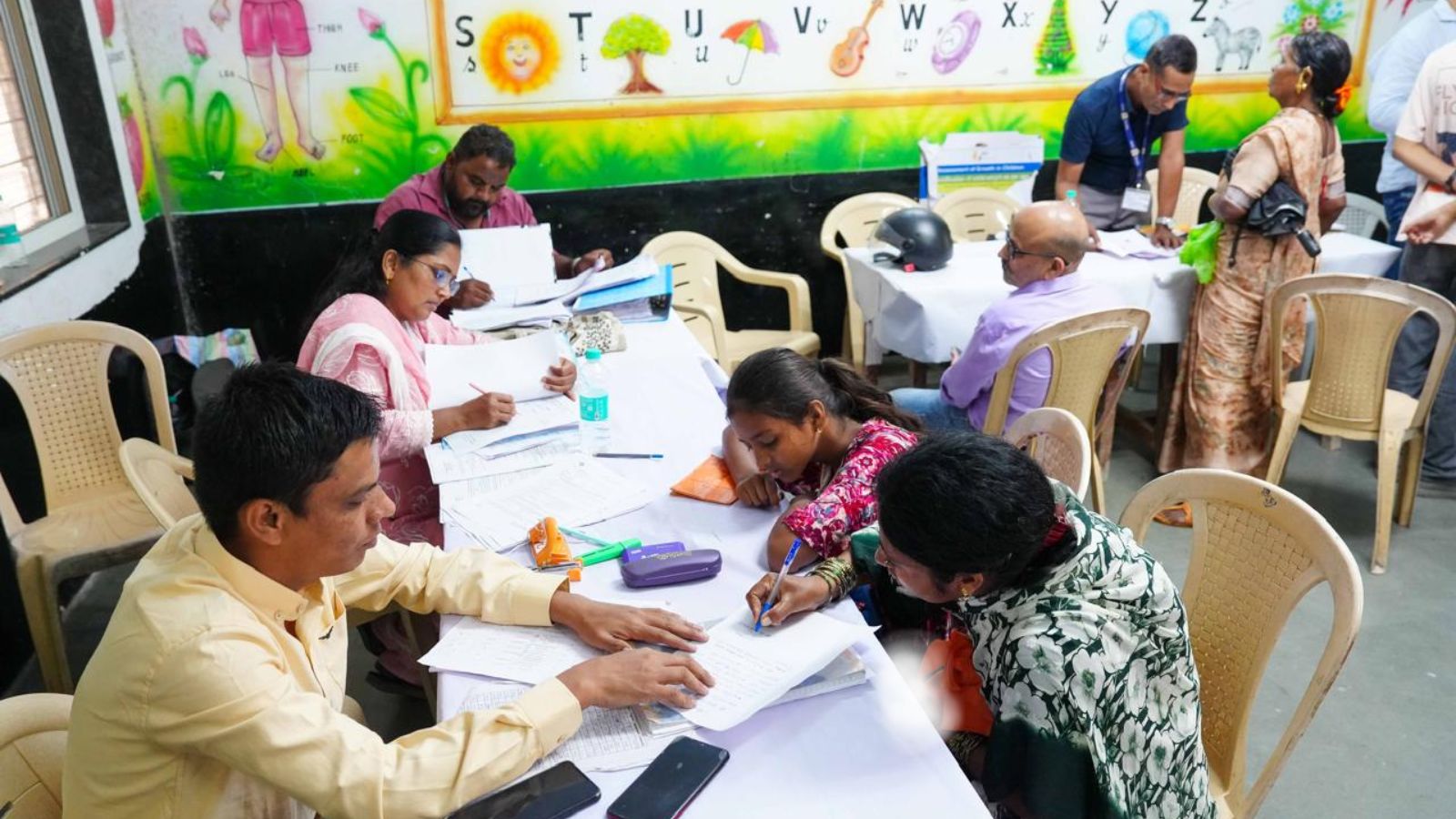
Since September 20, special camps to resolve notices have been organised in the capital every weekend. Camps have been set up to include particularly vulnerable groups such as the homeless, those displaced due to demolitions, the transgender community, and sex workers.
Awareness campaigns are being conducted through hoardings, radio jingles, advertisements and announcements on the Delhi Metro.
An official said that BLOs have been given a target of conducting at least 10 hearings every day. Several BLOs claimed that disposals have become faster since they are now well versed with the way the portal works.
The CEOs of at least eight other states and Union Territories -- Jharkhand, Mizoram, Sikkim, West Bengal, Bihar, Puducherry, Uttarakhand and Gujarat -- have also posted on X about ensuring that no eligible voter is left out of the electoral roll.
These CEOs too have highlighted that a "proactive campaign" and "special camps" are being held across all booths to ensure this.