
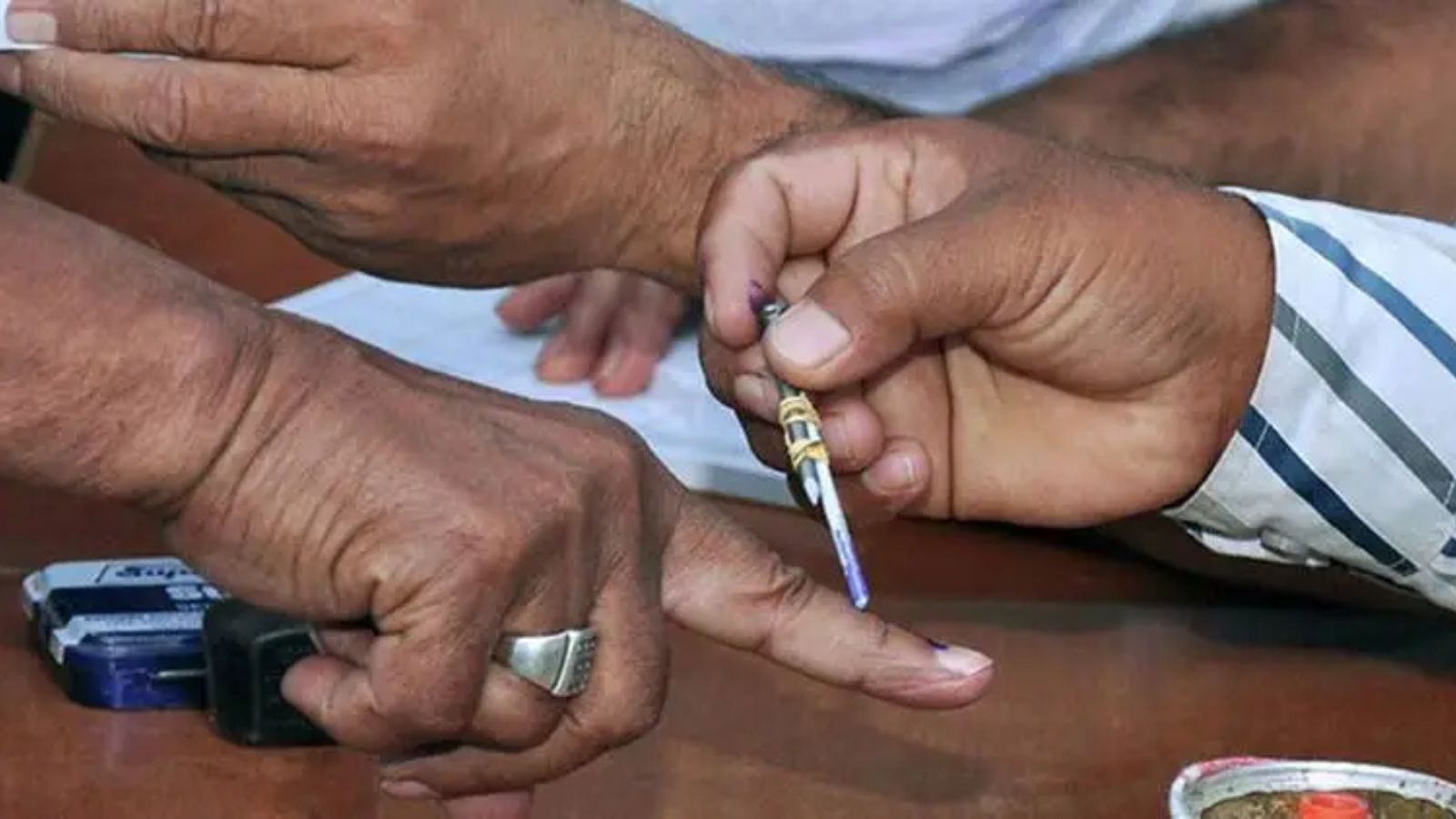
The Joint Parliamentary Committee cancelled its October 6 visit to the Supreme Court regarding the One Nation, One Election Bills. Chairman P P Chaudhary said, "The study visit was to familiarise the committee members with the Supreme Court." Opposition members and Kapil Sibal had raised concerns about the planned meeting.
The Joint Parliamentary Committee examining the One Nation, One Election Bills Thursday cancelled a visit to the Supreme Court scheduled for October 6, days after an agenda circulated among its members said the panel would hold an "informal discussion" with the Chief Justice of India and other judges on simultaneous elections.
The Lok Sabha Secretariat informed members Thursday evening that the "Local Study Visit" to the Supreme Court had been cancelled. No reason was given in the communication.
Committee chairman and BJP MP P P Chaudhary, however, said the visit was not meant for discussing the proposed legislation with the judges.
"The study visit was to familiarise the committee members with the Supreme Court including the library as some of the members had never visited the Supreme Court. The proposed visit was not to discuss the Bill with the court. The visit has been put off as there are other programmes scheduled," Chaudhary told The Indian Express.
The agenda for the visit, circulated among members a few days ago, had described its purpose as "Informal discussion with Honourable Chief Justice of India and other honourable judges of the Supreme Court of India on the issue of simultaneous elections."
It is learnt that some Opposition MPs on the committee had expressed their inability to join the October 6 programme as INDIA bloc MPs have scheduled a protest against Chief Election Commissioner Gyanesh Kumar on the same day.
Earlier Thursday, Rajya Sabha MP and senior advocate Kapil Sibal questioned the proposed interaction, saying it was contrary to the principle of separation of powers since the legislation, if enacted, could subsequently come before the Supreme Court for constitutional scrutiny.
"Parliament debates and passes Bills. When a Bill is passed the court determines whether it is constitutional or not. But till today, in the history of this country, I have never heard that a parliamentary committee will hold a meeting in the Supreme Court to tell the court what the Bill is all about," Sibal said at a press conference.
"So the government will tell SC judges how good this law is going to be - the law which will likely face petitions on constitutionality. And then the SC will decide on that. This is unconstitutional. It is contrary to the concept of separation of powers," he said.
During its examination of the Bills, the committee has already heard several former Chief Justices of India as experts, including Justice U U Lalit, Justice Ranjan Gogoi, Justice J S Khehar and Justice D Y Chandrachud.
Justice Lalit, who appeared before the panel in February 2025, is learnt to have cautioned that substantial curtailment of the tenure of a state Assembly could invite legal challenges and suggested that the transition to simultaneous elections could be staggered.
Justice Khehar and Justice Chandrachud, who appeared before the committee in July 2025, are learnt to have said that simultaneous elections by themselves would not violate the basic structure of the Constitution. They, however, flagged provisions that could face constitutional challenges, particularly the powers proposed to be given to the Election Commission.
The 39-member committee headed by Chaudhary, a former Union Minister of State for Law, is examining the Constitution (129th Amendment) Bill, 2024, and the Union Territories Laws (Amendment) Bill, 2024. The legislation followed recommendations made by the high-level committee headed by former President Ram Nath Kovind.
The Constitution amendment Bill seeks to establish a framework for synchronising elections to the Lok Sabha and state Assemblies. It proposes a new Article 82A under which the terms of Assemblies elected after an "appointed date" would eventually be aligned with that of the Lok Sabha. If the Lok Sabha or an Assembly is dissolved prematurely, the newly elected House would serve only the remainder of the five-year term, thereby retaining the common electoral cycle.
The BJP has backed simultaneous elections saying frequent polls involve substantial expenditure, repeatedly bring the Model Code of Conduct into force and divert political and administrative machinery from governance.
Several Opposition parties have opposed the proposal, raising questions over its implications for federalism and parliamentary democracy, particularly provisions that could result in the tenure of elected state Assemblies being curtailed to synchronise them with the Lok Sabha elections.