
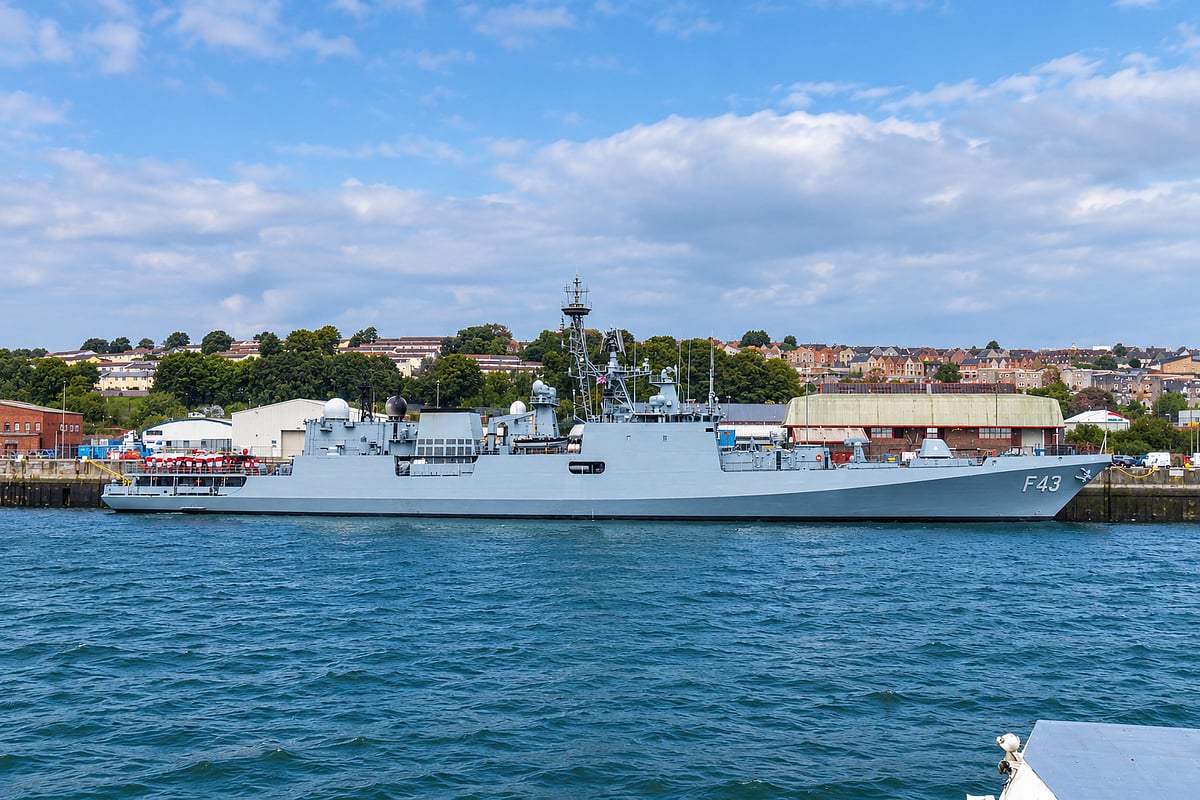
Indian stealth frigate INS Trishul reached Plymouth on Thursday for the biennial Konkan exercise with the Royal Navy. The drills run till October 15, focusing on air and underwater warfare. This mission follows the ship's recent exercises with the French Navy, showing how India and Britain keep building stronger defence ties.
NEW DELHI: Indian stealth frigate INS Trishul is now in British waters for the biennial Konkan exercise with the Royal Navy. It is the latest sign of New Delhi and London stepping up defence ties under their decade-long 'Vision 2035' roadmap.
The Talwar-class guided-missile frigate arrived at Plymouth on Thursday for the exercise, which runs till October 15, the Navy said on Sunday. The harbour phase covers professional interactions, cross-deck visits, sports fixtures and cultural engagements, and the warship is also open to visitors.
In the sea phase, the two navies will drill across the air, surface and underwater domains. This will include cross-deck helicopter landings, firing serials, air defence drills, seamanship evolutions and anti-submarine warfare.
The Plymouth leg caps a long deployment for the 4,000-tonne Trishul. The Russian-built frigate was inducted in 2003 and has since been fitted with BrahMos-capable vertical launchers. In August, it escorted two crude tankers through the high-risk Bab-el-Mandeb strait along with fleet tanker INS Aditya, days after the Indian-flagged MSV Faize Noore Oliya was struck and sunk off Yemen.
The frigate then called at Djibouti, which also hosts China's first overseas military base, before entering the Mediterranean. There it made a port call at Alexandria, took part in the 24th Varuna exercise with the French Navy at Toulon and halted at Valencia.
Konkan began in 2004 and is hosted by the two navies in rotation. It was last held in UK waters in 2021, when INS Tabar drilled with HMS Westminster in the English Channel. Trishul itself took part in the 2023 edition off the Konkan coast. Last year's edition saw the first-ever link-up of Indian and British carrier strike groups, led by INS Vikrant and HMS Prince of Wales.
The exercise comes as the two countries look to move beyond a buyer-seller relationship. Vision 2035 was unveiled during PM Narendra Modi's London visit in July last year, alongside the bilateral free trade pact. It includes a 10-year defence industrial roadmap covering jet engine technologies, maritime security, underwater systems and directed energy weapons.
During UK PM Keir Starmer's Mumbai visit last October, India inked a Rs 4,136-crore deal for Thales-made lightweight multirole missiles for the Army. The two sides also signed an implementing arrangement on electric propulsion for Indian warships. In August, the 25th India-UK Defence Consultative Group meeting in New Delhi agreed to expand joint exercises and training.
India is steadily diversifying its arms sources beyond Russia, and the UK is part of a widening circle of Western partners. The Navy, meanwhile, is increasingly operating far beyond the Indian Ocean Region.
The exercise, the Navy said, is "a reaffirmation of the shared commitment to ensuring secure, open and free seas".