
India raised concerns with US lawmakers over the Lindsey O. Graham Sanctioning Russia and Iran Act of 2026. Foreign Secretary Vikram Misri said the law could have implications for bilateral relationships and the international energy market. President Donald Trump signed the act on September 18, creating new tariff mechanisms.
Market Mastery
Webinar by Vishal Malkan
Find the weak links
in your portfolio by Vishal Malkan
India has raised concerns with US lawmakers over the newly enacted American sanctions law targeting Russia and Iran, warning that its provisions could have implications for India-US ties as well as the international energy market.
Foreign Secretary Vikram Misri conveyed New Delhi’s concerns over the Lindsey O. Graham Sanctioning Russia and Iran Act of 2026, or SRIA, during a meeting with a bipartisan US Congressional delegation led by House Foreign Affairs Committee Chairman Brian Mast in New Delhi on Sunday, the Ministry of External Affairs said.
“Various issues of bilateral nature were discussed at the meeting. Also, the Foreign Secretary conveyed our concerns about the SRIA legislation, as to the kind of implications it would have for bilateral relationships, as well as for the international energy market,” MEA spokesperson Randhir Jaiswal said at a media briefing on Tuesday.
The discussions covered the broader India-US relationship, energy security, counter-terrorism, freedom of navigation and international issues of mutual concern, according to the ministry.
What the new US law provides
US President Donald Trump signed SRIA into law on September 18 after the House of Representatives approved the Senate-amended legislation earlier in the month. It is now Public Law 119-111.
The law creates a mechanism for additional US tariffs of up to 100% on goods from countries that meet specified conditions linked to purchases of Russian-origin crude oil or natural gas.
Under Section 113, the measure applies to countries that continue making new purchases of Russian crude or gas after the statutory period and were among the five largest importers of Russian energy by volume during the preceding 12 months. It also covers countries identified among the largest facilitators of Russian oil sanctions evasion.
The legislation does not itself name India or automatically impose a 100% tariff on Indian goods. It requires US authorities to determine which countries fall within the criteria and allows the tariff rate to be set at more than zero and up to 100%. The law also allows the US president to waive duties or other sanctions if a written certification is submitted to Congress stating that such a waiver is in the US national interest.
India has raised the issue at multiple levels
Misri’s intervention follows discussions between External Affairs Minister S Jaishankar and US Secretary of State Marco Rubio in New York last week, when the two sides also discussed the implications of the new sanctions legislation.
The latest engagement with US lawmakers therefore marks another instance of New Delhi formally putting its concerns over the law on the table since its enactment.
India’s exposure to the measure stems from its position as a major buyer of Russian crude. Russia remained India’s largest oil supplier in August even as imports fell 16.5% from the previous month to about 2.1 million barrels per day, according to trade-source data reported by Reuters.
India imports close to 90% of the crude oil it consumes, making global supply conditions and crude prices important considerations for its energy security. The government has repeatedly stressed diversification of supply and availability of energy as central to its sourcing strategy.
The tariff provisions come at a time when Indian refiners are also dealing with tighter Russian supplies and increased competition for barrels. Russian shipments to India were projected to ease further in September, although Russia remained the country’s largest crude supplier.
Next India-Russia summit to be held in Russia
Separately, Jaiswal said there was no immediate timeline to announce for the next India-Russia annual summit.
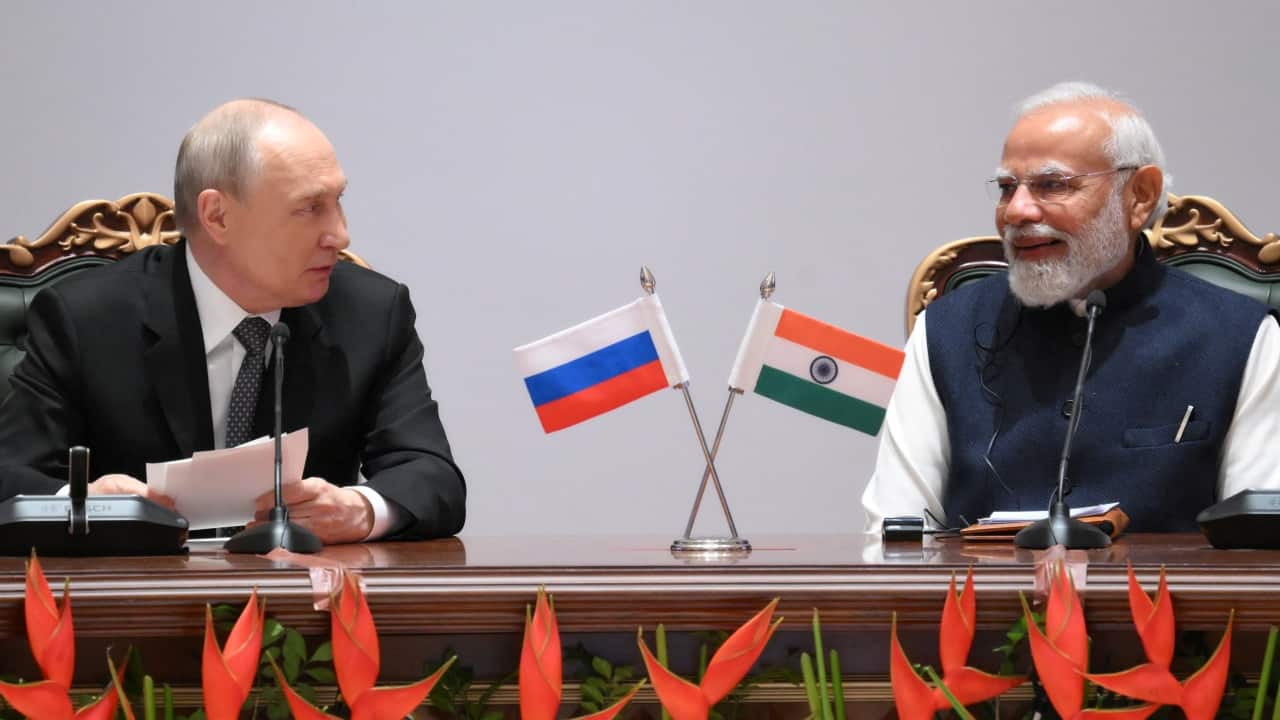
“The last annual summit with Russia was held in India, and we were delighted to host President Putin. The next meeting will be held in Russia, and we are still some distance away from it. We'll keep you updated with the details in that regard,” he said.
The comments came in response to a question on the timing of Prime Minister Narendra Modi’s next visit to Russia for the annual summit.