
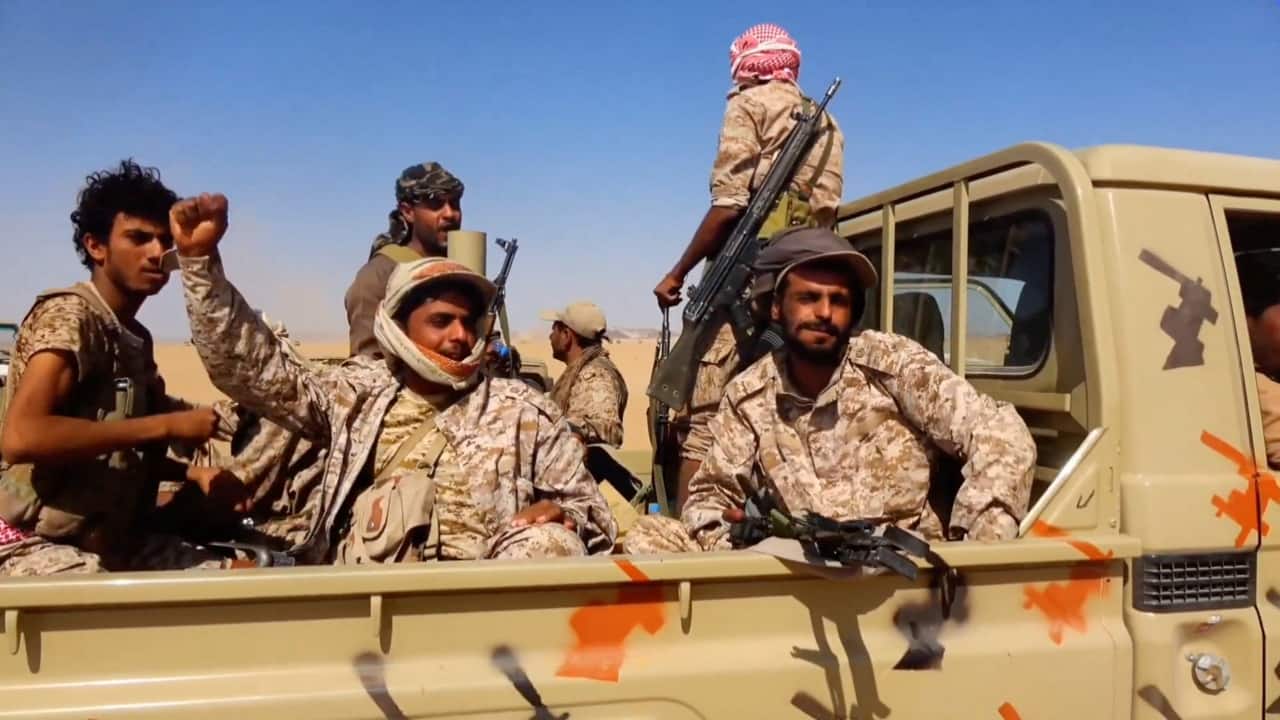
Saudi Arabia is back in the Yemen war after Houthi missiles hit its territory. The kingdom wanted to focus on investment and tourism, but renewed conflict killed three people. Analysts said the return to fighting followed miscalculations, including a break with the United Arab Emirates and failed military command transitions.
Saudi Arabia spent years trying to put the war in Yemen behind it. Crown Prince Mohammed bin Salman wanted to focus instead on attracting investment, tourists and major international events as part of his plans to transform the kingdom. Now missiles and drones are once again hitting Saudi territory, oil infrastructure has been attacked and Riyadh is supporting another military campaign against the Iran-backed Houthis. The renewed conflict has already killed at least three people in Saudi Arabia, including a Saudi pilot, after Houthi attacks on several airports. Regional instability has also disrupted entertainment events and put pressure on the kingdom's flagship financial conference scheduled for later this month. According to analysts cited by CNN, Saudi Arabia's return to war followed a series of miscalculations, from its break with the United Arab Emirates to its failure to prepare allied Yemeni forces for renewed fighting and its assumption that Washington would provide military support if the kingdom came under attack. Saudi Arabia's break with the UAE changed the balance in Yemen For years, Saudi Arabia and the UAE had been partners in Yemen despite backing different factions. That relationship broke down late last year after Saudi warplanes attacked military vehicles sent by the UAE to support separatist forces. Abu Dhabi subsequently withdrew its forces, leaving Riyadh to deal with the conflict largely on its own. The withdrawal also created problems on the ground. Thousands of Yemeni fighters had spent years operating under Emirati command, and officials allied with the UAE told CNN that Saudi Arabia failed to replace the command structure that disappeared when Abu Dhabi left. One southern Yemeni official described the transition as inadequate, saying the Emiratis had operated an efficient command-and-control system that the Saudis did not replace. War with Iran helped reignite the Houthi conflict The timing made Saudi Arabia's position even more difficult. Eight weeks after the UAE withdrew, the United States and Israel launched their war against Iran, killing Iranian Supreme Leader Ayatollah Ali Khamenei and plunging the region into a much broader conflict. Initially, the Houthis remained formally in a truce with Saudi Arabia. That changed in July, when Iran sent a commercial aircraft to collect a Houthi delegation attending Khamenei's funeral in Tehran, defying a Saudi blockade of Yemen. Saudi Arabia attacked the Houthi-controlled airport in Sanaa to stop the aircraft from landing. The Houthis responded by declaring the truce over, announcing a naval blockade of Saudi ships and launching an offensive along Yemen's coast. They captured strategic territory around the Bab al-Mandeb Strait in what CNN described as the largest escalation since 2022. Houthi forces then attacked Saudi oil facilities and pipelines, disrupting crude supplies and driving prices higher. Saudi Arabia responded with hundreds of airstrikes. Ahmed Nagi of the International Crisis Group told CNN that Riyadh had failed to prepare adequately for a Houthi offensive and lacked coordination with the Yemeni forces it inherited following the UAE withdrawal. Saudi Arabia expected more help from Trump Another problem for Riyadh has been the response from Washington. Saudi Arabia signed a new defence agreement with the United States last year and was designated a Major Non-NATO Ally. But analysts say the kingdom expected stronger American backing when fighting with the Houthis resumed. Prince Mohammed spoke with President Donald Trump twice last month and urged him to attack the Houthis, according to CNN. Trump declined. Instead, Washington held talks with the Houthis in Oman to protect its own ceasefire with the group. The arrangement allowed US vessels to continue travelling through the Red Sea while the Houthis maintained that their fight was with Saudi Arabia. Saudi Arabia has since sought support elsewhere. France has agreed to deploy defence assets and military personnel, while Britain is sending an aircraft to help refuel Saudi jets. More than 100 US military advisers are providing intelligence and targeting assistance. Saudi Arabia, Turkey and Pakistan have also agreed to activate collective deterrence measures under the Mecca Joint Defense Agreement. Forces loyal to the UAE appear to have joined the latest offensive as well, suggesting some improvement in relations between Riyadh and Abu Dhabi. Saudi Arabia is back in a war with no easy exit Riyadh is now backing a new campaign against the Houthis called "Yemen's Dawn", but early territorial gains do not necessarily offer a route out of the conflict. The Saudi-backed Yemeni forces remain divided, and analysts say they will need unified command structures, sustained funding, logistics and regional support if they are to hold territory captured from the Houthis. The larger problem is that Yemen's renewed war is now intertwined with the US conflict with Iran. As long as Washington and Tehran remain at war, analysts say Iran has an incentive to support Houthi pressure on Saudi Arabia. That leaves Riyadh with few attractive options. It can seek a separate diplomatic accommodation with Iran or intensify its campaign against the Houthis, but neither is likely to resolve Yemen's underlying conflict quickly. For a Saudi leadership that spent years trying to keep the Yemen war away from its ambitious economic transformation at home, the result is precisely what it had hoped to avoid: another costly conflict on its border with no obvious way out.