
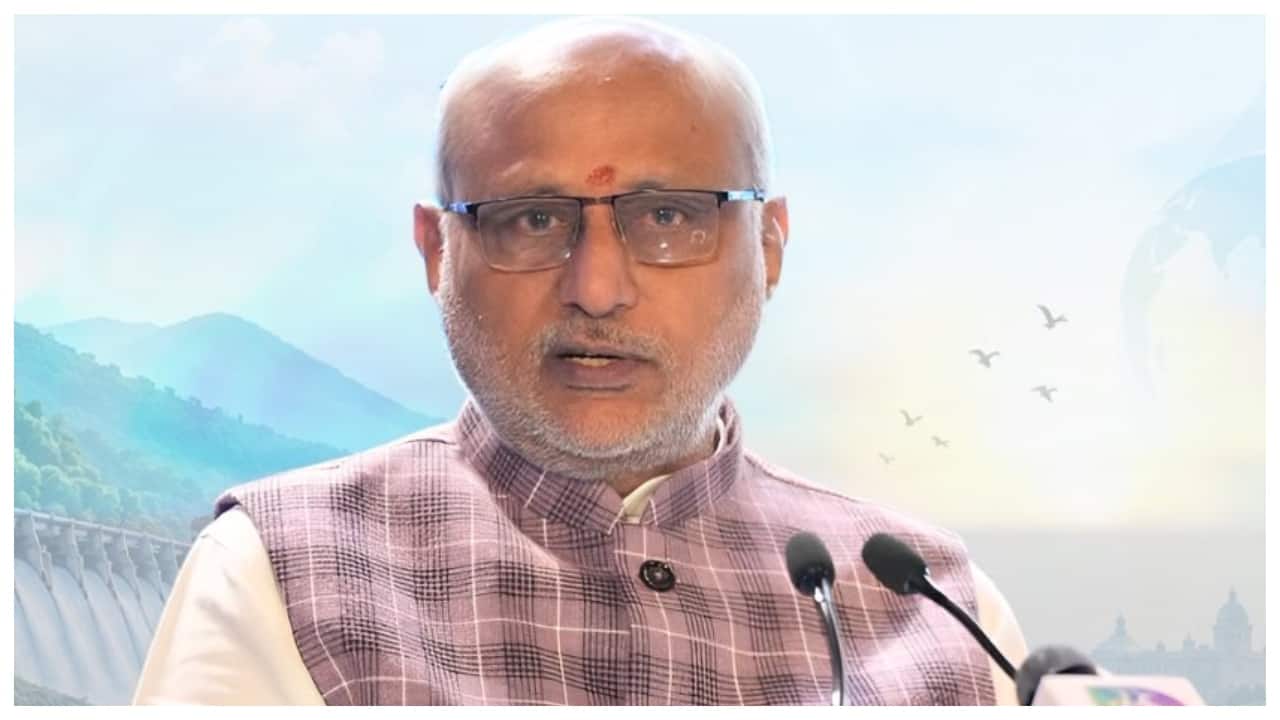
Vice President CP Radhakrishnan said on October 3 that India’s development cannot be measured by GDP alone. He stressed that economic resilience depends on inclusive growth reaching every citizen. “The true measure of resilience is our ability to ensure that no citizen, no region is left behind,” he said.
India’s development cannot be measured by gross domestic product alone and the country’s economic resilience will ultimately depend on whether the benefits of growth reach every citizen and region, Vice President CP Radhakrishnan said on October 3.
“The true measure of resilience is our ability to ensure that no citizen, no region is left behind. GDP alone cannot be the measure of development,” Radhakrishnan said while delivering the inaugural address at the Kautilya Economic Conclave in New Delhi.
The comments come as India’s economy recorded real GDP growth of 7.8 percent in the April-June quarter of FY27, compared with 6.9 percent in the corresponding quarter a year earlier.
Radhakrishnan said India was undergoing a “positive transformation” as it moves from being a developing economy towards its ambition of becoming a developed economy, but stressed that policymakers would have to keep track of inclusivity alongside headline growth.
“Economic resilience cannot be separated from social resilience,” he said. “The mark of our development is how benefits reach every section of society.”
The fifth Kautilya Economic Conclave is being held from October 3-5 under the theme ‘Resilience in an Age of Flux’.
Inclusion as resilience
Radhakrishnan said financial inclusion and improvements in the delivery of welfare benefits illustrated how social inclusion could itself strengthen an economy’s ability to withstand shocks.
He cited the Jan Dhan-Aadhaar-Mobile, or JAM, architecture, which enabled wider financial inclusion and direct benefit transfers, as an example of this approach.
“Inclusion can become an instrument of resilience,” he said, adding that resilience should not be viewed only in terms of financial markets or large infrastructure projects.
“Resilience is a woman getting a bank account in a village, a small enterprise getting funds,” he said.
Radhakrishnan also said more than 25 crore Indians had moved out of poverty over the past decade. Government estimates have previously put the number of people exiting multidimensional poverty at nearly 25 crore between 2013-14 and 2022-23.
GST, formalisation and women-led growth
The Vice President described the Goods and Services Tax as India’s biggest tax reform and said it had contributed to the formalisation of the economy.
He also placed women’s participation at the centre of the inclusion agenda, arguing that access to education and economic opportunities would allow women to increasingly take leadership roles.
“We want to empower the woman, give them the right education and they will empower themselves,” he said.
Policy must reflect ground realities
Radhakrishnan called on policymakers to remain attentive to conditions on the ground as economic and technological changes accelerate.
“We should understand ground realities to form policy,” he said, pointing to China’s economic development as an example of the importance of understanding local conditions.
The pace of change, he said, had also made policymaking more challenging.
“We never thought that changes would be so fast and dynamic, but we need to adapt to this. The situation is changing year by year; last year is incomparable to this year,” he said.
India’s future resilience would also depend on strengthening its research ecosystem and expanding collaboration with global institutions, Radhakrishnan said.
He also underlined the role of democratic institutions in supporting long-term economic development, saying India had demonstrated that democracy and economic growth could progress together.