
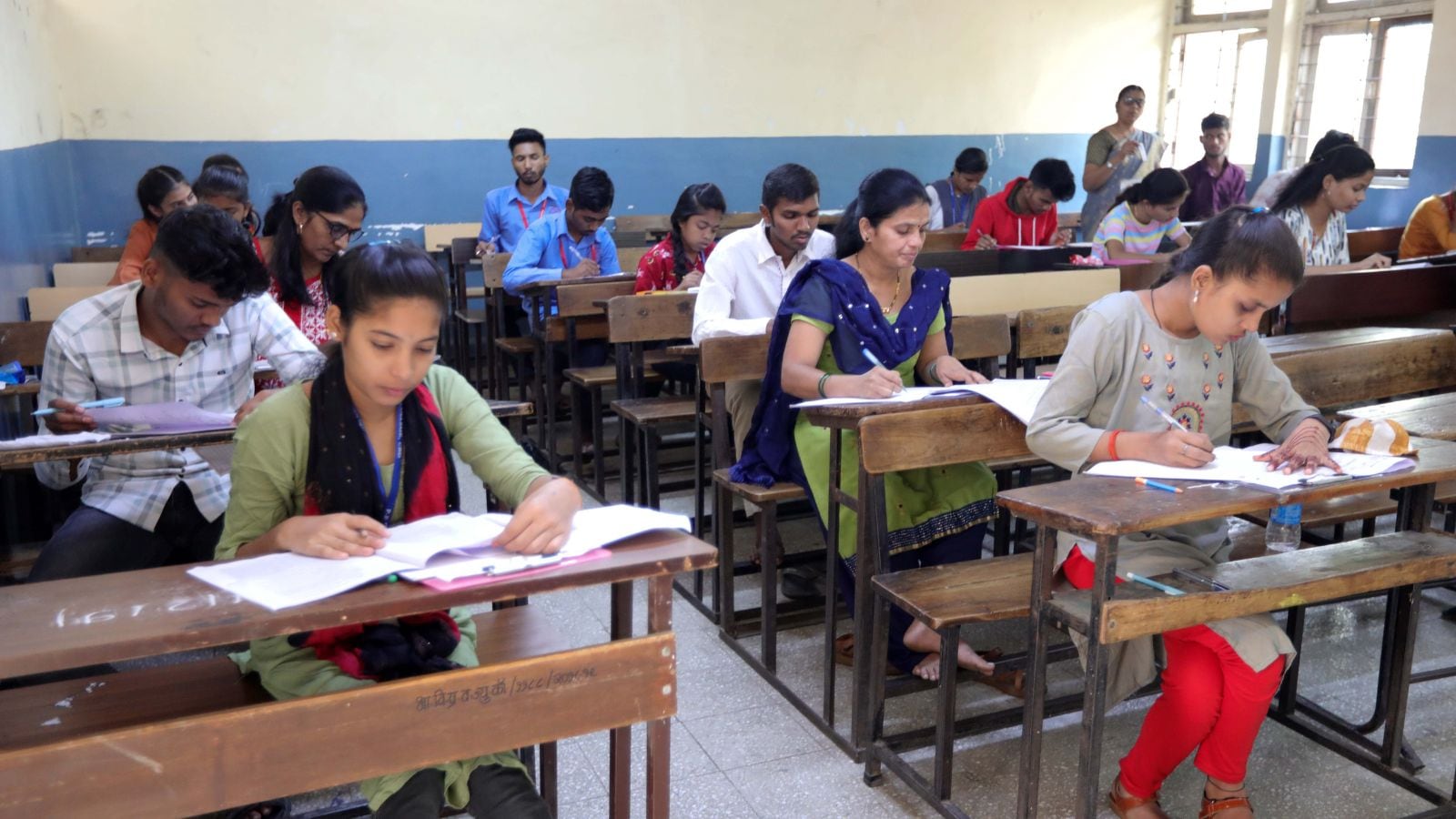
A Parliamentary Committee submitted its 382nd report on NTA reforms to the Rajya Sabha. The panel said, "The recent challenges have affected the public trust in NTA." It suggested creating a research wing and better communication. Officials must act as guardians of integrity to fix issues after many court cases.
Flagging a loss of public trust in the National Testing Agency (NTA) following repeated examination-related controversies, a Parliamentary Committee has called for sweeping reforms to strengthen its credibility and accountability.
In its 382nd report on "Reforms and Strengthening of the National Testing Agency", submitted to Rajya Sabha, the Standing Committee, headed by Mukul Wasnik, made a series of recommendations to NTA and the Union Ministry of Education.
The report follows the July protest against the alleged NEET-UG paper leak at Jantar Mantar, which led to a CBI probe and the resignation of then Union Education Minister Dharmendra Pradhan.
Restoring trust in NTA
The panel called on NTA to strengthen awareness of its feedback mechanisms among students and educational institutions by integrating them into routine operations and publicising them widely among students, parents, and teachers to improve responsiveness to their concerns.
"The recent challenges have affected the public trust in NTA, and that rebuilding this trust will require consistent, transparent, and two-way communication with stakeholders... NTA's present engagement with candidates is largely confined to one-way communication through portals and notifications," the report said.
The committee said institutional culture matters as much as procedures, adding that NTA needs to cultivate a culture where every official, from the director general to the centre invigilator, sees themselves as "a guardian of examination integrity", not just as a "jobholder" in an administrative system.
The panel said 474 cases had been registered in courts across the country in which NTA was either respondent or petitioner. Of these, 69 were filed in the Supreme Court and the remaining in various High Courts. It added that 356 cases related to NEET-UG 2024 alone.
Research, equity audits and attempt limits
The committee welcomed the measures introduced by NTA since 2024, including State and District Level Coordination Committees, biometric authentication, mobile jammers and AI-based CCTV analysis. However, it said the cancellation of NEET-UG 2026 despite these safeguards underscored the need for further procedural and institutional reforms.
The panel said NTA must be "reimagined not just as a body to administer exams but as a think-tank for all matters and policies relating to examinations".
It flagged a manpower shortage and recommended that the NTA establish its own research wing staffed by academics with expertise in education research, rather than relying solely on bureaucrats and officers.
"The absence of a research wing currently precludes the NTA from conducting critical tasks like longitudinal studies that gauge if the NEET, CUET, UGC-NET exams, etc, actually fulfil their intended purpose. Similarly, an NTA with deep academic expertise can also be a resource for other educational institutions like the CBSE, which are implementing interventions like the introduction of an OnScreen Marking system in Board Examinations," the report said.
The committee recommended strengthening NTA's academic and research capabilities to improve the conduct of its own examinations and eventually support assessments conducted by other agencies.
It noted that NTA currently tracks the number of candidates registering for various examinations from different states but does not maintain data on their success rates.
"Participation data and success data are very different things. A state may have high registration numbers but poor pass rates, pointing to a quality or access problem... NTA should conduct an annual Equity Audit examining, for each major examination, the participation rates, pass rates, and cutoff achievement rates of candidates disaggregated by State, gender, school board type (government, aided, private), medium of instruction, and social category (OBC, SC, ST, EWS, general)," the panel said.
It recommended publishing the audit findings in NTA's annual report and submitting them to the Ministry of Education for policy consideration.
The panel also recommended that the Ministry of Education consult the Ministry of Health and Family Welfare and other stakeholders to examine the feasibility of introducing reasonable age and attempt limits for major examinations, including NEET-UG.
It noted that NEET-UG currently has no limit on the number of attempts and no effective upper age limit, resulting in cases of candidates above 70 participating in the examination. "An exception to this rule may be made only for the UGC-NET," it said.
The committee also recommended adequate representation for state governments on NTA's Governing Body to strengthen cooperation and incorporate their expertise.
AI tests, cybersecurity
The panel proposed that once the NTA's digital infrastructure has matured, examinations should transition to computer-based testing (CBT) using a Computer Adaptive Testing (CAT) model, which it described as a benchmark for assessment.
This would require AI tools that can select questions from a large question bank and adapt them to candidates' aptitude, while accurately evaluating responses and normalising scores based on objective factors, including question difficulty.
"Such a system will minimise the scope for malpractice. There will be no standard question paper that can be leaked. Further, no two candidates at the same centre will receive an identical set of questions, reducing the scope for cheating. Accordingly, the NTA should set up a technical team with the proficiency to develop, monitor, and continuously strengthen these tools," the report said.
However, the panel also flagged the cybersecurity risks associated with CBT examinations. NTA told the committee that computer systems could be vulnerable to hacking by malicious actors and that such intrusions could be difficult to trace. It cited an attempt that the Central Bureau of Investigation investigated during the 2021 JEE-Main examination.
"The transition to CBT therefore presents new challenges which the NTA must anticipate and be prepared for," the report said.
The committee recommended that NTA establish a dedicated, in-house cybersecurity team to complement live CCTV monitoring and develop secure examination software that prevents remote access, screen recording and the use of virtual machines.
It also called for AI-based analytical tools to detect and flag anomalous response patterns that may indicate malpractice.
The panel noted that the number of sanctioned posts had increased since 2024, but even at full strength of 39 officers, the NTA would have to rely on third-party private contractors.
It recommended that the agency gradually build its capacity to manage the logistics of all examinations independently. The use of non-NTA employees, it said, should be limited to paper-setting and other academic functions that require external expertise.
The panel also recommended that NTA adopt the transparency practices followed by the Union Public Service Commission (UPSC) in declaring results.
It said the agency should develop in-house capabilities to detect, trace and establish prima facie irregularities in the examination system, enabling it to respond more quickly to crises.
Public disclosure of paper leaks
The committee flagged the absence of an official public record detailing paper leaks, related FIRs, and the investigation and prosecution of such cases by the CBI and other agencies.
The Department of Higher Education told the committee that while examination malpractices and disruptions had occurred, no paper leak had taken place in any examination conducted by NTA between its establishment in 2017 and 2025.
The panel said the ministry's "assertion is at variance with the opinion of some Members of the Committee".
It recommended that NTA collaborate with the Department of Higher Education and other government agencies to publish a public report detailing examinations conducted by the agency and related investigations.
Compensation, grievance redressal and curriculum-based testing
The committee recommended that NTA clearly define its duty of care towards candidates, including provisions for financial compensation for those affected by examination cancellations due to administrative reasons. It also called for fixed timelines for resolving candidates' grievances.
"This will reduce the financial and psychological burden that such events place on candidates," it said.
The panel also called on the Ministry of Education to establish clear, measurable standards to ensure that NEET-UG, JEE (Main) and CUET assess students' conceptual understanding of the prescribed school curriculum rather than favouring techniques taught by coaching institutes.
"Further, there should be a regulatory framework for the coaching industry, with attention to fee transparency, safety standards, and the mental health of students in coaching centres," the panel said.