
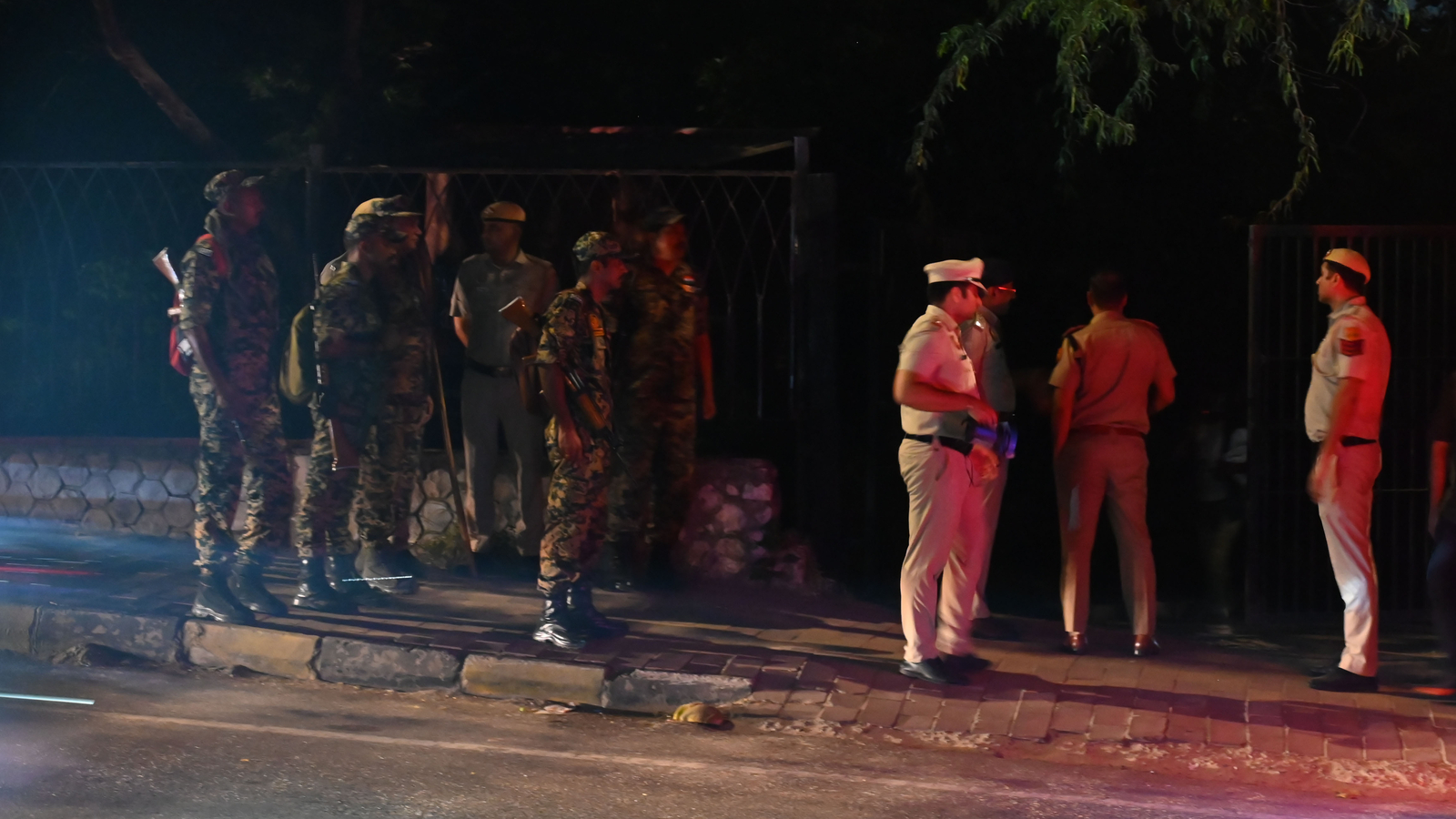
The Supreme Court told Delhi Police to ensure women feel safe at 10 pm. Justices JB Pardiwala and K Vinod Chandran said, “Merely putting out guidelines and directions on paper will not help.” The court asked for better patrolling at vulnerable spots and set the next hearing for November 16.
Taking up a suo motu petition over recent incidents of rape in Delhi, a bench of Justices JB Pardiwala and K Vinod Chandran said merely issuing guidelines would not be enough and that the directions must be implemented on the ground.
“Merely putting out guidelines and directions on paper will not help. You need to get it into action. If that means to become harsh, the endeavour should be to ensure rape, etc. is done away with,” the bench said.
The court has been monitoring the matter since its September 28 order directing the Delhi Police to conduct an audit of public places and vulnerable spots, including parks, roads, bus stands, Metro stations and other locations, to identify gaps in security.
Solicitor General Tushar Mehta, appearing for the Delhi Police along with senior police officials, said a detailed response to the September 28 order was being prepared. He also assured the court that several steps had been taken to increase vigilance.
The bench said it would issue a detailed order during the course of the day, reiterating that the exercise was aimed at ensuring the safety and security of women in Delhi.
“Focus today should be to increase patrolling day and night. Concentrate on bus stops, metro stations, railway stations, schools and college campuses where women and young girls are vulnerable,” the bench said.
Stating that the task before the police was enormous, the court urged the force to “rise to the occasion” and posted the matter for further hearing on November 16.
“People should not run away from you, but meet you and talk to you. Your response should be to comfort them,” the bench told the police officers.
At the same time, the court cautioned against excesses in the name of patrolling and said the police should focus on preventive action based on suspicion rather than acting only after a crime had been committed.
With the festival season approaching, the bench stressed the need to create a strong deterrent against criminals.
“Create a fear in the minds of these criminals that if something goes wrong, you are doomed. But what is happening today is that you catch hold of the culprits and put him behind bars, when the focus should be to prevent the crime,” the court said.
Senior advocate Liz Mathew, assisting the court as amicus curiae, said a Comptroller and Auditor General (CAG) audit had highlighted vacancies across various posts in the Delhi Police. She said these vacancies needed to be filled if patrolling was to be intensified.
The court asked Mehta to ensure that recruitment was carried out and that constables were adequately trained to prevent such crimes. It also suggested fixing accountability for police personnel who fail to carry out their patrolling duties, particularly in cases where such lapses contribute to crimes.
The bench also proposed setting up a large monitoring cell through which CCTV cameras installed at public places, parks and other vulnerable locations could be continuously monitored, allowing preventive action to be initiated based on alerts received by the control room.