
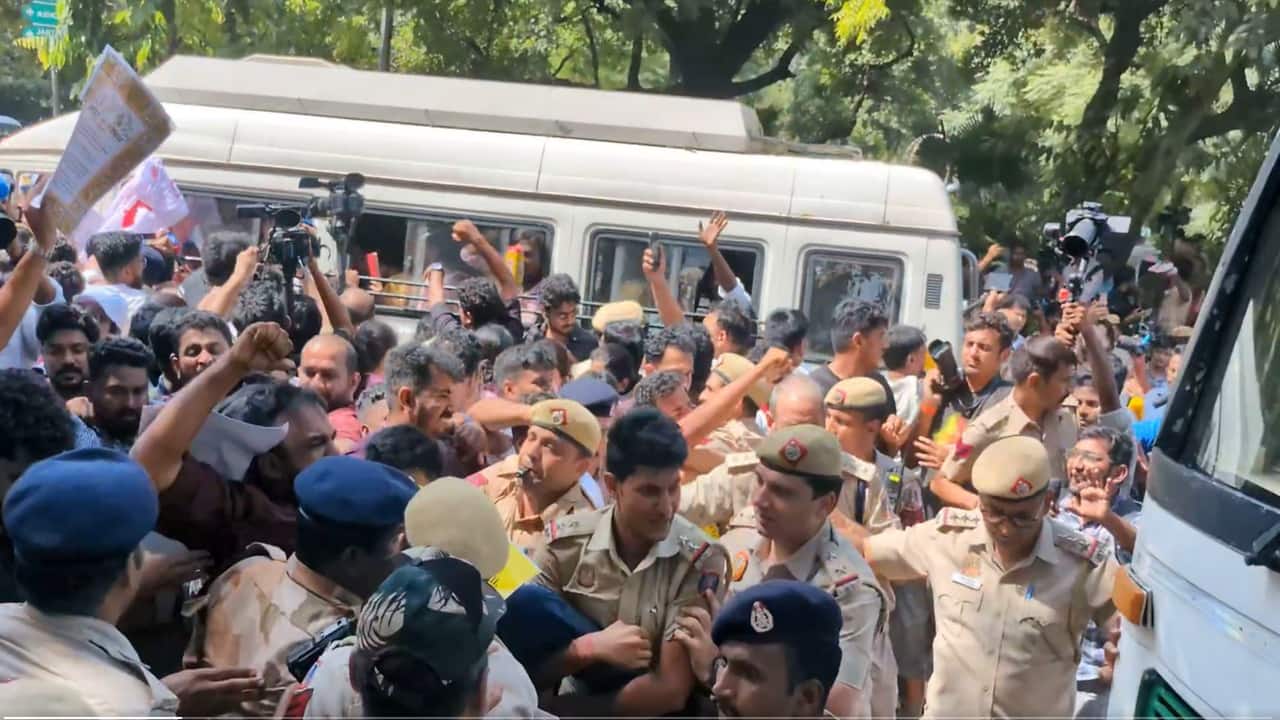
Delhi Police denied ordering officers to remove name tags during Jantar Mantar protests. DCP Sachin Sharma said, "There are no instructions from the police side to avoid wearing name tags." He explained that badges likely fell off during crowd control. Personnel must wear them to ensure accountability while on duty.
The absence of name tags on some Delhi Police personnel deployed at Jantar Mantar has triggered questions over whether officers were deliberately asked to conceal their identities during protests seeking the resignation of Chief Election Commissioner Gyanesh Kumar. The police, however, have denied issuing any such direction. New Delhi district DCP Sachin Sharma said wearing name tags remains mandatory for personnel on duty. According to him, some badges could have come off while officers were dealing with crowds at the protest site. "There are no instructions from the police side to avoid wearing name tags. Some name tags may have broken during crowd-control duties at the protest, and personnel are required to wear their name tags," Sharma told NDTV. The clarification comes against the backdrop of an earlier protest-related episode in July. During the Cockroach Janta Party (CJP)'s 'Chalo Sansad' march, violence broke out and several police officers were identified through their name tags. Sharma said those officers subsequently faced trolling on social media. Reports have since suggested that concerns about similar online targeting may have influenced the use of name tags during the latest deployment. Under Delhi Police Standing Order No 51, personnel are required to wear a bilingual plastic name plate as part of their uniform. The prescribed plate carries white lettering on a black background. The matter has also reached the political arena. CPI Rajya Sabha MP P Sandosh Kumar wrote to Union Home Minister Amit Shah on Saturday, asking for intervention over what he described as police violence, arbitrary detentions and the alleged removal of name badges during the Jantar Mantar protests. Kumar invoked the Supreme Court's directions in the 'D K Basu vs State of West Bengal' case, which require police personnel making arrests or dealing with detainees to carry "accurate, visible and clear identification and name tags with their designations". Pointing to the Delhi Police's own standing order, Kumar said, "Identification is fundamental to accountability when the State exercises coercive power against citizens". The CPI leader was among those detained on October 2 along with party workers and other protesters. The dispute over police identification comes as demonstrations continue in Delhi over the Special Intensive Revision of electoral rolls. The protests have focused on demands for Gyanesh Kumar's resignation and allegations of vote theft. The issue gained further attention following an Indian Express report which said Election Commissioners Sukhbir Singh Sandhu and Vivek Joshi had formally objected 14 times over 10 months to decisions and orders linked to the SIR process under Kumar. The SIR exercise has so far resulted in 13.3 crore voters being removed from the electoral roll, according to the information provided.