
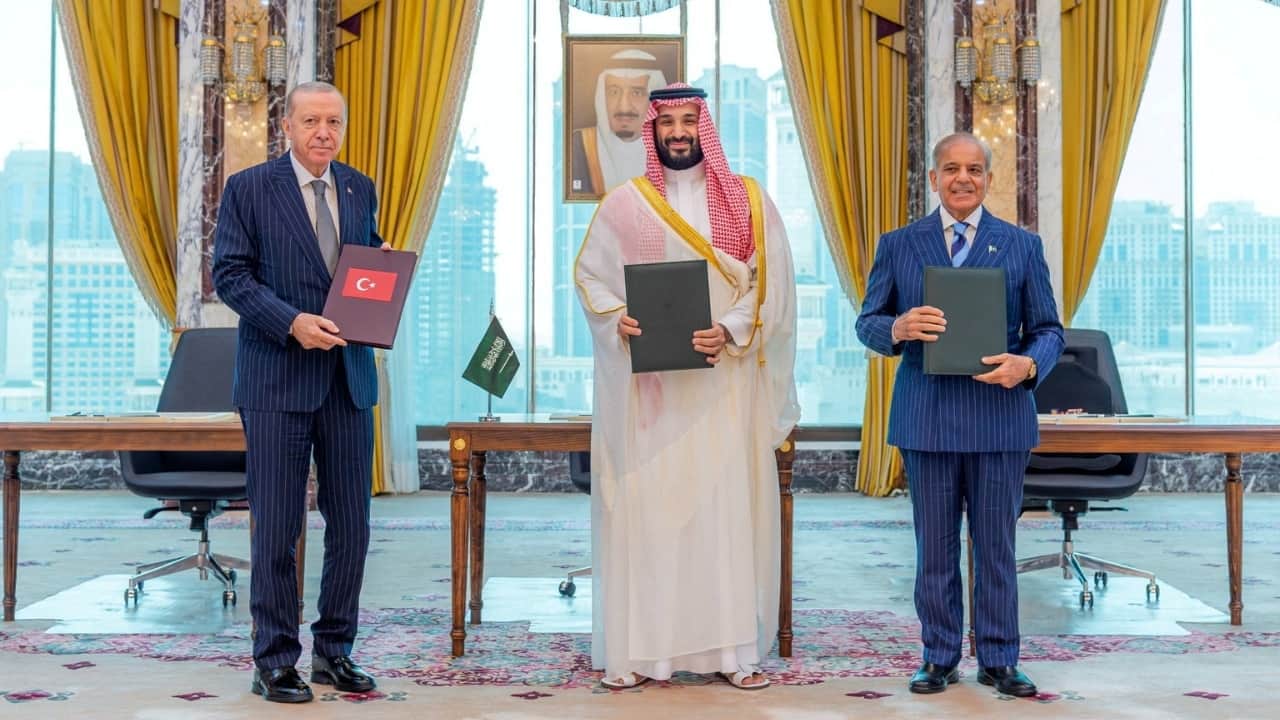
Turkey’s opposition parties are challenging the Mecca Defence Alliance signed on August 7. They said the pact violates the Constitution because it lacks parliamentary approval. Özgür Özel warned, "Signing this with a country at war is to directly become a party to the conflict." Many fear troops could face deployment.
Turkey's opposition parties have strongly criticised the activation of the Mecca Defence Alliance, warning that any deployment of Turkish troops or military capabilities to Saudi Arabia could violate the country's Constitution and risk pulling Ankara directly into the war in Yemen. The backlash follows an emergency meeting in Riyadh on October 5, where Turkey, Pakistan and Saudi Arabia agreed to begin implementing their mutual defence commitments and prepare for the rapid deployment of forces and military capabilities to Saudi Arabia. The Mecca Joint Defence Agreement, signed by Turkish President Recep Tayyip Erdogan, Saudi Crown Prince Mohammed bin Salman and Pakistan Prime Minister Shehbaz Sharif on August 7, stipulates that an armed attack on one member will be treated as an attack on all three. Why is Turkey's opposition objecting? The main point of contention is that the agreement has not yet been submitted to Turkey's Grand National Assembly for ratification. Under the Turkish Constitution, parliamentary authorisation is also required for the deployment of Turkish troops abroad. Özgür Özel, leader of Turkey's main opposition New Party, argued that entering a defence pact with a country involved in a war could make Turkey a party to the conflict. "Joint defence pacts are established during times of peace. Signing this with a country at war is to directly become a party to the conflict," Ozel said. He also objected to reports that Turkish forces could be deployed before Parliament considers the agreement. "Last night they decided to deploy troops there. While you haven't brought the agreement, haven't sent it to Parliament, and the Speaker of the Grand National Assembly hasn't put it on the agenda, the minister is signing off on a decision that Parliament should have made," he said. Ozel added: "If the military is going to leave, it will have to pass through Parliament again." He also said, "We do not accept the adventure that will send our soldiers to Yemen 100 years later, acting as Trump's obedient soldiers." IYI Party lawmaker Turhan Comez accused the government of violating Articles 90 and 92 of the Constitution, saying Turkish soldiers "cannot and should not be sent to the deserts of Yemen for the interests of the US, Israel, and Saudi Arabia". New Party MP Namik Tan also questioned the legal status of the agreement and whether it can be implemented without parliamentary approval. "These actions constitute a constitutional crime. From a foreign policy perspective, these reckless initiatives reveal a doomsday scenario obsession characteristic of one-man regimes. If the claim of sending military forces and or capabilities to Yemen is true, it is a clear manifestation and proof of this obsession," Tan said. New Party spokesperson Zeynel Emre similarly argued that parliamentary approval was necessary. "For it to come into effect, it needs to pass through the Grand National Assembly and be published in the Official Gazette. You cannot act as if it has already entered into force. This is a constitutional crime," Emre said. What military support could Turkey provide? Despite the political opposition, Turkish personnel and military equipment are reportedly already present in Saudi Arabia. Middle East Eye, citing Turkish officials, reported that Ankara has maintained technical teams, air defence systems and electronic warfare equipment in the kingdom since last year to protect critical infrastructure and energy facilities. Turkey could provide additional air defence systems, anti-drone capabilities, intelligence, surveillance and reconnaissance support, as well as technicians and emergency response teams. A limited deployment of pilots, aircraft and military personnel could follow parliamentary approval. A senior Turkish official told the outlet that Ankara does not plan to send a large force or directly intervene in Yemen. "We don't plan to send a large group of soldiers and have no plans to directly intervene in Yemen," the official said, adding, "Ankara still believes diplomatic efforts might bear fruit in coming months." Why does the pact matter? The agreement was activated as fighting intensifies between Saudi-backed forces and Yemen's Iran-aligned Houthi movement. Riyadh has faced missile and drone attacks from the Houthis, raising concerns over the security of Saudi territory and key energy infrastructure. For Ankara, the immediate focus appears to be helping Saudi Arabia strengthen its air and missile defences rather than sending combat troops into Yemen. But the opposition argues that any expansion of the mission could expose Turkish forces and commercial interests to Houthi attacks and gradually draw Turkey into the conflict. The central question now is how Ankara will implement its defence commitment to Riyadh while keeping the scope of Turkish military involvement within constitutional and political limits.