
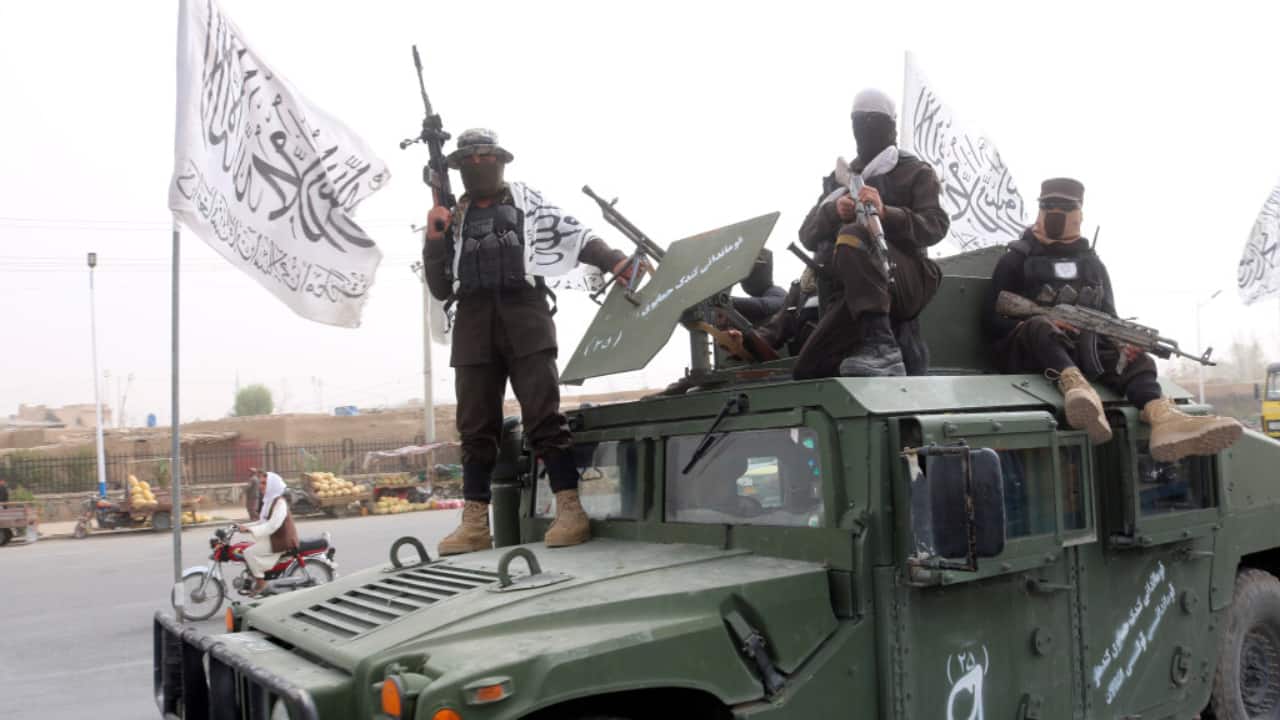
The Taliban government accused Pakistan of blaming Kabul for its domestic failures to hide internal issues. Spokesperson Zabiullah Mujahid said, "Blaming Afghanistan for its own failures by Pakistani officials is no solution to any problem." Tensions rose after Pakistan’s Foreign Minister Ishaq Dar urged the Taliban to stop cross-border militant attacks.
Afghanistan's Taliban government has hit back at Pakistan's accusations over cross-border militancy, accusing Islamabad of blaming Kabul for its domestic failures as tensions between the neighbours escalate. Taliban spokesperson Zabiullah Mujahid said Pakistani authorities were relying on allegations and propaganda instead of addressing their political, security and economic challenges. He warned that Islamabad's approach was undermining negotiations and could have wider implications for regional stability. "Blaming Afghanistan for its own failures by Pakistani officials is no solution to any problem," Mujahid wrote in a post on X. His remarks came after Pakistan's Foreign Minister Ishaq Dar urged Afghanistan's Taliban authorities to prevent militant groups from using Afghan territory to launch attacks inside Pakistan. He warned that the same groups could eventually threaten the Taliban's own government. "I politely reminded him that if the Afghan authorities failed to take appropriate action against terrorist groups operating from their territory, the day would come when these very groups would threaten his government as well," Dar said, referring to a warning he delivered during a visit to Kabul in July 2025. Pakistan presses Taliban on militant activity Islamabad has repeatedly accused Kabul of providing safe haven to the Tehrik-e-Taliban Pakistan (TTP), which it holds responsible for attacks on Pakistani security forces and civilians. Pakistan has also raised concerns about the activities of the outlawed Baloch Liberation Army (BLA) and other militant organisations. Afghanistan's Taliban government has consistently denied allowing militants to use its territory to target Pakistan. Dar said Pakistan's diplomatic and economic engagement with Kabul had failed to secure meaningful action against the groups. He cited efforts to expand bilateral trade, upgrade diplomatic representation and develop a railway connecting Pakistan with Central Asia through Afghanistan. "Good neighbourly relations are a two-way responsibility," he said. "They cannot mean silently absorbing one attack after another." Dar also claimed that militant attacks were being organised from across the border and said Pakistan had nearly completed a fence stretching more than 2,600 kilometres along the frontier. Pakistan's Information Ministry said Islamabad remained committed to dialogue but expected Kabul to honour its counterterrorism commitments and take verifiable action against militant networks. Border clashes deepen tensions The diplomatic confrontation comes amid renewed fighting along the Durand Line, including clashes in the Kurram-Paktia border region. Both sides have accused the other of initiating attacks, while reports of airstrikes, artillery exchanges and drone activity have heightened concerns about a broader escalation. Pakistan has launched military operations against groups it identifies as militants operating from Afghanistan, while Taliban authorities have disputed Islamabad's account of several clashes. The United Nations Mission in Afghanistan reported in September that it had documented more than 1,100 civilian deaths and injuries from cross-border violence in Afghanistan this year. With both sides maintaining sharply conflicting positions over militant activity, the latest exchange of accusations has added to uncertainty over whether diplomatic efforts can contain the worsening security situation.