
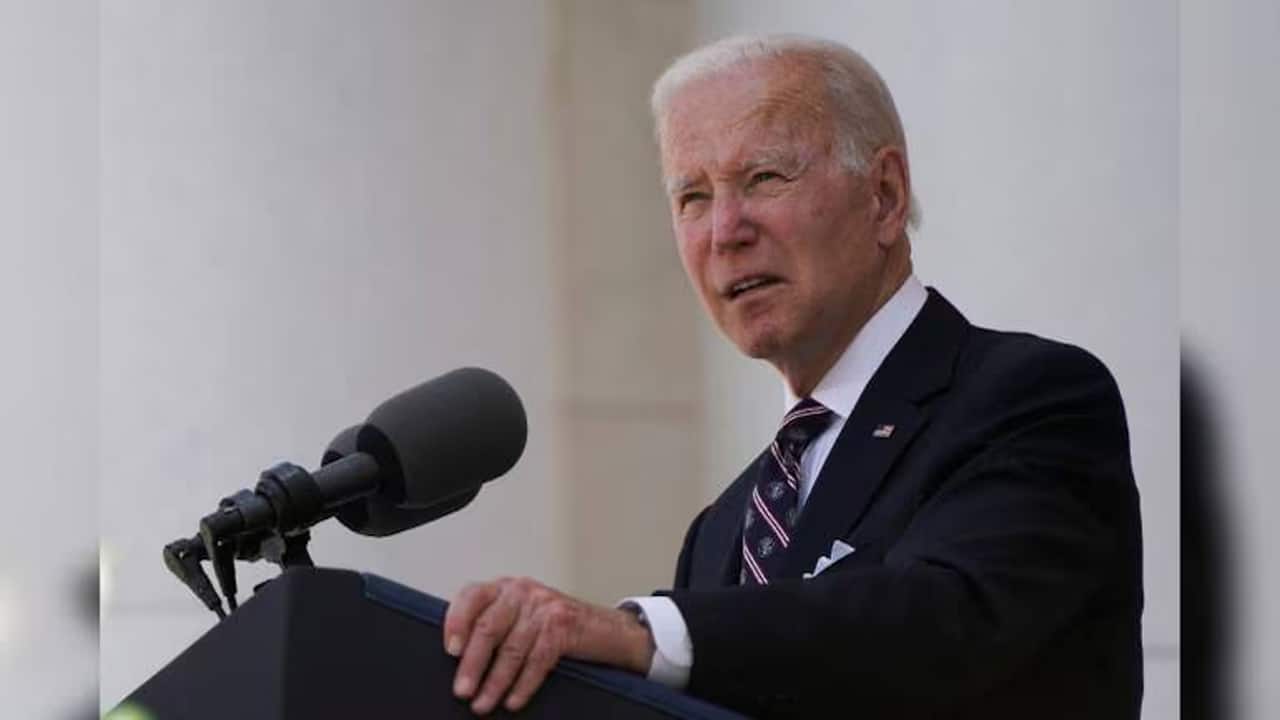
Joe Biden nearly cut off US military support for Israel in the spring of 2024. Former advisor Brett McGurk said Biden got fed up with Benjamin Netanyahu over the Gaza war. During a tense call, Biden asked Netanyahu, "You think I'm Santa Claus?" while threatening to stop sending military aid.
Joe Biden came close to cutting off US military support for Israel in the spring of 2024 as his frustration with Benjamin Netanyahu over the war in Gaza reached breaking point, according to his former top Middle East advisor. Brett McGurk, who served as Biden's coordinator for the Middle East and North Africa, has provided an inside account of the tensions in his new memoir, 'Brink'. He describes a relationship that came close to a major rupture as Biden struggled to balance support for Israel with concerns over civilian casualties, humanitarian aid and efforts to secure the release of hostages held by Hamas, according to the New York Times. Biden was 'completely fed up' By early 2024, Biden's relationship with Netanyahu had deteriorated considerably. The two leaders had spoken 20 times during the final three months of 2023, but only twice during the first three months of the following year. The crisis deepened after Israeli forces struck a World Central Kitchen convoy on April 1, killing seven aid workers. Jill Biden was so disturbed by the attack that, according to her own memoir, she left her husband a note urging him to pressure Netanyahu. Three days later, Biden was due to speak to the Israeli prime minister. McGurk recalls arriving at the Oval Office to find an enraged president who appeared ready to withdraw his support. Some advisors wanted Biden to tell Netanyahu that the war had to end and threaten to cut off US assistance if he refused. Others were concerned that such a move could jeopardise efforts to secure the hostages held by Hamas. CIA director William Burns argued that a hostage agreement remained the best route to a ceasefire and that continued support for Israel was necessary while negotiations continued. 'You think I'm Santa Claus?' When Biden finally spoke to Netanyahu, his anger was unmistakable. McGurk recalls Biden demanding to know what Netanyahu was doing and asking whether the Israeli leader thought he was "Santa Claus". When Netanyahu asked what he meant, Biden pointed out that he could stop US military aid. Netanyahu attempted to explain the strike on the World Central Kitchen workers as a tragic miscommunication, but Biden cut him off. It was, according to McGurk, the closest Biden came to a complete break with Netanyahu during the war. Iran attack changed the equation Before that confrontation could develop into a broader rupture, the regional situation changed dramatically. Iran was preparing to launch a massive barrage of missiles and drones at Israel. Despite his anger with Netanyahu, Biden decided that the United States had to help defend its ally. American forces, working alongside Israel and Arab partners, helped intercept nearly all the incoming missiles and drones, preventing major casualties. Biden then turned his attention to preventing Netanyahu from launching a major retaliation that could escalate the conflict further. McGurk recalls Biden telling aides that he had just saved Netanyahu and wanted the confrontation to stop. National Security Advisor Jake Sullivan suggested the more diplomatic message: "Take the win." Biden used that formulation in his conversation with Netanyahu. The Israeli prime minister initially argued that Iran needed to be taught a lesson, but ultimately refrained from a heavy counterattack. Relations remained strained The episode did not end disagreements between the two governments. Biden later suspended the supply of certain heavy bombs to Israel. Some of his advisors wanted him to go further, although McGurk believed the suspension had made negotiations harder by encouraging Hamas to think it could hold out for better terms. McGurk was generally among those in the administration more sympathetic to Israel's position. He also argued that the Gaza conflict could not be separated from the broader regional challenge posed by Iran and its proxies. Ceasefire finally came as Biden left office Negotiations for a ceasefire and hostage-release agreement continued through Biden's final months in office. McGurk describes a frustrating process in which new conditions repeatedly appeared whenever an agreement seemed close. The deal was eventually secured shortly before Biden left office, with assistance from incoming president Donald Trump and his special envoy Steve Witkoff. McGurk credits both sides. He says Trump and Witkoff were essential in pushing the parties to accept the final agreement, while Biden's months of negotiations had created the framework that made the deal possible.