
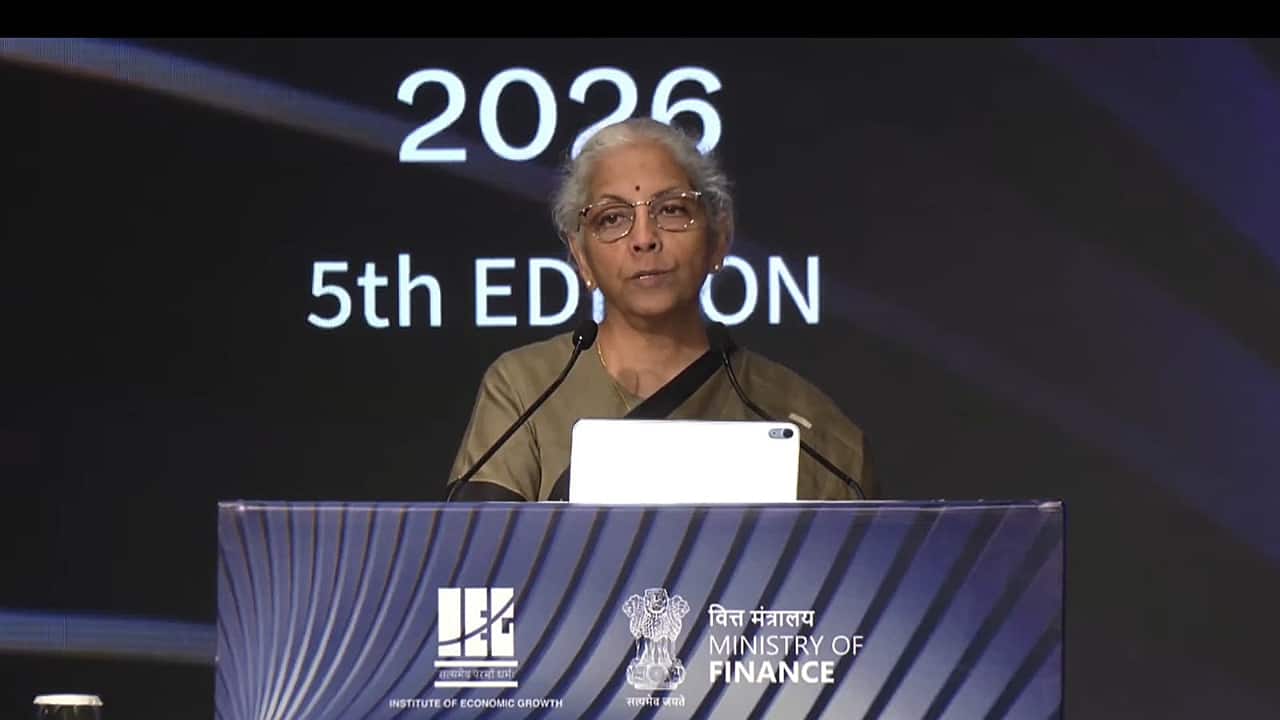
ആഗോള സാമ്പത്തിക പ്രതിസന്ധികൾക്കിടയിലും ഇന്ത്യയുടെ സാമ്പത്തിക അടിത്തറ ശക്തമായി തുടരുന്നുവെന്ന് ധനമന്ത്രി നിർമ്മല സീതാരാമൻ വ്യക്തമാക്കി. ബാങ്കിംഗ് മേഖലയിലെ പരിഷ്കാരങ്ങൾ, അടിസ്ഥാന സൗകര്യ വികസനം, ജിഎസ്ടി തുടങ്ങിയ നടപടികൾ രാജ്യത്തിന്റെ സാമ്പത്തിക വളർച്ചയ്ക്ക് കരുത്തേകി. ആഗോള കടബാധ്യതകൾ വർധിക്കുമ്പോഴും ഇന്ത്യ സുസ്ഥിരമായ വളർച്ചാ പാതയിലാണെന്ന് മന്ത്രി ചൂണ്ടിക്കാട്
Market Mastery
Webinar by Vishal Malkan
Find the weak links
in your portfolio by Vishal Malkan
Finance Minister Nirmala Sitharaman on Saturday said India had navigated a period of global turbulence with its economic fundamentals intact and strengthened, even as the world economy faces shrinking buffers and rising public debt.
“India has come through this period remarkably well with its fundamentals intact and strengthened,” Sitharaman said.
She noted that global public debt rose to nearly 94 per cent of GDP in 2025 and is projected to reach 100 per cent by 2029, a level last seen in the aftermath of the Second World War.
Banking sector reforms
On banking, Sitharaman said the government had undertaken tough reforms, including recapitalisation, resolution of stressed assets, and stronger governance and risk-management frameworks.
The banking sector is now helping enterprises navigate external uncertainty, although working capital and access to markets remain critical, she said.
“Emergency credit line schemes helped withstand liquidity pressures during periods of disruptions,” Sitharaman said.
Infrastructure push
On infrastructure, she said the results of sustained capital investment since 2014 were visible. National highways have expanded by about 60 per cent, while Indian Railways commissioned 36,429 kilometres of new track between 2014 and 2026.
Operational airports have more than doubled, and cargo-handling capacity at major ports has risen by nearly 60 per cent.
Sitharaman credited the government's reform record, including the Goods and Services Tax (GST), the Insolvency and Bankruptcy Code (IBC), the labour codes and the Jan Vishwas measures.
“The task has been to make economic activity simpler, predictable and more productive across the country,” she said, adding that this required sustained attention to implementation and timely completion of public infrastructure.
She also stressed the importance of efficient last-mile delivery to ensure government schemes reach beneficiaries on the ground.
Inflation management
On prices, Sitharaman said the flexible inflation-targeting framework, introduced in 2016, anchors expectations.
Continuous monitoring of prices, arrivals, stocks and crop conditions, along with buffers financed through a price stabilisation fund, supports timely intervention, she said.