
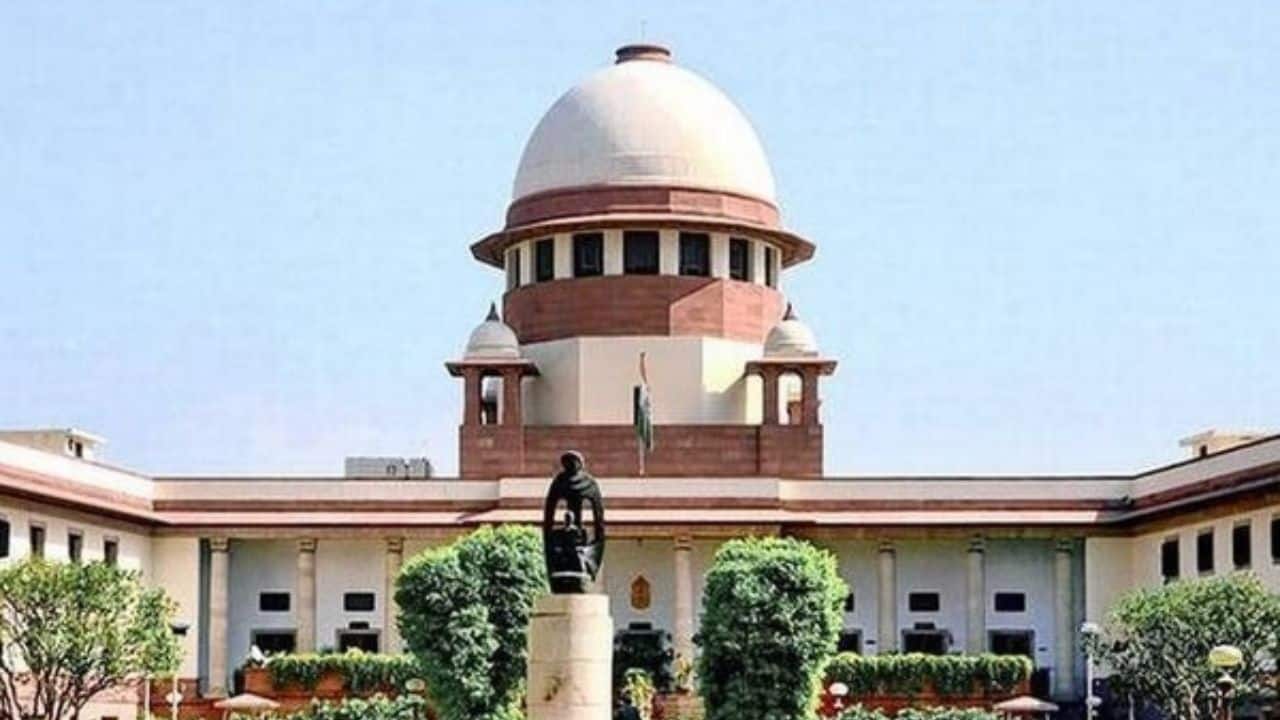
The Supreme Court will examine a plea to recall its split verdict on the Chief Election Commissioner Act, 2023. Senior Advocate Gopal Sankaranarayanan mentioned the application before a bench led by CJI Surya Kant. "We will examine and take a call," the CJI said regarding the request for a hearing.
'Eyes on 403, not 3': Here's why Akhilesh Yadav dropped plan to field 3rd candidate for UP Rajya Sabha election
An application has been filed before the Supreme Court seeking a recall of its recent split verdict on whether petitions challenging the Chief Election Commissioner and Other Election Commissioners (Appointment, Conditions of Service and Term of Office) Act, 2023 should be referred to a larger bench.
Senior Advocate Gopal Sankaranarayanan mentioned the application before a bench comprising Chief Justice of India (CJI) Surya Kant and Justices Joymalya Bagchi and V Mohana.
"We will examine and take a call," CJI Kant said on the request to list the application for hearing.
Sankaranarayanan told the Court that he had previously mentioned the application before a bench headed by Justice Dipankar Datta.
"There is a split verdict on the Chief Election Commissioner issue. We have mentioned an application for recall of the judgment. I mentioned the case before the Justice Dipankar Datta-led Bench. He asked us to mention the matter here because the matter has been released from his board," the senior counsel said.
A Bench comprising Justice Dipankar Datta and Justice Satish Chandra Sharma delivered separate opinions on September 23 on petitions challenging Sections 7 and 8 of the 2023 Act. These provisions establish a selection panel consisting of the Prime Minister, the Leader of the Opposition and a Union Cabinet Minister. A related petition also challenged the appointments of Gyanesh Kumar, who is now the Chief Election Commissioner, and Election Commissioner Sukhbir Singh Sandhu.
The Centre had sought the matter's reference to a larger bench, arguing that it raised a constitutional question. While Justice Datta declined the request, Justice Sharma supported the Centre's plea.
In view of the differing opinions, the Bench asked the Chief Justice of India (CJI) to consider constituting a Constitution Bench to hear the case.
Plea related to conflict of interest while hearing
A separate curative petition filed by Dr Jaya Thakur is also pending before the Supreme Court.
The petition contends that Justice Satish Chandra Sharma should not have heard the matter after supporting the Centre's plea for its reference to a larger bench, citing an alleged direct conflict of interest.
Thakur has argued that there was a "reasonable apprehension of bias and propriety", as Justice Sharma's son, Siddharth Sharma, has been serving as standing counsel for the Election Commission of India (ECI) before the Madhya Pradesh High Court since July 2024.
What is split verdict
A split verdict occurs when an even-numbered bench of judges (such as a two-judge Division Bench) cannot reach a unanimous decision or a majority consensus because they hold opposing views on a case.
What happens in case of split verdict
Referral to a Larger Bench: The case is placed before the Chief Justice of India (or the Chief Justice of the respective High Court), who acts as the "master of the roster".
Rehearing: The Chief Justice constitutes a larger, odd-numbered bench, typically comprising three judges, or a five-judge Constitution Bench if a substantial question of law is involved.
Stay informed on all the latest news, real-time breaking news updates, and follow all the important headlines in india news and world news on Zee News.