
Trade negotiations between India and the US reached a plateau, finance minister Nirmala Sitharaman said on Monday. She noted that further concessions are difficult for both sides. "Both sides have reached a plateau, beyond which giving or taking might be very difficult," she said. Talks started in February 2025 to resolve.
Washington flags India's trade surplus, while new tariff threats linked to Russian energy imports add pressure to the negotiations between both countries
Trade negotiations between India and the US have reached a "plateau", with further concessions becoming increasingly difficult for both sides, finance minister Nirmala Sitharaman said on Monday.
"One thing about the US agreement which is yet to be finalised, is that it has been a hard and very rigorously negotiated agreement. The agreement negotiations are still ongoing, although we like to believe that both the sides have reached a plateau, beyond which giving or taking might be very difficult.
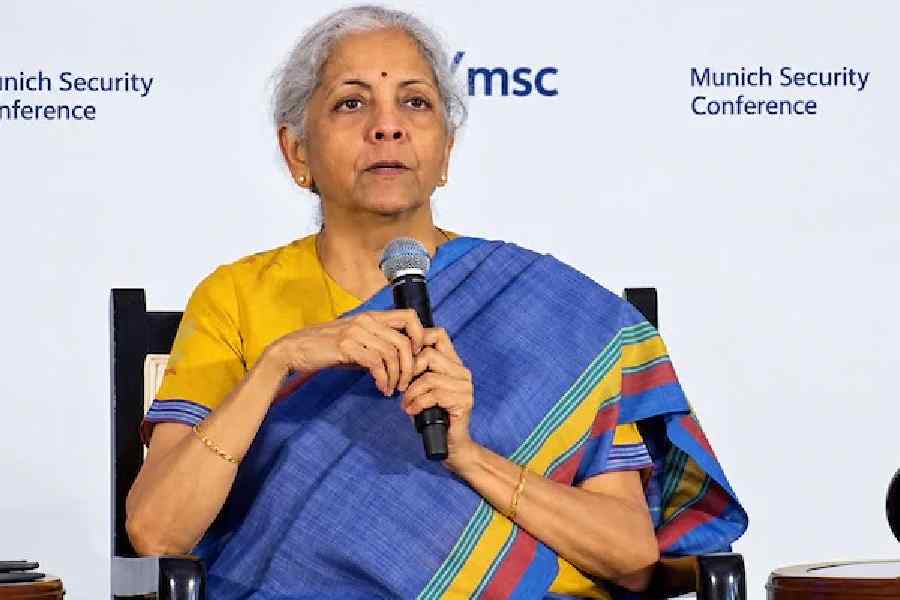
"But if there are rooms to operate from, both sides would do it," Sitharaman said at the Munich Security Conference in New Delhi.
Sitharaman also pointed to the trade imbalance between the two countries, saying India's trade surplus with the US remained a key concern for Washington.
Her comments are among New Delhi's strongest public indications that negotiations on the proposed trade agreement have hit a difficult phase. The two countries have been negotiating since February 2025 with the objective of expanding market access, strengthening economic ties and resolving long-standing differences over tariffs and non-tariff barriers.
Last Friday United States trade representative Jamieson Greer had said that the trade deal was in final stages but not imminent.
"We are continually trying to finish the trade deal with India, we are in the short strokes. I think we are towards the end of it," Greer had said, adding that US President Donald Trump and Prime Minister Narendra Modi had held a "constructive" call and that both sides had identified the outstanding issues.
Greer had also indicated that another conversation between Trump and Modi could take place soon to assess progress.
Give and take
Sitharaman also criticised the growing use of tariffs as a tool to address trade imbalances, saying their use had gone beyond their traditional role as a negotiating instrument.
She cited India's large trade deficit with China to argue that imbalances should be addressed through negotiations rather than unilateral tariff action.
"I can take the same position, can I not, with China? It is so lopsided, it is terribly against me, but no you can't, you have to negotiate, you have to give and take," she said.
The negotiations have also been complicated by new US legislation that could enable Trump to impose tariffs of up to 100 per cent on major buyers of Russian oil and gas. India, a significant importer of Russian energy, has warned that such measures could strain bilateral ties and disrupt global energy markets.
Ajay Srivastava, founder of the Global Trade Research Initiative and a former trade official, said India should avoid making further concessions until the agreement is finalised.