
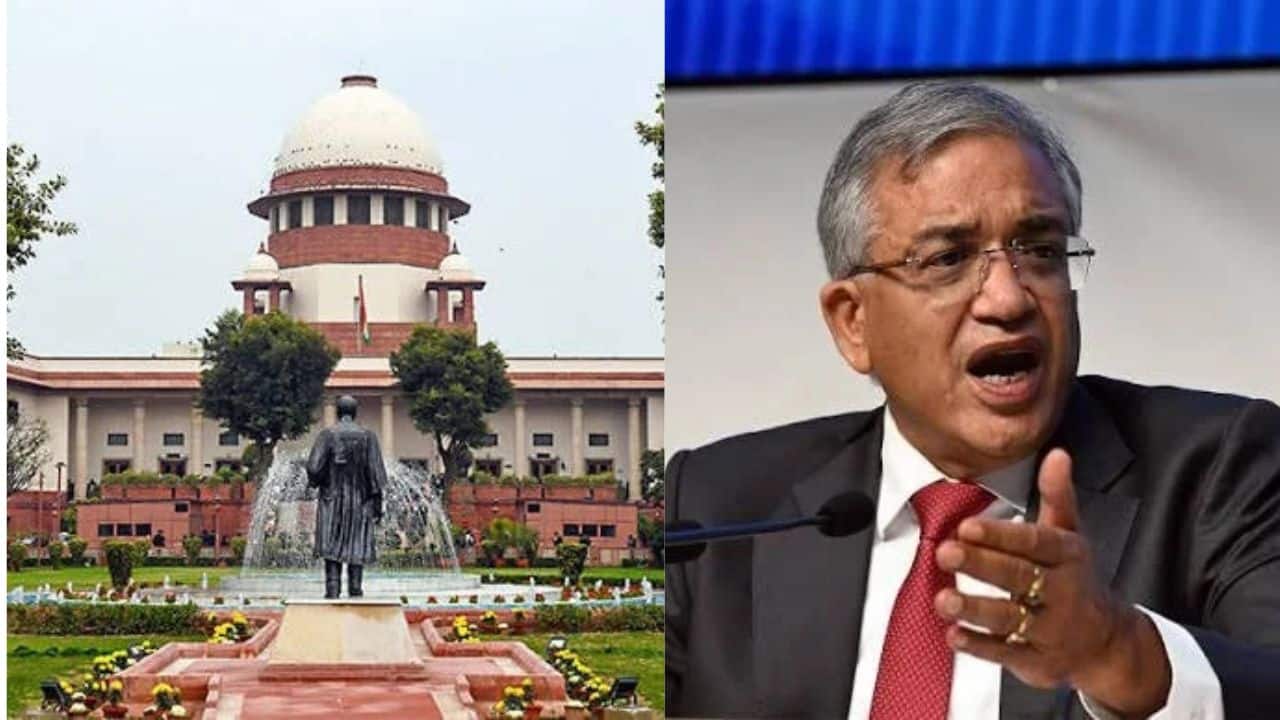
The Supreme Court on October 5, 2026, heard petitions challenging the authority of CEC Gyanesh Kumar. A bench led by Chief Justice Surya Kant refused to suspend Kumar but issued notices to the ECI and the Centre. Petitioners questioned if Kumar took 14 decisions alone instead of using the full Commission.
Rakul Preet Singh breaks silence on IT raid reports: 'I've been paying my due taxes since the age of 20 years'
The Supreme Court on October 5, 2026 heard a batch of petitions challenging the alleged unilateral exercise of authority by Chief Election Commissioner (CEC) Gyanesh Kumar in the name of the multi-member Election Commission of India (ECI). A bench led by Chief Justice of India Surya Kant, along with Justices Joymalya Bagchi and V Mohana, refused to pass any interim order on the pleas demanding suspension of Kumar but issued notices to the ECI, the CEC, the other two Election Commissioners (Sukhbir Singh Sandhu and Vivek Joshi), the Centre, and certain officials, seeking responses within a week.
Here, we explain in points what the petitioners sought from the Supreme Court regarding the issues involving Gyanesh Kumar in particular and the Election Commission of India (ECI) as a whole.
Suspension of CEC Gyanesh Kumar: The PIL sought the suspension of Chief Election Commissioner (CEC) Gyanesh Kumar from exercising his powers until the Supreme Court considers and decides the petitions challenging decisions taken under his leadership. The plea also sought to ensure that the disputed decisions are examined by the court before Kumar continues to exercise authority in relation to the matters under challenge.
Alleged individual exercise of ECI powers: The plea also raised a question over whether powers legally entrusted to the multi-member Election Commission of India (ECI) were exercised individually by the CEC. It challenged the manner in which certain decisions were allegedly taken, questioning whether Kumar acted on his own in matters where the authority was intended to be exercised collectively by the full Commission. The plea argued that decisions concerning the functioning of the poll panel should be taken in accordance with the framework governing the Commission.
Reliance on Section 18 of the 2023 law: The petitioners have relied on Section 18 of the Chief Election Commissioner and Other Election Commissioners Act, 2023, which provides that the Commission's business should, as far as possible, be conducted unanimously. In cases where the members differ on an issue, the provision states that the majority view is to prevail. The plea questions whether this statutory mechanism was followed while taking the decisions under challenge.
Challenge to 14 alleged unilateral decisions: The petition, filed by advocate Shailendra Mani Tripathi, sought the quashing of 14 decisions that the petitioner alleges were taken unilaterally. The plea challenged the manner in which these decisions were made and sought judicial intervention to determine whether they were taken in accordance with the prescribed decision-making process of the multi-member Election Commission.
Independent inquiry into the decisions: The petitioner has also sought the constitution of an independent Judicial Inquiry Commission/Special Investigation Team (SIT) to examine the alleged unilateral decisions. The proposed panel is to be headed by a retired Supreme Court judge and assisted by experts in cybersecurity and information technology, with the aim of conducting an independent examination of the issues raised in the petition.
Challenge to electoral-roll processes: The petitions question specific actions allegedly taken under the leadership of CEC Gyanesh Kumar, including purported changes to Form 6, which is used for voter registration, along with other procedures related to the preparation and revision of electoral rolls. The petitioners have sought judicial scrutiny of these actions and directions to ensure that such processes are carried out in accordance with the applicable legal framework.
Criminal proceedings against CEC Kumar sought: Another plea has sought the initiation of criminal proceedings against Kumar, alleging that certain decisions were taken unilaterally rather than through the prescribed collective decision-making process of the multi-member Election Commission.
The petitions stem from reports, including an Indian Express investigation, that Election Commissioners Sukhbir Singh Sandhu and Vivek Joshi recorded formal written objections on at least 14 occasions between roughly October 2025 and August 2026. These objections concerned various steps taken in the Commission's name during the SIR process, such as alterations to processes for adding or deleting voters, changes to statutory forms, centralisation of electoral-roll data systems, restricted access for field-level officers, and the filing of a large number of appeals, claiming many were issued without their knowledge, concurrence, or proper Commission approval.
Stay informed on all the latest news, real-time breaking news updates, and follow all the important headlines in india news and world news on Zee News.