
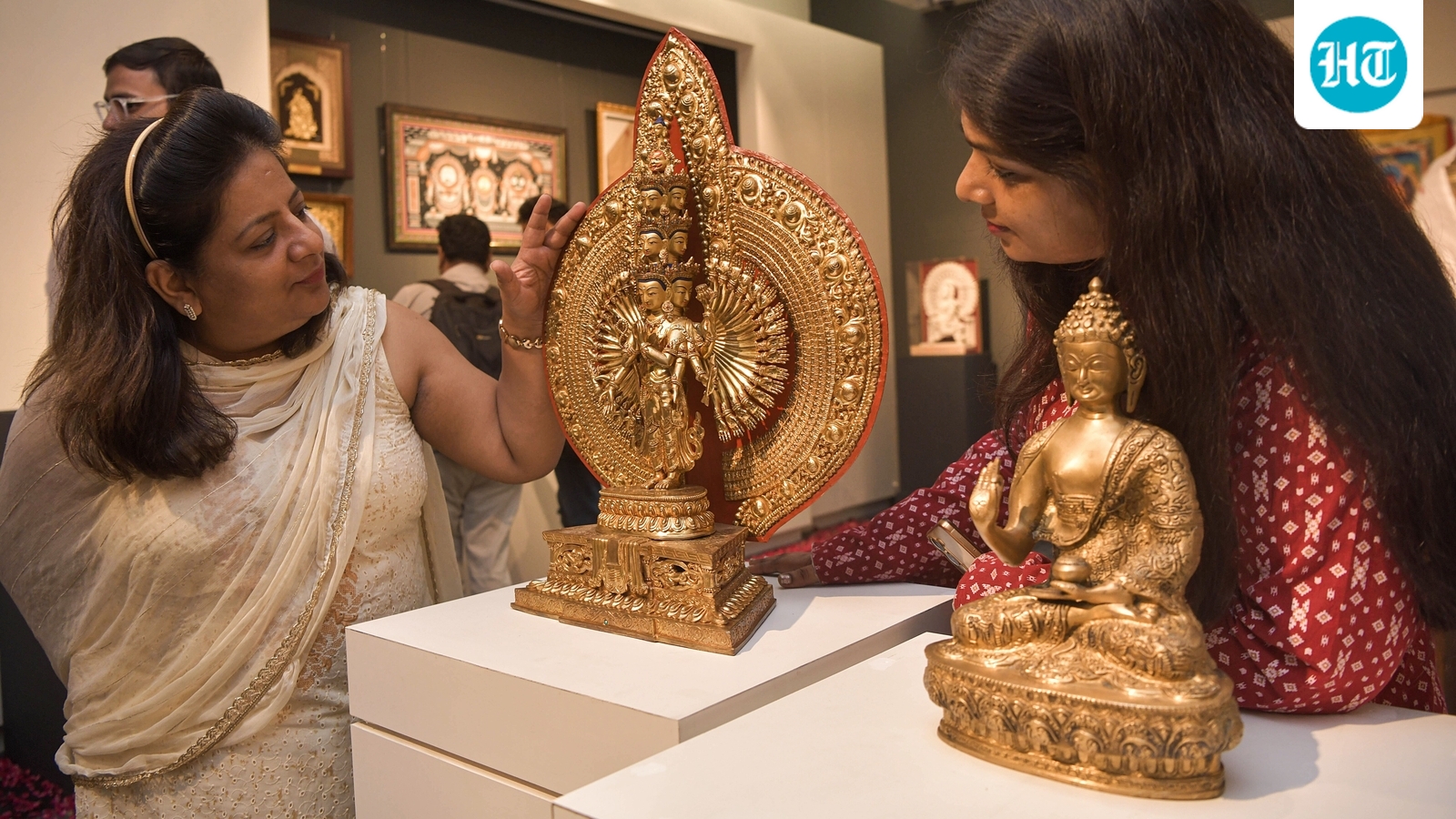
The eighth PM Mementoes e-auction started, featuring gifts like a Sikkim prayer wheel and a silver Ram idol from Karnataka. Union minister Gajendra Singh Shekhawat said, "what the country has given him is not his to keep." Proceeds from these sales will help clean the Ganga, supporting a national cause.
A brass Buddha and a Tibetan prayer wheel from Sikkim now sit in the same online catalogue as a silver Lord Ram from Karnataka, as the eighth PM Mementoes e-auction gives citizens a chance to own a piece of gifts received by Prime Minister Narendra Modi from various states, an effort the culture ministry calls a "unifying force" for the country's traditions.
Union culture minister Gajendra Singh Shekhawat said at the launch in New Delhi that the scheme rests on a simple principle that PM Modi believes "what the country has given him is not his to keep," and that the gifts must therefore be returned to the people, with the proceeds going toward cleaning the Ganga.
The tradition goes back to Narendra Modi's days as Gujarat CM. After he took the post in October 2001, the gifts he received were auctioned for Kanya Kelavani, a drive for girls' education launched in 2003. As Prime Minister, he took the idea national in January 2019, when about 1,800 items went under the hammer at the National Gallery of Modern Art. It turns ceremonial gifts given to an office into a public good.
The idea was presented as a first from the beginning. "It is the emotional and sentimental values attached to the gifts, which is immeasurable," then Culture Minister Prahlad Singh Patel said at the 2019 launch, calling Modi the first Prime Minister to auction all the gifts he receives.
The numbers show how far it has grown. Gajendra Singh Shekhawat said seven earlier editions sold 7,741 objects, raising about ₹52 crore, averaging roughly ₹67,000 per object. This year's 1,498 items are nearly 200 more than the "over 1,300" listed last year.
The Sikkim pair show the craft behind the gifts. The Buddha is a finely crafted brass sculpture, presented to the Prime Minister by the Governor of Sikkim. The second piece is a tabletop prayer wheel, or Mani Khorlo, embossed with the mantra "Om Mani Padme Hum," a chant central to Tibetan Buddhist practice.
The Ministry says their inclusion "speaks to the diversity of India's cultural landscape." A prayer wheel is meant to be turned by hand, clockwise, and each turn is believed to carry the mantra outward. It will now be judged on a bidder's screen, which shows how far Himalayan devotion can travel when a gift becomes a national catalogue.
From the south come the showpieces. Karnataka sends the silver Lord Ram, priced at ₹13.50 lakh, and a silver replica of the Kakatiya Kala Thoranam, the carved gateway motif of Telangana's Kakatiya era, is listed at ₹9 lakh. A Gond "Tree of Life" painting starts at ₹7.50 lakh, and a Jagannath Parivar piece on a chariot, from Odisha's tradition, at ₹6 lakh.
These form part of 50 "hero objects," just 3.3 per cent of the catalogue. Most of the rest come from West Bengal, Uttar Pradesh, Gujarat, Maharashtra, Assam, Bihar and Odisha. Assam's share ranges from handloom and bamboo-and-cane work to metalwork, so a single page carries weaving, carving, and casting from different parts of the country.
The capital has its own set of 30 items, from two Delhi Metro models and the Ashtamangala, the eight auspicious symbols of Buddhism, to artwork on institutions such as St Stephen's College, the Old Secretariat and the New Parliament Building. A pencil sketch of the Prime Minister by a student from Rohini shows that a gift need not be grand to be included.
The cause links the catalogue to the country's geography. Namami Gange is the Union Government's flagship programme for the conservation and rejuvenation of the Ganga and the protection of its fragile ecosystem. Uttar Pradesh, Bihar and West Bengal, all among the larger contributors of gifts this year, lie along the river's course.
PM Modi has described the practice as routine. "Every year, I auction the various mementoes I receive," he wrote on X, noting that the proceeds go to Namami Gange. He has also urged citizens to bid on works that show the "culture and creativity of India."
Earlier editions give a sense of the full sweep. Shekhawat has described the collection as a mirror of India's "rich tapestry" of culture, spirituality, history and politics. Items have ranged from angavastras, shawls, headgear and ceremonial swords, traditional symbols of honour and respect, to temple models of the Ram Mandir in Ayodhya and Shree Dwarkadhish in Dwarka.
The art on offer has run from Pichwai paintings and Khadi shawls to silver filigree, Mata Ni Pachedi, Gond and Madhubani work. One section of an earlier auction paid tribute to warriors and freedom fighters. Together, they read less like a sales list than a map of how India makes and gives things.
Sport has long been part of the mix. Olympic champion Neeraj Chopra's javelin fetched ₹1.5 crore in 2021, in a round that raised ₹16 crore from 1,348 items. A T-shirt signed by para-shooter Manish Narwal sold for ₹50 lakh, and Paralympic memorabilia has been a regular feature.
Art has drawn some of the highest bids. A painting of a Prayagraj ghat sold for ₹74.5 lakh, and a Banaras ghat artwork fetched ₹64.8 lakh in 2023. That year, reserve prices ranged from ₹100 to ₹65 lakh, a spread that shows how wide the gifts' value can be.
Shekhawat said every object carries a unique identification number and a record of its measurements, material, condition, cultural context and artistic background. Valuers and customs officers assess each piece; the National Gallery of Modern Art handles the documentation and a companion exhibition; and the State Bank of India handles payments.
Shekhawat said 92,000 people registered as bidders in the first five editions, which suggests the auction reaches well beyond serious collectors. Bidding was meant to close on October 2 but has been extended to October 31; the final prices of the Buddha and the Mani Khorlo will be known only after that.
In the end, the catalogue is more than a list of lots. A prayer wheel from the Himalayas, a gateway motif from the Deccan and a handloom from Assam sit side by side, each carrying the skill and faith of its region. Each bid on them also flows to the Ganga, linking the country's many cultures to the river that runs through them.