
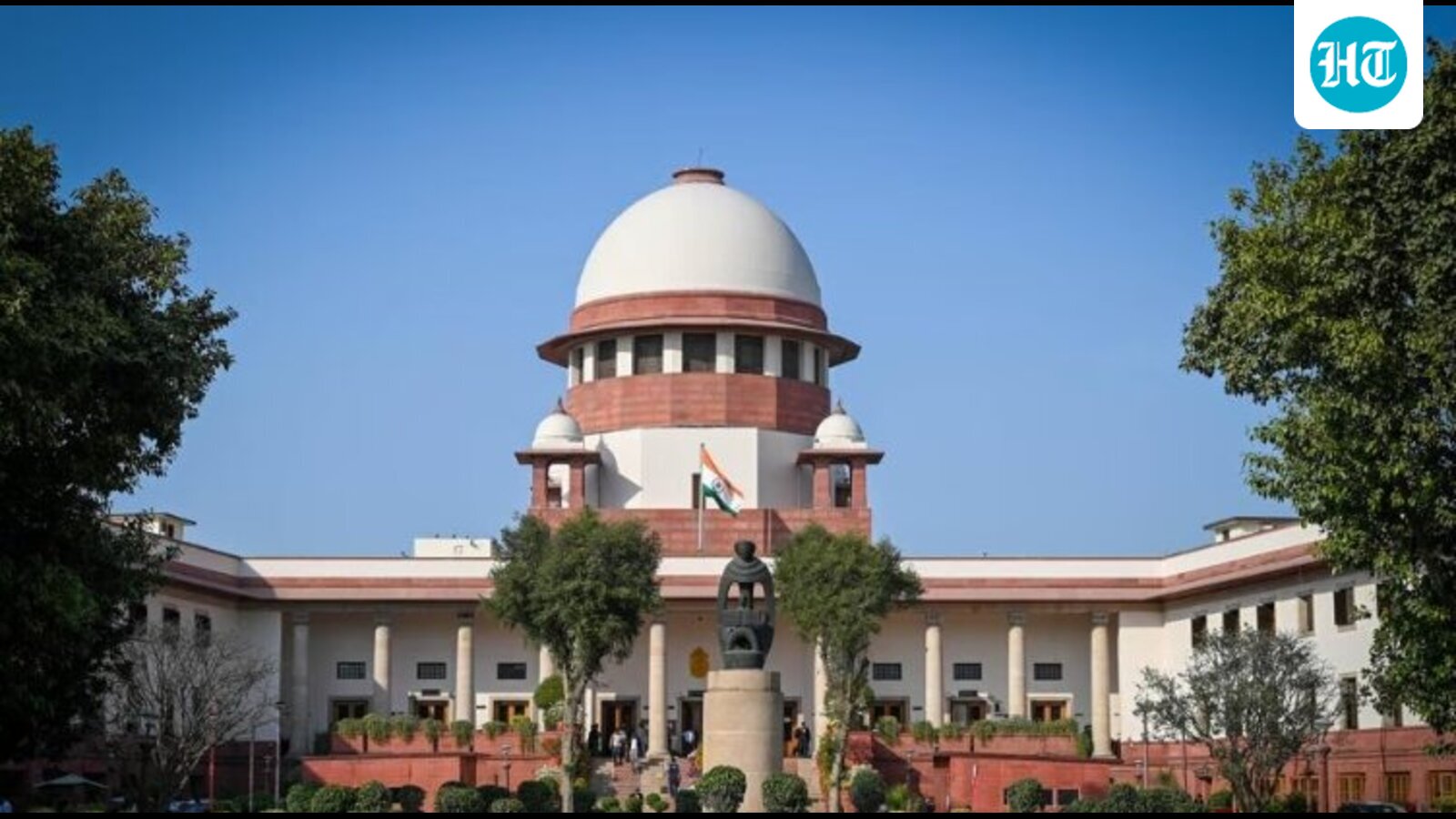
The Supreme Court asked for a standard operating procedure to verify caste claims during the Census 2027. CJI Surya Kant said, “If any person claims to be OBC or SC, we need to know what is the standard operating procedure to verify if it is fake or genuine.” The court awaits instructions.
A bench headed by Chief Justice of India (CJI) Surya Kant said, “If any person claims to be OBC or SC, we need to know what is the standard operating procedure (SOP) to verify if it is fake or genuine.”
Observing that this exercise will be essential to accept such claims, the court said, “Any false claim may lead to taking away legitimate rights of genuine people. After all, we know there is possibility of fake certificates being issued.”
The court was hearing a public interest litigation filed by a Delhi-based social activist Aakash Goel who said that since the Census 2027 allows cast details to be filled, the claim should be verified based on the documents produced.
Without issuing notice on the PIL, the bench, also comprising justices Joymalya Bagchi and V Mohana, told solicitor general Tushar Mehta to take instructions in this regard and file a note indicating the SOP in this regard.
The bench said, “We are not issuing notice but we need to know SOP on Census 2027. Is a person required to produce a certificate and if so, how will it be verified?” The matter will be heard after two weeks.
Senior advocate Mukta Gupta appearing for the petitioner said that the petition is only seeking safeguards governing the recording and verification of caste particulars in Census 2027. She said that in February 2026, the same petitioner had approached the top court when his petition was allowed to be submitted as a representation to the Centre.
Following this, a notification was issued on August 14 under Section 8(1) of the Census Act, 1948 which authorises collection of information concerning Scheduled Caste/Scheduled Tribe but the notification does not specify particulars of an existing government-issued caste certificate or a mechanism for checking its authenticity.
The petitioner even filed an application under the Right to Information Act (RTI) to know the verification mechanism, if any, but no details were forthcoming.
Gupta said, “The petitioner is saying that when you gather the details, there ought to be a mechanism by which you verify the material. A person’s recorded caste status is directly and statutorily linked to entitlement to reservation in education, public employment and legislative representation under Articles 15(4), 16(4), 330 and 332 of the Constitution.”
The petition said, “Inaccurate enumeration arising from the absence of adequate safeguards for recording and checking the authenticity of available government-issued caste certificates may distort the assessment of a community’s numerical strength and socio-economic circumstances, and consequently affect the identification of policy priorities, the targeting of welfare measures and the distribution of limited public resources.”