
The Supreme Court’s May 27, 2026, order dismissed claims of vote theft regarding the Election Commission’s Special Intensive Revision. The court said the exercise “does not supplant the Representation of the People Act and the Rules.” This verdict settled long-standing Opposition allegations against the Modi government and the Election Commission.
As the Opposition keeps alleging “theft of votes” and questioning EC and the Modi government, the Supreme Court’s May 2026 order on SIR gives a legal answer to the claim
For months, the Opposition has accused the Narendra Modi government and Bharatiya Janata Party (BJP) of “vote chori" with support of the Election Commission of India (ECI). Earlier, the charge hinged on the use of Electronic Voting Machines (EVMs), but when the accusations fell flat on their face, now the Special Intensive Revision (SIR) of electoral rolls has been made central to that charge. The Supreme Court’s judgment of May 27, 2026, in the case Association for Democratic Reforms & Ors. versus Election Commission of India & Ors is an important reference point in this debate.
The Challenge
Most of the petitions were filed in June last year after the EC decided to conduct SIR in Bihar. The petitioners included the Association for Democratic Reforms, activist Yogendra Yadav, and MPs Mahua Moitra (TMC), Manoj Jha (RJD), KC Venugopal (Congress) and Supriya Sule (NCP-SP).
A bench of Chief Justice Surya Kant and Justice Joymalya Bagchi framed four questions: Did the EC have the power to conduct SIR? Was it founded on a legitimate purpose and supported by proportionate measures? Did its procedure violate the Representation of the People Act, 1950, or the Registration of Electors Rules, 1960? And could the EC scrutinise the citizenship of those seeking inclusion in the rolls?
Claim 1: The EC had no power to do this
The court rejected this. CJI Surya Kant held that when the statute itself authorises a special revision “at any time, for reasons to be recorded and in such manner as the Election Commission may deem fit", the exercise cannot be invalidated merely because it departs from the modalities of a routine revision.
In the court’s words, the SIR “does not supplant the Representation of the People Act and the Rules. Rather, it breathes life into the constitutional mandate under Article 324 within the precise statutory contours provided by Section 21(3)". The commission, it said, had not acted in excess of its statutory powers. The court also found that the SIR does not detract from the constitutional imperative of free and fair elections. It is traceable to Section 21(3) read with Article 324, and advances the objective Part XV of the Constitution protects.
Claim 2: The exercise is arbitrary and disproportionate
The court applied a proportionality test and found the SIR met it. It held the exercise was founded on a legitimate purpose: restoring the accuracy, completeness and integrity of the electoral rolls.
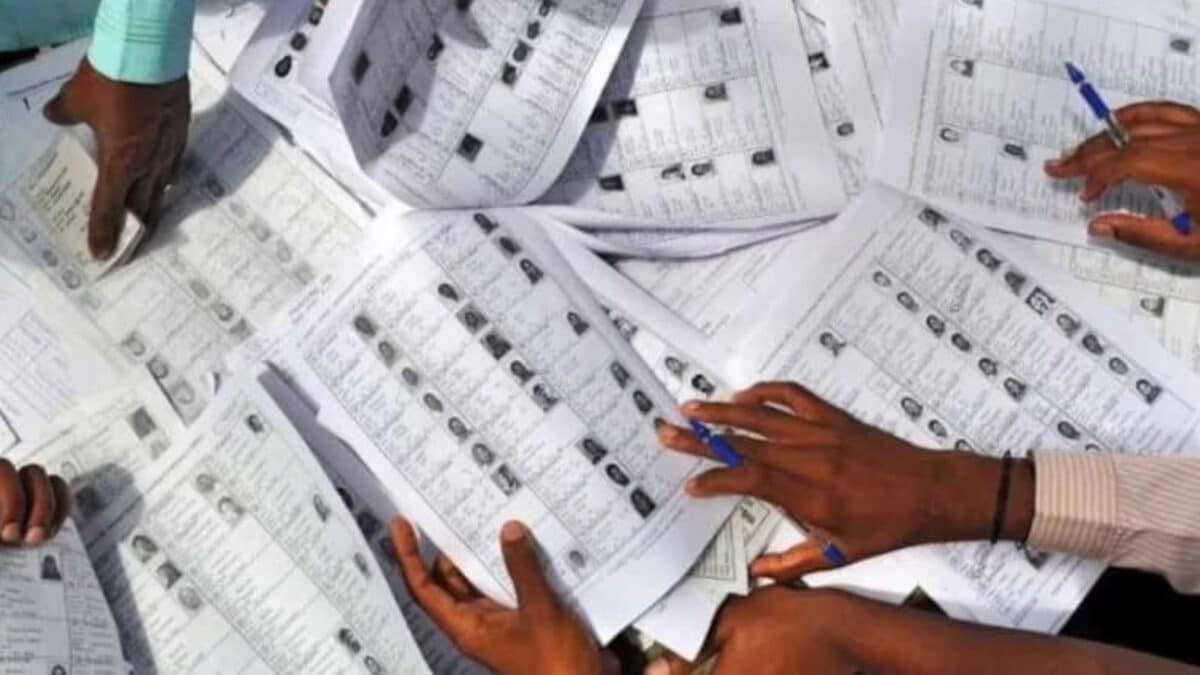
On rational nexus, the court said the measures “are not only logically connected to the stated objective but are, in fact, intrinsically designed to achieve it". These include structured house-to-house enumeration, submission of enumeration forms, and verification against prescribed documents. House-to-house verification addresses outdated or inaccurate entries by physically checking the presence and eligibility of electors. Standardised forms allow uniform scrutiny across constituencies.
The court also noted that the exercise sits within a wider framework of scrutiny by designated officers, notice in cases of doubt, and appellate remedies. It dismissed the argument that the exercise lacks an empirical foundation. Large-scale migration, non-reporting of deaths and duplication of entries, it observed, are “matters of common administrative experience" and are recognised within the statutory scheme itself.
The court therefore concluded that the SIR bears “a direct and proximate nexus" with the purity and accuracy of the electoral roll. It held the measures are “not manifestly excessive" and carry sufficient safeguards against arbitrary exclusion.
Claim 3: Asking for documents negates the presumption of citizenship
The court rejected the argument that the procedure negated the presumption of citizenship of people already on the rolls. Asking electors for supporting material, it held, does not amount to negation. It is “the procedural mechanism through which the commission seeks to reaffirm or, where necessary, correct existing entries". In the court’s words, “the presumption continues to operate, but it does not negate the possibility of verification".
Inclusion in the roll gives rise to a presumption of validity, but that presumption is rebuttable. It cannot be read as a blanket embargo on the commission’s power to undertake an SIR. The court also distinguished the Lal Babu Hussein case which it said is confined to adjudicatory proceedings and does not extend to a systemic, inquisitorial exercise.
On documentation, the court held that the regime is a considered exercise of administrative discretion, based on intelligible criteria with a direct nexus to the integrity of the roll. It could not be called arbitrary. This was apart from Aadhaar, which the court had directed to be included by its order of September 8, 2025.
Claim 4: Deletions violate due process
The court held that deletions under SIR are not contrary to Rule 21A of the 1960 Rules. The safeguards of notice and hearing, it said, are “preserved in substance", and the process remains within the statutory mandate.
Citizenship: A limited enquiry
The court held that in view of Section 16 of the Representation of the People Act, the commission is “undoubtedly empowered" to examine questions bearing on citizenship while preparing or revising rolls. It drew a careful line. The enquiry is limited and does not amount to a determination of citizenship in the strict sense. Its consequences are electoral alone: it affects entitlement to be on the roll, and with it the right to participate in the electoral process. It does not “divest the individual of claims to citizenship", nor does it foreclose adjudication by the competent authority under the Citizenship Act.
Safeguards The Court Built In
The verdict is not a blank cheque, and it does not claim to be. The court directed that where the commission is not satisfied that a person meets the statutory conditions, it must refer that person to the competent authority within the Union government. The commission’s view cannot assume finality on citizenship, and any deletion on this ground remains subject to that authority’s decision.
For those already deleted on the ground that they are not citizens, the commission must make the reference within four weeks. The competent authority is to decide, preferably before the next parliamentary, assembly or local body election, whichever comes first, after notice and a hearing. Anyone found to be a citizen is to be included in the roll.
What This Means For The “Vote Chori" Narrative
“Vote chori" is a charge of illegitimacy, that the exercise of SIR is a covert means of taking away votes. The Supreme Court examined the SIR for statutory authority, legitimate purpose, proportionality, procedural fairness and respect for citizenship. It found a lawful exercise, rooted in Article 324 and Section 21(3), with a rational link to a legitimate goal and with safeguards against arbitrary exclusion.
Opposition parties are free to criticise implementation, and the court has left judicial review open for anyone wrongly deleted. But the broader charge, that the SIR is itself an instrument of vote theft, has been weighed by the country’s highest court and not found to hold. A clean electoral roll is the foundation of free and fair elections. Removing the dead, the duplicated and the ineligible, and including every eligible elector, protects the vote and does not steal it.
(The writer is an author and columnist. His X handle is @ArunAnandLive. Views expressed are personal and solely those of the author and do not necessarily reflect News18’s views.)