
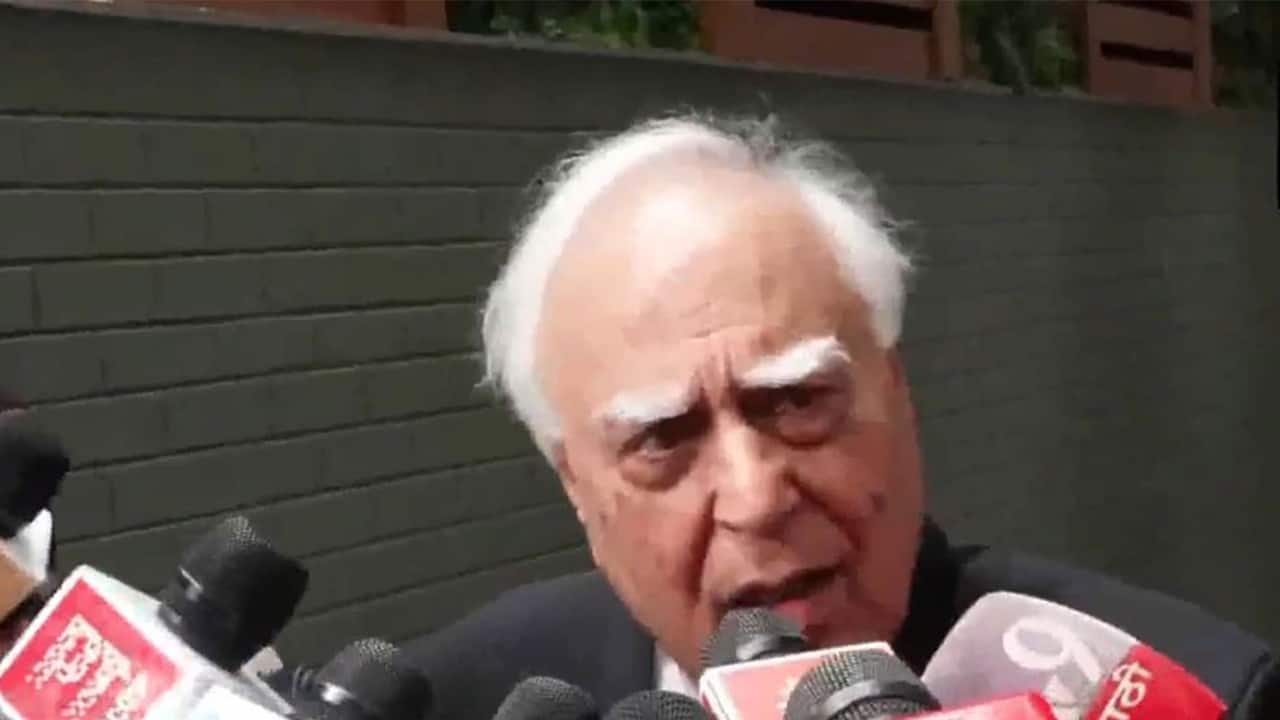
Senior advocate Kapil Sibal welcomed the Supreme Court’s interim directions on Delhi protest restrictions on Sunday. The court ordered authorities to ensure free movement and keep internet services running. “We are deeply grateful to the Supreme Court for having passed an order that restores faith among professionals in the system.”
Market Mastery
Webinar by Vishal Malkan
Find the weak links
in your portfolio by Vishal Malkan
Senior advocate Kapil Sibal on Sunday welcomed the Supreme Court's interim directions on restrictions imposed in Delhi amid protests, saying the order restores faith in the country's justice system.
“We are deeply grateful to the Supreme Court for having passed an order that restores faith among professionals in the system of justice in this country,” Sibal said.
The Supreme Court directed authorities to ensure the free movement of people in the national capital in accordance with the law, while ordering that internet services remain undisturbed. It also said there should be no detentions or traffic and metro restrictions except as permitted by law.
A bench comprising Justices Joymalya Bagchi and V Mohana issued the interim directions while hearing a batch of petitions challenging the Delhi Police and paramilitary forces' crackdown and detention of demonstrators during protests in the national capital on October 10. The court also heard a contempt plea alleging wilful disobedience of its earlier orders.
Emphasising the right to peaceful movement, the bench directed authorities to facilitate the smooth movement of people across Delhi, subject to traffic regulations.
"Smooth movement of people in the city shall be permitted in accordance with law. There shall be no illegal detention, particularly of peaceful, unarmed assemblages of people, beyond the area where Section 163 BNSS is in operation," the bench stated.
The court also directed authorities to remove restrictions imposed under Section 163 of the Bharatiya Nagarik Suraksha Sanhita (BNSS) in and around the Supreme Court to ensure people could access the premises without apprehension.
"We have been informed that a notice under Section 163 has been imposed in and around the Supreme Court. We direct the authorities to take down the restriction so that there is no apprehension of access to justice with regard to ingress and egress to the Supreme Court," the bench said.
The court further directed authorities to review the need for barricades, keeping law and order considerations in mind, and ensure that internet facilities remained unaffected.
The Supreme Court also agreed to seek a response to the contempt plea alleging wilful disobedience of its earlier orders directing authorities to shut various civic services, including trains, metro services and internet services.