
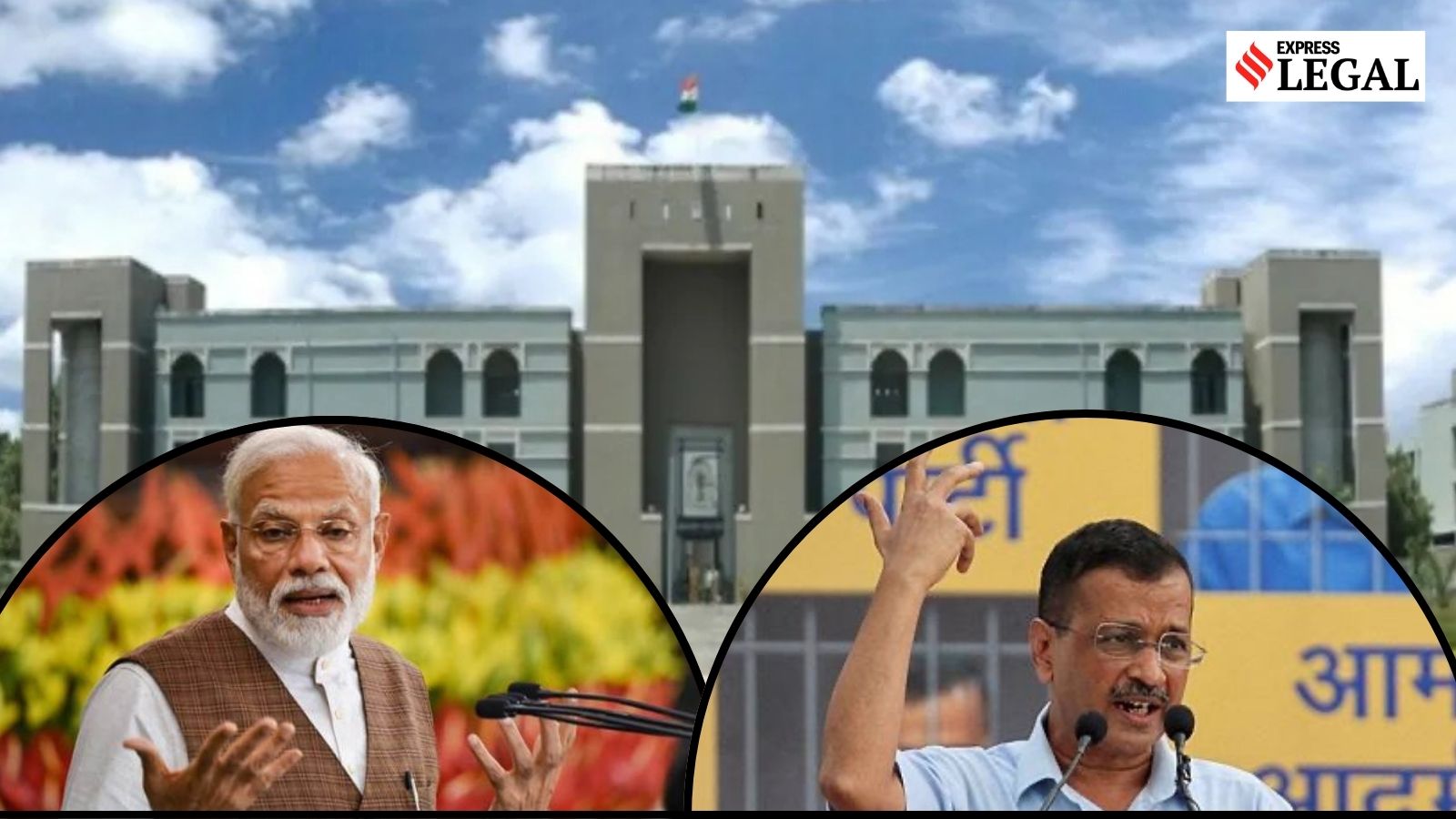
The Gujarat High Court rejected Arvind Kejriwal’s plea seeking Prime Minister Narendra Modi’s degree details on September 29. The court said that the degree is personal information and not subject to disclosure under the RTI Act. It added, "None of the information directed to be disclosed can be said to be necessary."
The Gujarat High Court has ruled that Prime Minister Narendra Modi's degree is personal information that cannot be disclosed under the Right to Information (RTI) Act and dismissed a plea filed by former Delhi chief minister Arvind Kejriwal seeking details of the PM's educational qualification.
The September 29 ruling passed by Chief Justice Sunita Agarwal and Justice D N Ray held that just because personal information about the educational degree sought was that of the Prime Minister of the country, it does not mean that the said information would automatically fall "within the purview of ambit, or the public interest or larger public interest", the exception to the exemptions under Section 8 (1)(e) and (j) of the Act".
Sections 8(1)(e) and 8(1)(j) of the Right to Information Act, 2005 provide legal exemptions that allow public authorities to refuse the disclosure of information involving fiduciary relationships and personal privacy.
"The fact that the information about the educational degree of the Prime Minister is already in the public domain, as noted by the CIC, has no relevance in so far as the consideration of obligations under the RTI Act," the order added.
The court said that the directions of the Information Commissioner requiring the PMO (Prime Minister's Office) to provide specific number and year of the degree and PG degree to the Delhi University and Gujarat University office so as to facilitate the University to search and provide any documents relating to it, and further directing the Public Information Officer of the Delhi University and also the Gujarat University (the original petitioner) to search for the information regarding the degrees and provide them to the appellant herein, were "directly hit by Section 8(1)(e) and (j) of the RTI Act, 2005".
"None of the information directed to be disclosed can be said to be necessary for disclosure in public interest or larger public interest," the court said.
The bench went on to add, "Even a public servant being a citizen of the country cannot be compelled to disclose his personal information to the public merely because he is holding a public office or is a public servant, unless and until there is an obligation upon him to disclose or the public authority with whom the information is available is obliged to disclose under the RTI Act, 2005."
On September 28, the Supreme Court Collegium recommended the names of Justices Agarwal, Delhi High Court Chief Justice Devendra Kumar Upadhyaya and Telangana High Court Chief Justice Aparesh Kumar Singh, for elevation to the apex court.