
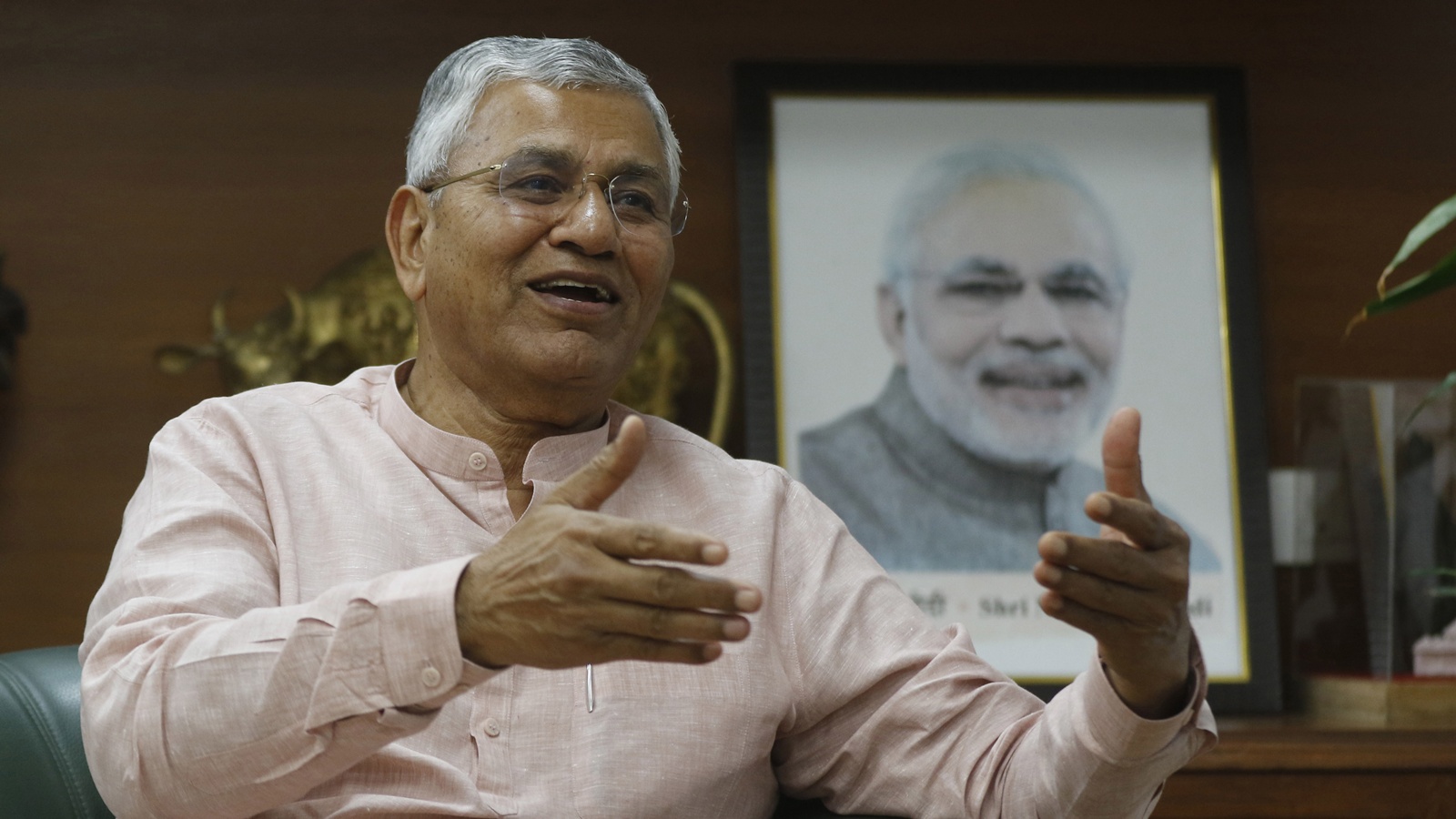
JPC Chairman P P Chaudhary said the Supreme Court gave its nod on September 22 for a meeting with the panel on October 6. However, the court cancelled it on October 1 after objections. Chaudhary said, "If it is not appropriate, then we should not pursue the matter."
THE CHAIRMAN of the Joint Committee of Parliament on One Nation, One Election Bills, P P Chaudhary, on Monday said the Supreme Court on September 22 wrote to the committee confirming a meeting with its members at 4.30 pm on October 6, before deciding to cancel it on October 1 following objections raised to the proposed meeting.
The committee was scheduled to visit the court for a "local study visit", including an "informal discussion" with Chief Justice of India Surya Kant and other judges of the Supreme Court "on the issue of simultaneous elections", as per the programme circulated to the panel members.
Controversy over the proposed meeting erupted last week when Rajya Sabha MP Kapil Sibal addressed a press conference on October 1, calling the meeting "unconstitutional" as the Bills being deliberated by the committee could someday come before the court for adjudication.
Read | One Nation, One Election: Supreme Court cancels meeting with parliamentary panel
The Supreme Court wrote to the committee on October 1 afternoon, cancelling the meeting, saying the matter was discussed among senior judges and it was felt that it would not be desirable to have the discussion as the Bills may become a subject of judicial review.
Speaking to reporters after a meeting of the Parliamentary committee on Monday, Chaudhary said the meeting was fixed by the Supreme Court after it was suggested by DMK MP and lawyer P Wilson. He said after the Supreme Court wrote to the committee on September 22, fixing the time of the meeting, all members were informed. Law Minister Arjun Ram Meghwal submitted "material" to the court; the lists of members and officers who would take part in the meeting were also shared.
"After eight or nine days, when some issues were raised publicly, the Supreme Court felt... it would not be proper to have the meeting, so we also informed the members. If it is not appropriate, then we should not pursue the matter," Chaudhary said. He added that committees of Parliament had interacted with the Supreme Court in the past.
Earlier in the day, the matter is learnt to have come up in the meeting of the committee. Wilson is learnt to have read out a letter explaining the matter. The DMK MP is learnt to have said that he had suggested the meeting with the court in the interest of broad-based consultation. He is learnt to have noted that the meeting could not take place due to political objections.
Wilson is learnt to have said that seeking the judges' informal views cannot amount to seeking adjudication from the court. He is also learnt to have cited past examples, including when the draft Constitution was circulated to seek views from judges in 1948, as well as some recent examples, including meetings of Parliamentary committees with judges regarding the Mediation Bill, virtual courts and National Legal Services Authority.
Congress MP Manish Tewari is learnt to have said the decision to consult the Supreme Court was a grave error, given that the Bills could end up before the court. After Wilson made his point that such meetings had been held in the past, Tewari is learnt to have asked why then was the meeting cancelled.
The committee is also learnt to have held interactions with Chief Economic Advisor V Anantha Nageswaran, Chairman, Economic Advisory Council to Prime Minister, S Mahendra Dev and Vivekananda International Foundation chairman S Gurumurthy. They are learnt to have supported the idea of simultaneous elections. The CEA, it is learnt, told the committee that frequent elections bring the focus on revenue expenditure instead of capital expenditure, and can lead to policy paralysis. Gurumurthy is learnt to have flagged that frequent elections lead to the creation of paid party workers and use of money power in elections, as opposed to voluntary cadres.
The committee is examining the Constitution (129th Amendment) Bill, 2024, and the Union Territories Laws (Amendment) Bill, 2024, that were introduced in December 2024. The Bills provide for a one-time curtailment of terms of state Assemblies to align with that of the Lok Sabha to pave the way for a simultaneous election to the Lok Sabha and all Assemblies.