
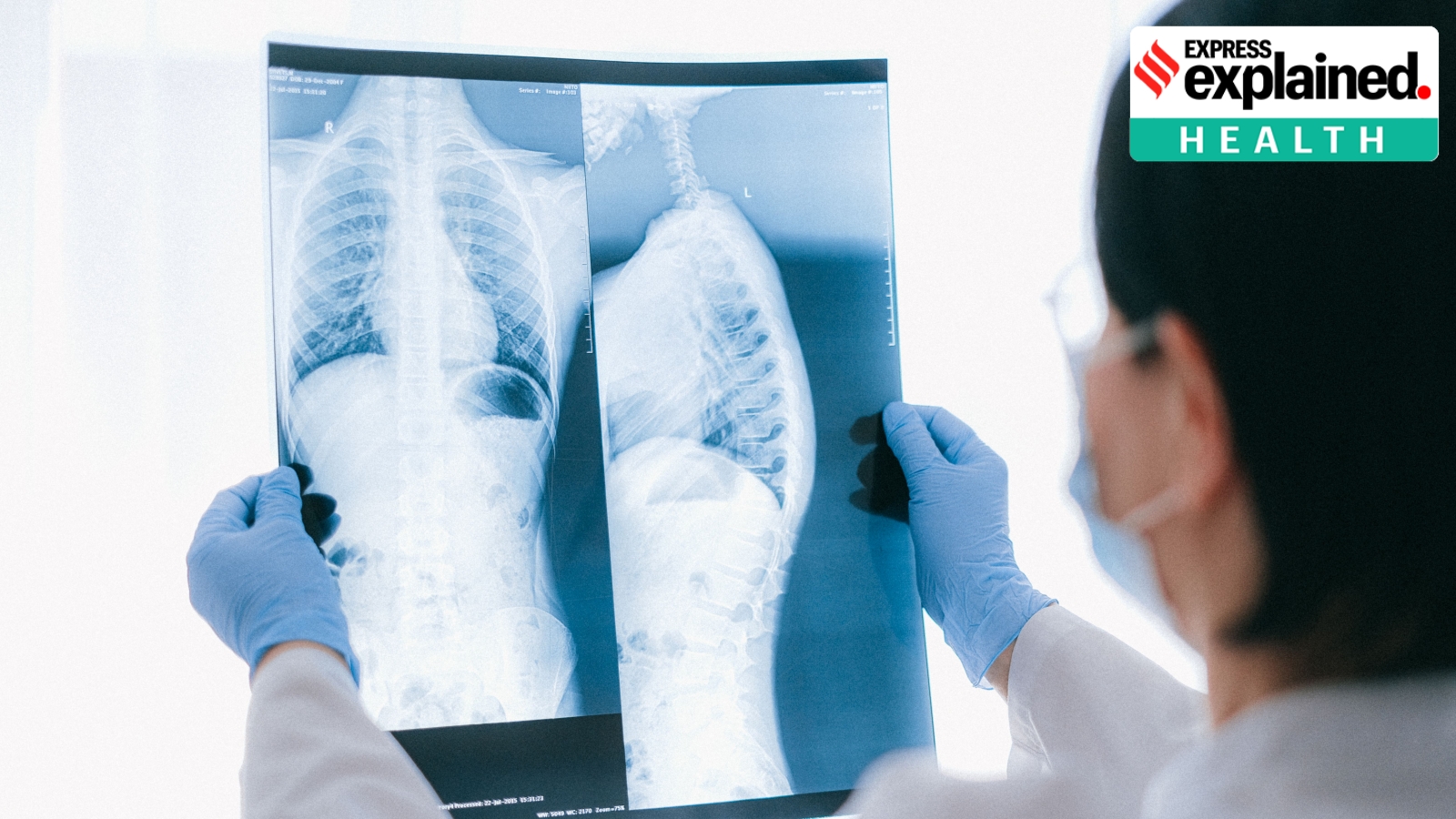
Lung cancer caused 98,687 deaths in India in 2024, rising from 75,031 in 2022. Most patients reach hospitals in late stages, where survival rates drop. Dr. Abhishek Shankar said, "We have seen that 93% of all the lung cancer cases are diagnosed in advanced stages." Government screening currently ignores this disease.
Lung cancer is the leading cause of cancer deaths in India. In 2024, it accounted for 10.9% of all cancer deaths, or 98,687 deaths, up from 75,031 in 2022, when it ranked fourth.
While lung cancer is one of the more difficult-to-treat types of the disease, another reason why it kills so many in India is that most patients reach hospitals in the late stages of the disease; by that time, the survival rate drops significantly.
Yet, the government's screening programme at primary health centres does not look at this type of cancer. It screens only for the other common types -- breast, oral and cervical. Why is that? What are the challenges with lung cancer screening in India? We explain.
Why is lung cancer screening necessary?
Between 2022 and 2024, new lung cancer cases increased from 81,748, or 5.8% of all cancer cases, to 1.12 lakh, or 7.2%, taking it from fourth to third place in terms of incidence. Mortality, meanwhile, increased from 8.2% of all cancer deaths to 10.9%, shows the latest data from Global Cancer Observatory, a cancer statistics platform maintained by the World Health Organisation's International Agency for Research on Cancer (IARC).
This means there is a need to detect cases and provide treatment early. And this can only happen if there is a screening programme for lung cancer.
But lung cancer is a disease that is not usually screened for -- and has no easy way to screen for -- it is usually diagnosed when it has already spread. "We have seen that 93% of all the lung cancer cases are diagnosed in advanced stages," said Dr Abhishek Shankar, who was one of the authors of a "perspective" on lung cancer screening published by the IARC in September.
When diagnosed in late stages, the likelihood of surviving five years with lung cancer is just 7% to 18%. This can increase to 80% if the disease is detected in the first stage. "LDCT (low-dose computed tomography) based lung cancer screening can reduce the mortality from lung cancer by treating the disease at an early stage. While lung cancer screening is not a part of the government's programme, there should be efforts at institutional level to provide lung cancer screening," said Shankar.
Why is India not increasing lung cancer screening?
There are several challenges that come with screening for lung cancer, especially in a resource-constrained setting such as India.
Cost of screening: The screening tests for breast, oral and cervical cancer are all inexpensive and low tech. Primary health centres perform clinical breast exams for breast cancer, a visual examination of the oral cavity for oral cancer, and usually a visual inspection under acetic acid for cervical cancer (the cancer cells turn white with acetic acid). If health workers detect something suspicious, they refer patients to higher centres in these cases.
The LDCT test needed for lung cancer screening, however, is not an inexpensive one -- and is likely to add to the government's budget if introduced as a screening tool.
But an Indian Council of Medical Research study comparing the outcomes of LDCT, chest X-rays and no screening in a hypothetical high-risk population found that although LDCT incurred the highest cost, it also provided the highest net monetary benefit. The study concluded: "LDCT is a cost-effective strategy for lung cancer screening in India, offering significant health benefits despite higher costs. Policymakers should consider integrating LDCT into national cancer screening programs, with further research needed to optimise screening intervals and target populations."
Availability of LDCT: The other challenge is availability of the CT scan machines. The test cannot be performed at primary health centres and would require patients to travel to a higher centre for a screening test without experiencing any symptom. Importantly, even at centres that do currently have CT machines, LDCT is not usually offered as a screening test. It is usually offered when the doctor suspects something.
Population at risk: Unlike the West, a significant proportion of lung cancer in India occurs among non-smokers. The current global screening guidelines recommend that LDCT be performed only for people between the ages of 50 and 80 who have been smoking a pack of cigarettes a day for at least 20 years. These guidelines would leave a large proportion of at-risk people in India out of the net. Importantly, India also has a large population of beedi-smokers and there is no equivalent screening criteria for them.
High incidence of TB: A concern that is usually raised is whether the high prevalence of TB in India could lead to more false positives and excessive testing. But a pilot study from Mumbai published in 2021 said: "...even in a tuberculosis endemic country, LDCT picks up malignant lung nodules early and saves lives." Another 2025 study by AIIMS doctors also found that prevalence of TB posed no problem in lung cancer screening. It concluded: "Screening for lung cancer using LDCT is feasible in TB-endemic countries like India. The proportion of subjects with positive screen, lung cancer detection rate, and proportion of false positives are comparable to reported literature from developed countries."
Who should be screened in India?
As explained above, the global screening criteria simply would not work in India.
An expert opinion statement written by Indian researchers in 2024 says that people with a history of bidi smoking, exposure to second-hand smoke, biomass fuel, fumes and domestic smoke should also be added to the high-risk category. And ambient air pollution may be an emerging threat.
"Screening cannot rely only on smoking history when millions are exposed to air pollution and occupational risks. Through the Indian Lung Screening Trial (ILST), we are generating Indian evidence on low-dose CT screening, while AIRCARE is studying the contribution of air pollution and other environmental exposures to lung-cancer risk," said Dr Shankar.
Are measures to curb smoking still important?
While a significant proportion of lung cancers in India may not be linked to smoking, smoking cessation is still a very effective way to reduce risk of lung cancer. This is the reason smoking cessation should be integrated as part of any lung cancer screening or treatment programme. "In lung cancer patients, smoking cessation can significantly improve treatment outcomes," said Dr Shankar.
He added that changing the way we warn people about the risks associated with smoking may also help in ensuring more people receive timely care. "Instead of simply saying that smoking kills, if the cigarette packets, for example, say that if you are over the age of 60 years and have been smoking for 20, you should get screened for cancer. This way, the people have actionable knowledge about what they need to do," says Shankar.
A 2025 opinion in the journal Frontiers in Public Health by AIIMS doctors says: "There is evidence in literature to suggest that gain-framed messaging possesses an advantage over loss-framed warnings but the research on such aspects has mainly focused on loss-framed warnings in the case of cigarette smoking."