
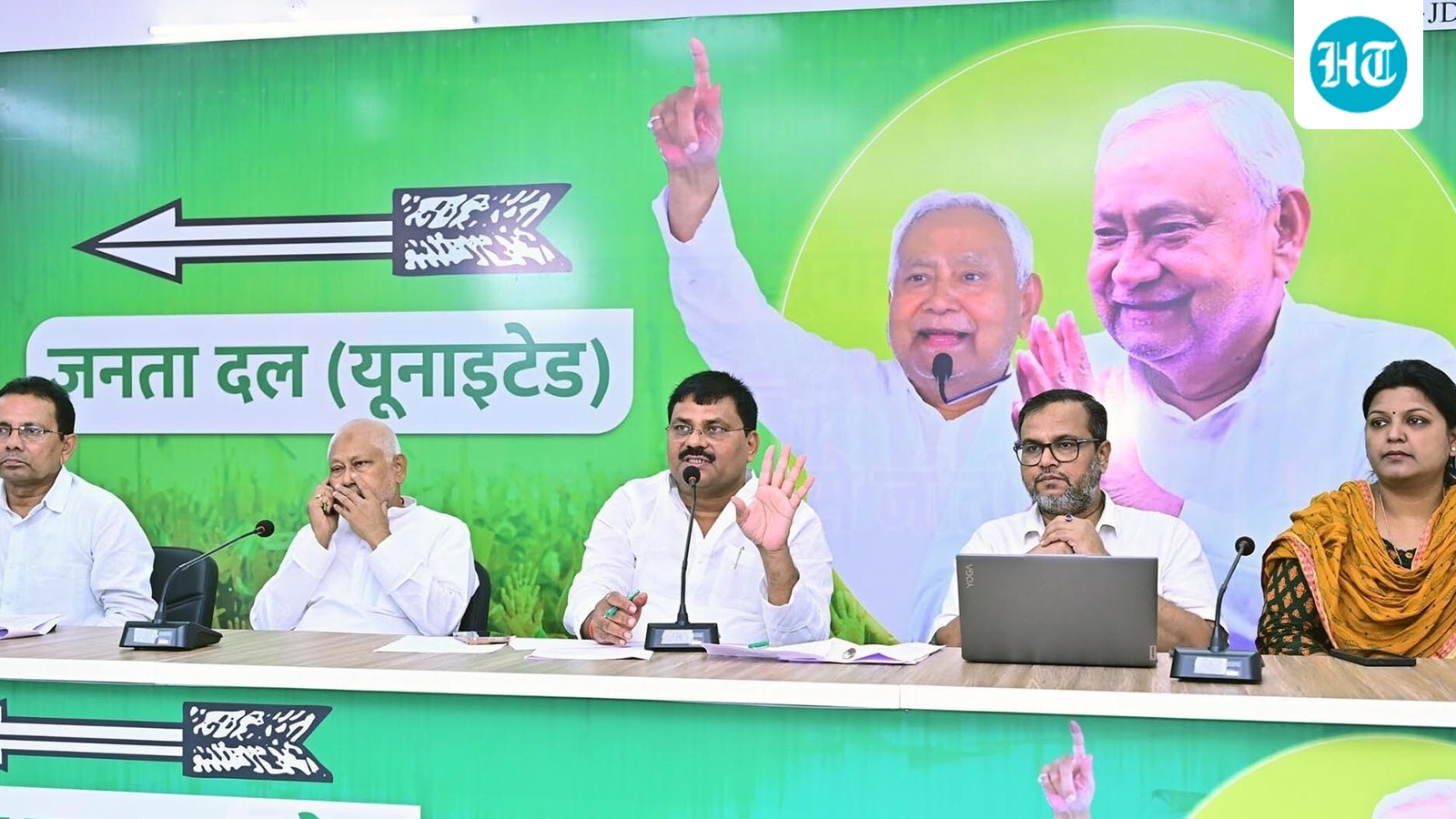
Bihar will vote for eight Legislative Council seats on October 23, but infighting strains both the NDA and INDIA bloc. The RJD and Congress candidates now face each other in five constituencies. Meanwhile, the NDA faces complications in Saran Teachers' seat as allies struggle to agree on a single candidate.
NEW DELHI: With Bihar set to vote for eight Legislative Council seats later this month, differences within the state's two principal political alliances have spilled into the open, with the ruling NDA and opposition INDIA bloc both facing contests involving their own constituents and leaders.
The elections, scheduled for October 23, are being held for four graduates' and four teachers' constituencies. Candidates can file nominations until October 6, while counting is scheduled for October 27.
The INDIA bloc faces the wider overlap, with the Rashtriya Janata Dal (RJD) and Congress fielding candidates against each other across several constituencies despite remaining alliance partners.
The RJD initially announced six candidates on September 11. It fielded Sanjeev Kumar Singh from Patna Teachers', Dilip Kumar from Patna Graduates', Nitesh Kumar from Kosi Graduates', Anil Kumar Jha from Darbhanga Graduates', Jairam Yadav from Saran Teachers' and Rashmi Vinayak Gautam from Tirhut Graduates'. At that stage, the party did not announce nominees for the Darbhanga Teachers' and Tirhut Teachers'.
Congress later unveiled five candidates, including former Bihar Congress president and sitting MLC Madan Mohan Jha from Darbhanga Teachers'. Its decision to field candidates from Patna, Kosi and Darbhanga graduates' constituencies put the party directly against RJD nominees in these seats.
The differences became more pronounced on Saturday when the RJD announced Kumar Rai as its candidate from Darbhanga Teachers', pitting him against Jha. The RJD had earlier stayed out of the constituency, raising expectations that the seat could be left for Congress.
With Rai's entry, RJD and Congress candidates are now set to face each other in five constituencies, underlining the absence of a comprehensive seat-sharing arrangement for the Council polls.
RJD leaders have sought to play down the significance of the overlapping candidatures, arguing that allies contesting separately in Legislative Council elections is not unprecedented. The growing number of direct contests, however, has brought differences over individual constituencies to the fore.
The NDA is facing its own share of complications.
In Saran Teachers', the JD(U) has fielded sitting MLC Anand Pushkar, but another NDA constituent, Upendra Kushwaha-led Rashtriya Lok Morcha (RLM), has laid claim to the constituency.
RLM state general secretary and spokesperson Ram Pukar Sinha has announced his decision to contest from the seat and is expected to file his nomination on Monday. Sinha has said he has the backing of Kushwaha and RLM state president Alok Singh.
His candidature would mean two NDA constituents effectively finding themselves on opposite sides of the electoral contest in Saran Teachers'. Jan Suraaj has further widened the field by nominating Afaque Ahmad from the constituency.
The NDA is also grappling with an unusual situation in Patna Graduates', where Mokama MLA Anant Kumar Singh has come out in support of Jan Suraaj nominee Anuj Singh instead of JD(U)'s official candidate and sitting MLC Neeraj Kumar.
Anant Singh and Neeraj Kumar have been political adversaries for years, particularly in the Mokama region. The former's decision to back Anuj Singh has turned what might otherwise have been a routine Council contest into a test for the JD(U)'s ability to manage differences within its ranks.
JD(U) leaders have been attempting to contain the disagreement and prevent it from developing into a wider organisational confrontation.
Council elections from graduates' and teachers' constituencies differ significantly from Assembly contests. Voting rights are restricted to eligible and registered graduates or teachers, and the constituencies often stretch across several districts. Personal networks, professional associations and years of constituency-level mobilisation can consequently matter as much as conventional party structures.
The final contours of the contest could still change. Nominations close on October 6, followed by scrutiny, while candidates have until October 9 to withdraw.
What was initially expected to be another NDA-versus-INDIA bloc contest has, therefore, acquired several battles within the larger battle. For the RJD and Congress, the challenge lies in managing five direct contests without allowing them to spill over into their broader relationship. For the NDA, the immediate task is to deal with the RLM's challenge in Saran and the Anant Singh-Neeraj Kumar confrontation in Patna.
The October 23 polls will thus test not only the electoral strength of the candidates but also the ability of Bihar's two principal alliances to manage competing ambitions within their own camps.