
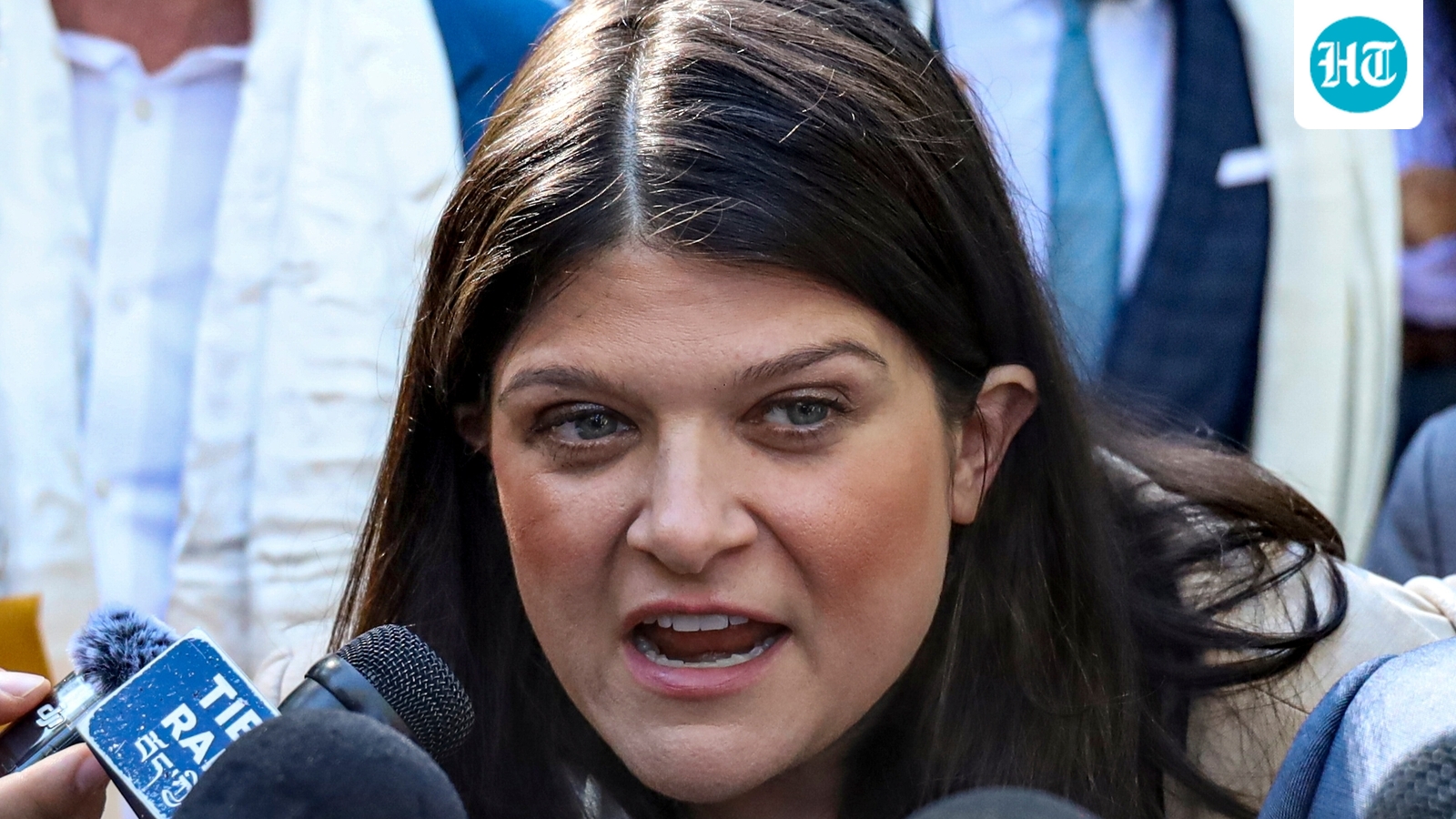
US Congresswoman Haley Stevens pitched closer ties with India after a recent bipartisan visit. She said, "India is not funding our detractors, for the most part." The remarks come as a new law signed last month allows President Trump to impose tariffs on countries that buy Russian oil and gas.
US Congresswoman Haley Stevens has highlighted the advantages of working with India, contrasting New Delhi's position with China's ties to regimes opposed to Washington, days after returning from a bipartisan congressional visit to India.
"India is not funding our detractors, for the most part. They really are not. But you have China in cahoots with these rogue regimes around the world," Stevens said, making a case for closer cooperation with India.
She went on to say that the US government "got to be standing alongside democratic, free market trade partners like the country of India."
"They want to work with us, which I find exciting!" Stevens added.
The Congresswoman' remarks come amid renewed uncertainty over US trade ties with India and China, as President Donald Trump's administration prepares to use new tariff powers targeting countries that buy Russian oil.
Stevens recently returned from a bipartisan congressional delegation's visit to India, where lawmakers met Indian foreign secretary Vikram Misri to discuss bilateral ties and areas of cooperation.
"Honored to join a bipartisan Congressional delegation in meeting with Indian foreign secretary Misri to discuss the partnership between our two countries, the future of US-India relations, and the importance of Michigan manufacturing on the global stage," she had said in a post on X.
Her comments underline the case for closer engagement with India.
The remarks come as a new US law has placed India and China among the countries potentially facing steep tariffs over their purchases of Russian oil.
Trump signed the Lindsey O Graham Sanctioning Russia and Iran Act of 2026 into law last month. It authorises him to impose tariffs of up to 100% on goods from the five largest buyers of Russian oil and gas during the 12 months before the law was signed.
India, China, Azerbaijan, Slovakia and Hungary were expected to be among the countries affected by the legislation.
The law gives Trump a new instrument to penalise buyers of Russian energy. His earlier sweeping tariffs had relied on executive powers under the International Emergency Economic Powers Act, which the Supreme Court struck down in February, and Section 122 of the Trade Act, which carries a 150-day limit.
The new legislation provides a separate, congressionally authorised basis for imposing tariffs on Russian energy buyers. It requires the president to impose tariffs on such countries within 30 days of the law's signing, setting October 18 as the deadline.
However, Trump has yet to announce a new tariff rate under these powers.
India had warned earlier that it would take steps to safeguard its economic interests. The ministry of external affairs said the implications of the legislation, "for not just the bilateral relationship but also the international energy market", had been "very clearly articulated" to US interlocutors at high levels in recent months.
Minister of state for external affairs Kirti Vardhan Singh reiterated New Delhi's position on its foreign policy and trade decisions.
"We have our own independent foreign policy. We will not follow any country," he told news agency ANI, adding that the government would "take every strong step for the strength and stability of our country, our population of 140 crores."
Meanwhile, Trump announced an energy supply agreement with Russia on Friday that could see Moscow supply nearly five million tonnes of diesel fuel to global energy markets.
The Republican said the agreement would lead to a speedy reduction in diesel prices for American and global consumers.