
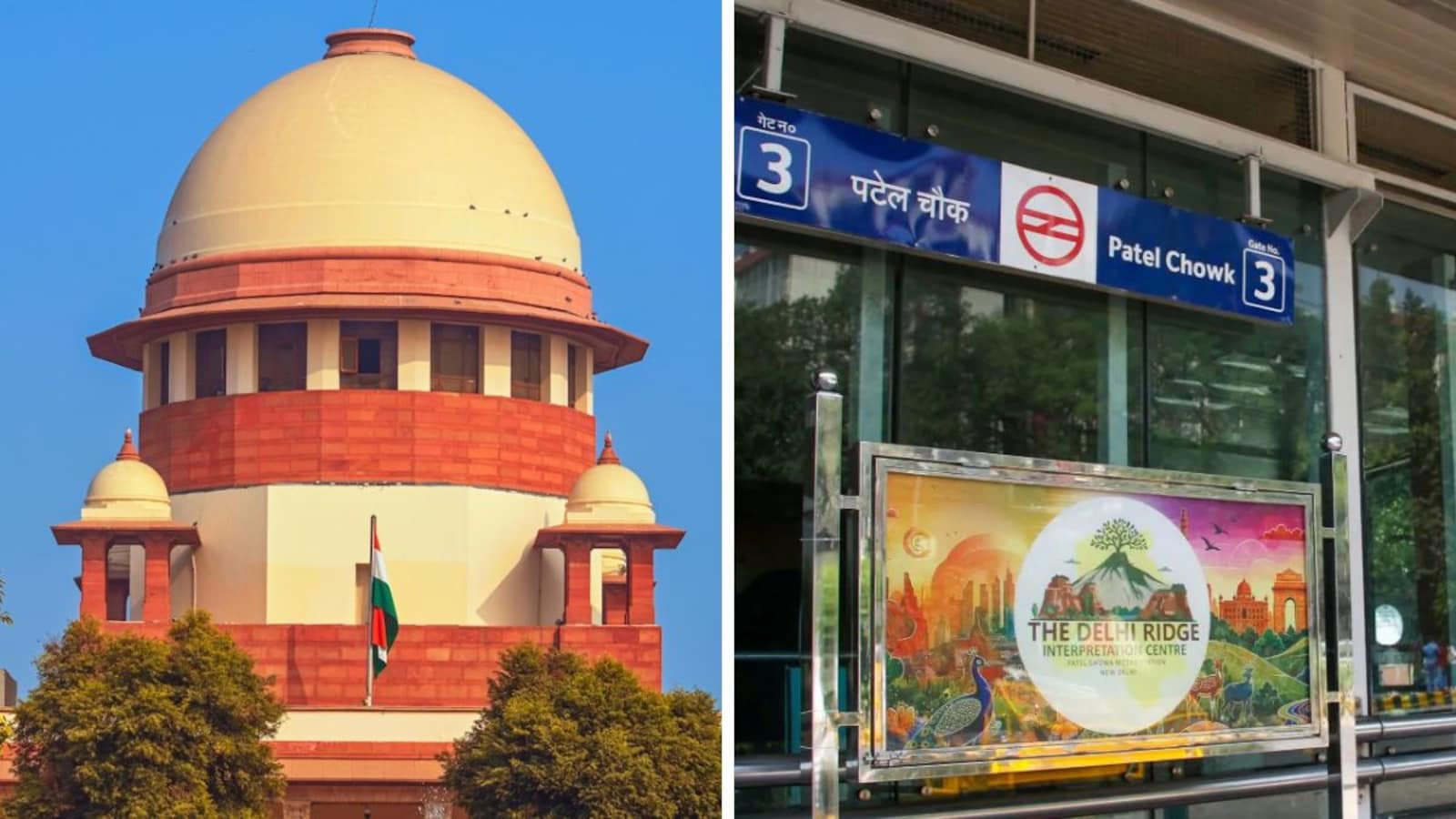
The Supreme Court heard a plea on Friday regarding strict curbs in the Capital ahead of Saturday’s Cockroach Janta Party protest. Fifty-seven Metro stations got shut and many trains were cancelled. Justice Joymalya Bagchi said, "Let us look at this from the prism of law," while seeking a fair balance.
New Delhi:
The issue of unprecedented curbs in the Capital ahead of the Cockroach Janta Party (CJP) protest on Saturday landed in the Supreme Court on Friday.
Senior advocate and MP Kapil Sibal raised the closure of Metro stations and cancellation of trains before the bench led by Chief Justice of India Surya Kant and urged the court to intervene.
"All trains are cancelled, Metro stations are closed. You cannot move anywhere. What is happening to my country? This is a peaceful protest," Sibal said in court.
Fifty-seven Metro stations have been shut in the Capital and several trains coming to Delhi have been cancelled in the wake of the CJP protest on Saturday. The Delhi Police have also denied permission for the protest.
Senior counsel Gopal Sankaranarayanan, also speaking against the curbs, said: "You cannot shut down an entire city because you are incapable."
Read | Delhi Braces For CJP Protest: Metro Curbs, Trains Cancelled, 23,000 Cops
The petitioners submitted a 16-page document in the court which included Delhi Police advisories on the protest, notice on imposing Section 163 of BNSS and media reports on cancellation of trains and restrictions on app-based taxis. It also included reports on Delhi Police reaching out to religious places and RWAs, and conducting checks at hotels and hostels ahead of the CJP protest.
While upholding the right to protest and assemble, Justice Joymalya Bagchi said that protests should be within the ambit of the law.
"Let us look at this from the prism of law. No doubt there is a right to association, but it has to be exercised according to law," the court noted.
The counsels informed the court that the protest organisers (CJP) had sought permission from the police, but it was denied.
Justice Bagchi stated that the court must first understand the ground reality regarding the protest. "If the protest is held with permission, it is a legal protest. Even if it does not strictly adhere to the law, we never say that people do not have the right to protest; however, they do so at their own risk."
Referring to the curbs, the court stressed the need for balance. "If we injunct this, we will also injunct the association, then will that be fair? No, because there is a right [to protest]!," Justice Bagchi said.
"How do we balance if the scales are not here before us? Give us something," the court asked the petitioners.
The court sought to know who the protest organiser is and how many people are expected.
"To strike a balance, we need two things: citizens before us who want their basic rights, and the group that wants to protest. We do not have the latter before us," the court pointed out.
The lawyers said that they will get back to the court with more details.