
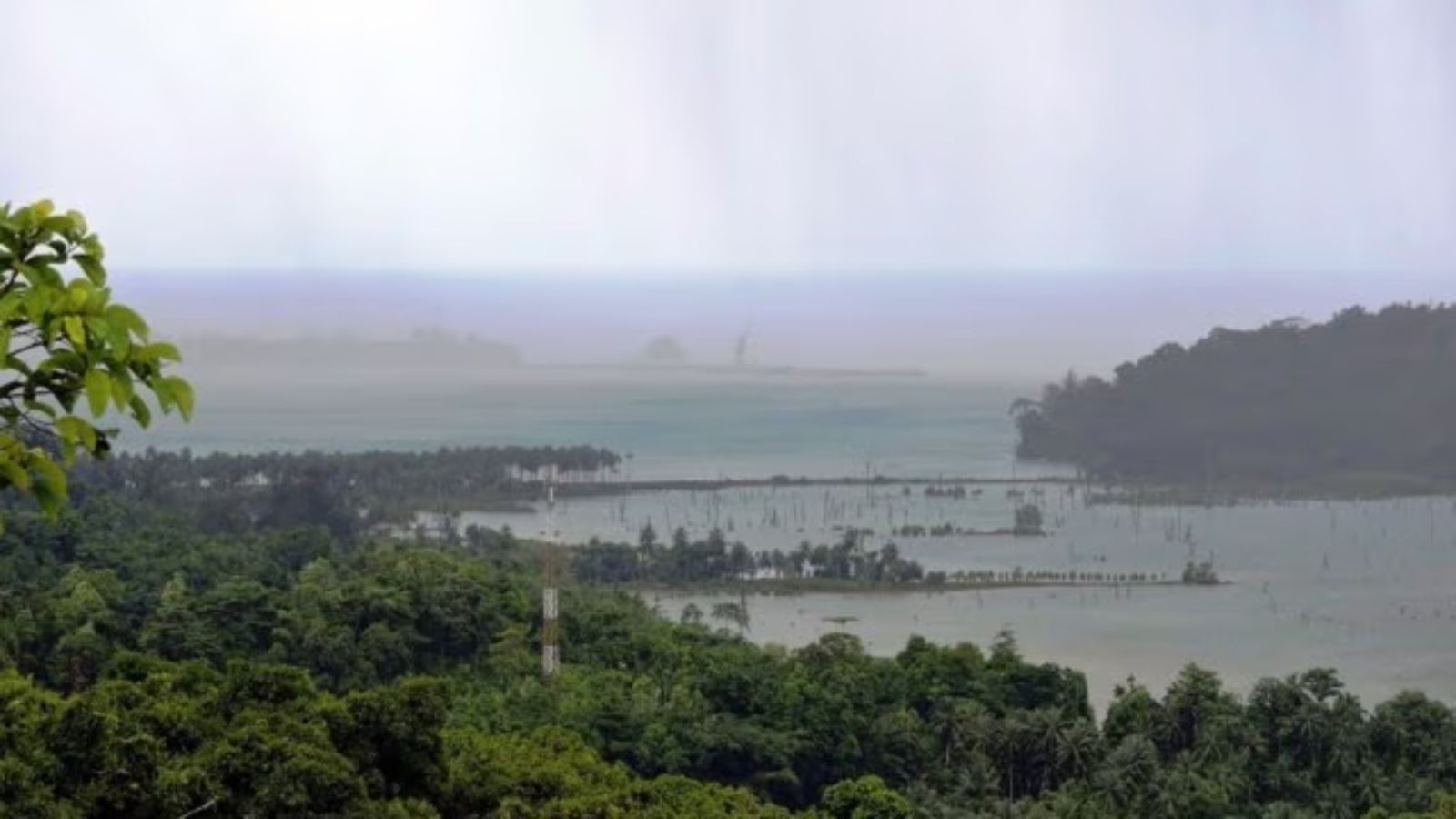
The Supreme Court on Monday dismissed the Centre’s objection regarding the maintainability of a PIL against the Great Nicobar project. The bench asked the Calcutta High Court to decide the matter on November 25-26. The Centre argued the petition should not be heard, but the court kept the door open.
The Supreme Court on Monday declined to entertain the Centre's objections regarding the maintainability of a PIL filed before the Calcutta High Court against the clearance for the ambitious Great Nicobar project.
A Chief Justice of India Surya Kant-led three-judge bench, also comprising Justices Joymalya Bagchi and V Mohana, asked the HC to make an endeavour to decide the matter on the dates (November 25-26) fixed.
The National Green Tribunal (NGT) had in February this year cleared the way for the government's Rs 81,000-crore Great Nicobar mega infrastructure project, noting its "strategic importance" and observing that there were "adequate safeguards" in the project's environmental clearance.
This was challenged before the HC on the ground that it violates the Scheduled Tribes and Other Traditional Forest Dwellers Act, 2006.
Before the HC, the Centre raised objections to its maintainability, but they were rejected. Following this, the Centre approached the Supreme Court.
Appearing for the Centre, Attorney General R Venkataramani told the SC, "...this is such an important matter on which somebody comes and files a petition years later, and then three different petitions try to challenge it in three different ways. Then they say the tribals are affected, and they are not before the court. Now they have got impleaded. Therefore, this petition should not be there before the High Court at all. This question of maintainability goes to the root of the matter."
Explained | As NGT clears Great Nicobar project, a look at its strategic importance and ecological fallout
He urged the bench to allow him to make submissions on the point of maintainability. "Do not close the door on maintainability because something very important turns on that. I just want to keep the door open," he said.
Appearing for respondent (original petitioner before HC) Meena Gupta, Senior Advocate S Muralidhar said the Centre's counsel had himself urged the HC to list it for final hearing. He contended that the PIL was maintainable as it involved the issue of Particularly Vulnerable Tribal Groups.
Justice Bagchi said the "preservation of culture is a constitutionally protected fundamental right". He added that the Great Andamanese had by now become integrated with the mainstream population, adding, "Do they become integrated completely with the mainstream, or do we keep them with their unique identity and the identity of their culture?"
The court ultimately left it to the HC, noting that other similar matters were also pending there.