
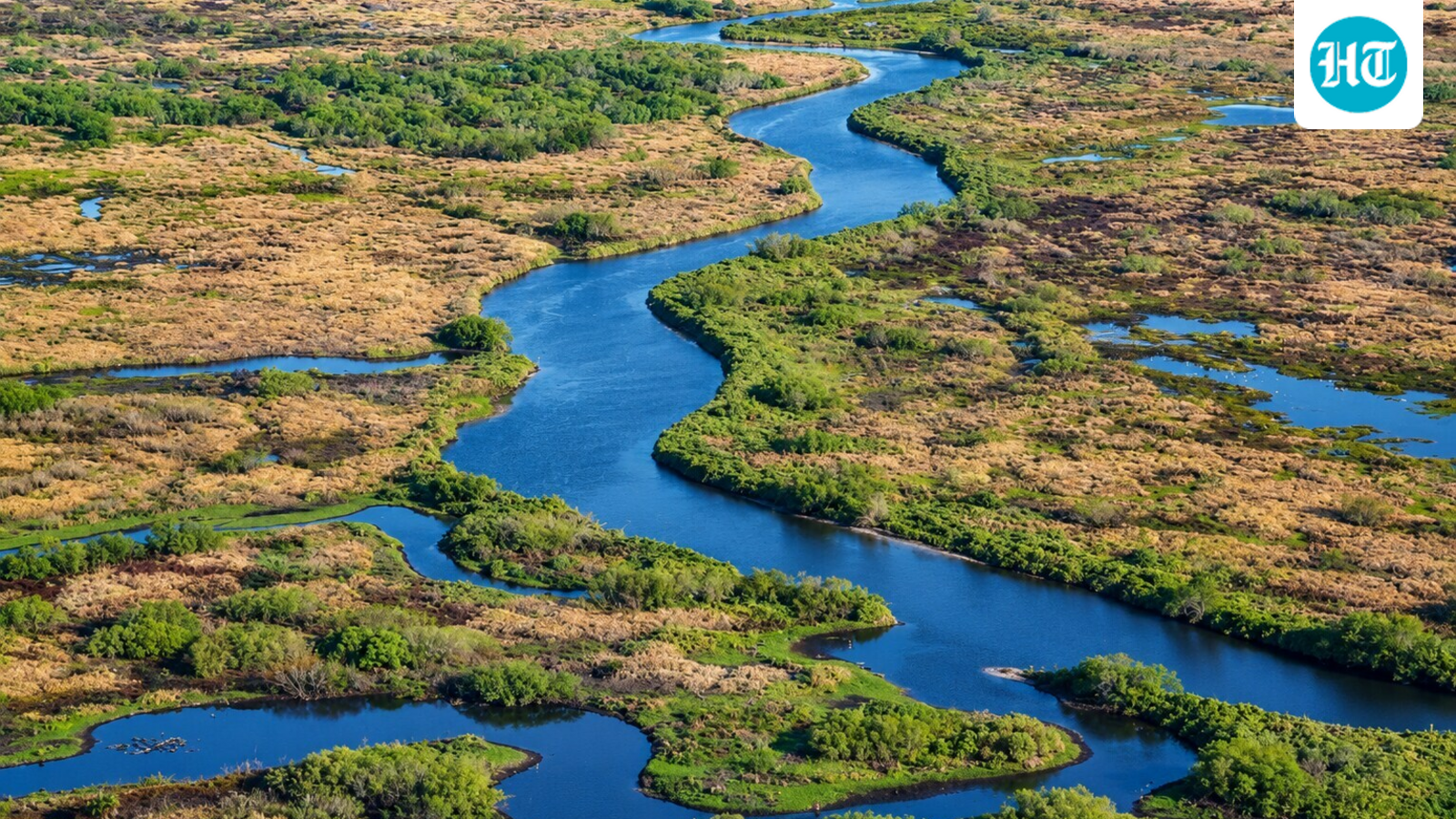
In 1999, Florida started restoring the Kissimmee River to reconnect 44 miles of channel and restore 20,000 acres of wetlands. Crews backfilled 22 miles of canal to help the floodplain. While the project showed success, many invasive plants grew. Now, scientists keep watching the river to see how it responds.
How do you bury a canal?
The concept is simple. Crews fill sections of the canal with dirt. This pushes water back into the old meanders of the river, and the water spreads out over the floodplain again. The job is a lot harder than it sounds. Work started in 1999 with the first stretch of backfill and has continued in stages for more than two decades. In July 2021, the U.S. Army Corps of Engineers and the South Florida Water Management District marked the end of construction with a ribbon-cutting. According to the South Florida Water Management District, crews backfilled the full 22 miles of canal. The project restored 44 miles of the historic river channel and more than 40 square miles of river-floodplain ecosystem, which includes about 20,000 acres of drained floodplain turned back into wetlands. Even so, finishing construction was not the end. Scientists are still watching the river to see how it responds.
What have scientists learned so far?
The 2007 team took measurements beforehand and afterward. They looked at the flow of water, the shape of the channel, oxygen levels, plants, insects, fish, and birds. The paper reported initial responses, comparing what scientists had predicted with what they actually measured.
Plants have a story to tell as well. In their 2014 study published in Restoration Ecology, Spencer and Bousquin compared vegetation maps from aerial photographs taken in 1954, 1974, 1996, 2003 and 2008. They focused on a section of the floodplain that was re-wetted between 1999 and 2001. Floodplain coverage with wetland plants in that section ranged from 65% to 83% after rewetting. Before rewetting, that figure was 22% to 37%. Before the canal in 1954, it was 84%. But the recovery was not perfect. Most of the new shrubby wetland was dominated by the invasive Peruvian water primrose, which was not a natural part of the river. So fixing a river can create new problems, and people have to keep monitoring and adjusting.