
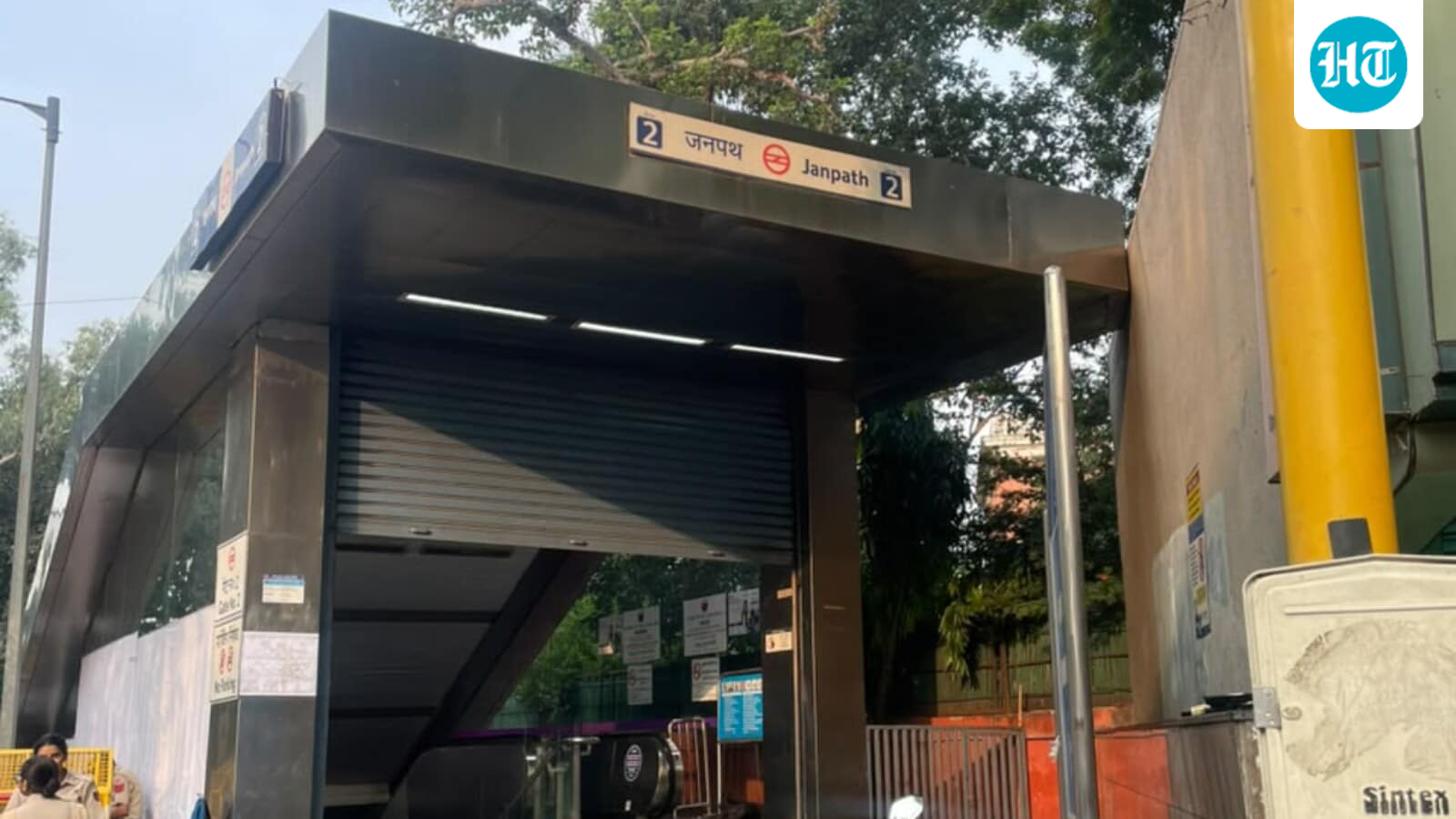
Six Delhi Metro stations shut until 4pm on Monday for security reasons, a day after the Supreme Court ordered normal services. The DMRC announced the closures early Monday morning. Previously, the court directed authorities to lift blanket restrictions on public transport to ensure that ordinary residents do not face inconvenience.
After the Supreme Court on Sunday directed that metro and railway services in Delhi operate normally, while ordering that peaceful, unarmed protesters cannot be detained except in accordance with the "procedure established by law," the Delhi Metro Rail Corporation (DMRC) announced in the early hours of Monday that six stations would be shut from 6am to 4pm due to "security reasons."
The DMRC had ordered the closure of 45 metro stations across the national capital on Saturday after a rap from the top court. Earlier, 57 stations were ordered to be shut down in view of the protests led by the Cockroach Janta Party in the city on October 10.
However, the apex court directed the Centre and the Delhi Police to lift blanket restrictions on metro and railway services ahead of Saturday's protests.
Notably, the top court had made it clear that security measures cannot amount to a complete prohibition on public transport and inconvenience millions of ordinary residents.
The Supreme Court on Sunday issued five key directives amid the ongoing protests in the capital, including the restoration of normal metro and railway services, uninterrupted internet connectivity, and free movement of people.
A special bench of justices Joymalya Bagchi and V Mohana issued the directions after an urgent hearing on petitions alleging mass detentions, restrictions on movement, suspension of internet services and non-compliance with the court's October 9 order on transport curbs ahead of Saturday's protest against chief election commissioner (CEC) Gyanesh Kumar.
The bench directed that metro and rail facilities run normally unless restrictions are required to address a public order situation within the framework of Article 19(2) of the Constitution. It further ordered that people's free movement in the city be permitted subject to law, internet services remain undisturbed in accordance with law, and no person be detained except in accordance with the procedure established by law, particularly in the case of peaceful, unarmed assemblies beyond the area covered by a prohibitory order under Section 163 of the Bharatiya Nagarik Suraksha Sanhita (BNSS).