
Chief Justice of India Surya Kant said on Monday (October 5) that the Supreme Court did not approve any modifications to Form 6. The court will examine who changed the form after getting a report from the Election Commission. Many people use this form to register as new voters.
Chief Justice of India Surya Kant on Monday (October 5) said that the Supreme Court had not approved "any" of the modifications to Form 6 in response to an argument on the "unlawful" modifications made to Form 6.
While hearing petitions against Chief Election Commissioner Gyanesh Kumar, a three-judge bench headed by the CJI said the Supreme Court will examine who modified the form after receiving a report from the Election Commission.
The latest development comes two weeks after The Indian Express investigation on September 23 that revealed that two Election Commissioners had flagged the "illegal" and "unauthorised" changes to Form 6.
One petition accused the Chief Election Commissioner of "deliberately manipulating the electoral roll bears no reasonable nexus or legal connection to his official duties". "Such an act falls squarely outside the ambit of official immunity and constitutes distinct, personal criminal liability," it added.
What is Form 6?
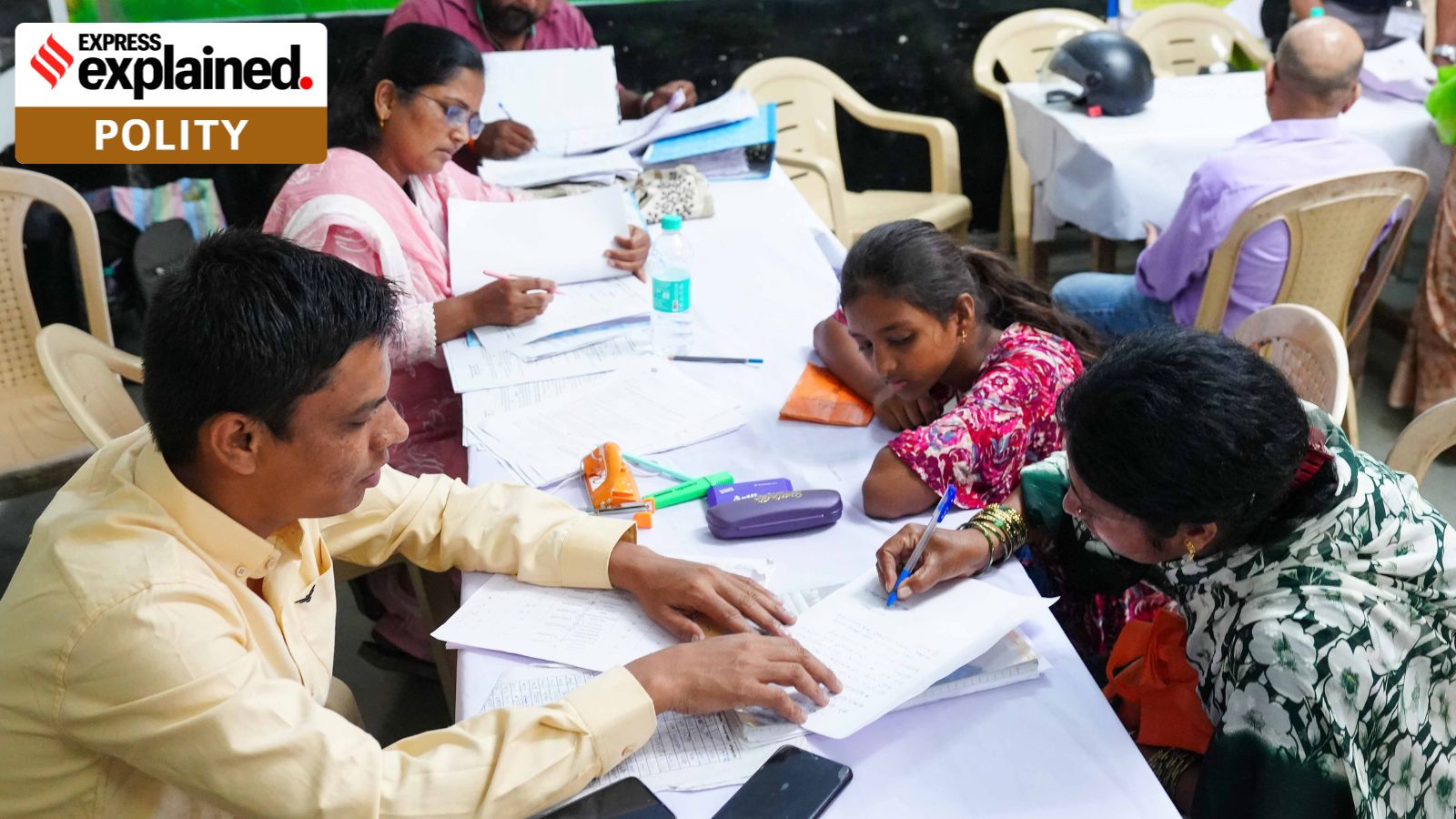
Form 6 is the statutory form for applicants who have newly become eligible voters after turning 18 years of age or acquiring Indian citizenship or deleted voters who want to apply afresh. The existing Form 6, which is published in the Registration of Electors Rules, 1960, asks the applicant to provide the name and EPIC number of those family members with whom they currently reside.
The Indian Express reported on July 12 that the online version of the form on ECINET had a new declaration inserted between the above two sections.
The change introduced questions related to the Special Intensive Revision (SIR) into Form 6. It asked applicants to choose one of three statements: whether their name appeared in the electoral roll during the last SIR held in the early 2000s, whether a parent's or grandparent's name appeared in that roll, or whether neither their name nor that of their parents appeared in it.
If their name appeared in the 2000s SIR, applicants were asked to provide the Assembly constituency number, the polling booth number (known as part number) and the serial number at which their father or mother was registered in the last SIR.
Also in Explained | ECINET, ERONET: How the Election Commission's roll systems work, and why they matter
Interestingly, the Form 6 available for download on the EC portal did not have this declaration.
Why was the change disputed?
The Indian Express investigation revealed that Election Commissioners Sandhu and Joshi had formally objected to decisions taken and orders issued without their knowledge at least 14 times over 10 months. The changes under scrutiny concerned the national rollout of the SIR.
After The Indian Express reported on the updated Form 6 on ECINET in July, Sandhu put on record on August 13 that it was "unauthorised and illegal" and "must be removed immediately".
Since the move was without amendment, the two Election Commissioners had objected to the same. Under the Representation of the People Act, 1950, only the central government can amend the voter enrolment, deletion and correction forms.
On September 26, the Election Commission announced it had removed the SIR declaration in Form 6 on the ECINET application portal in states where the SIR has concluded. However, the declaration was still there for those states where the SIR is still ongoing.
The EC said, "For non-SIR period, the Forms applicable as per Rules (the Registration of Electors Rules 1960) will be used."
Interestingly, the EC's press note did not mention the online form, or the question, or say whether it has been removed. However, it said that the Supreme Court "upheld" the declaration, which the court's May 27 order on the SIR does not appear to do in terms. And it does not say who put the question there in July, or why it stayed after Sandhu called it "unauthorised/illegal" on August 13.
What does the law say?
Article 326 of the Constitution guarantees the right to enrol as an elector to all adult citizens who are ordinarily resident in a particular Assembly constituency, unless otherwise disqualified by law.
The Representation of the People Act, 1950 empowers the Union government to make rules for the conduct of elections and the registration of electors.
Section 28 of the Act, titled "Power to make rules", says: "The Central Government may, after consulting the Election Commission by notification in the Official Gazette, make rules for carrying out the purposes of this Act." It also says that every rule made under the Act "shall be laid, as soon as may be after it is made, before each House of Parliament".
Form 6 is a part of the Registration of Electors Rules, 1960, which emerges from the Act. Therefore, any change to the form would require an amendment and gazette notification by the Law and Justice Ministry.
However, the ministry did not notify any change to Form 6, as seen in the notifications available on the e-Gazette website from June 24, 2025 -- when the EC first announced the SIR -- to date.