
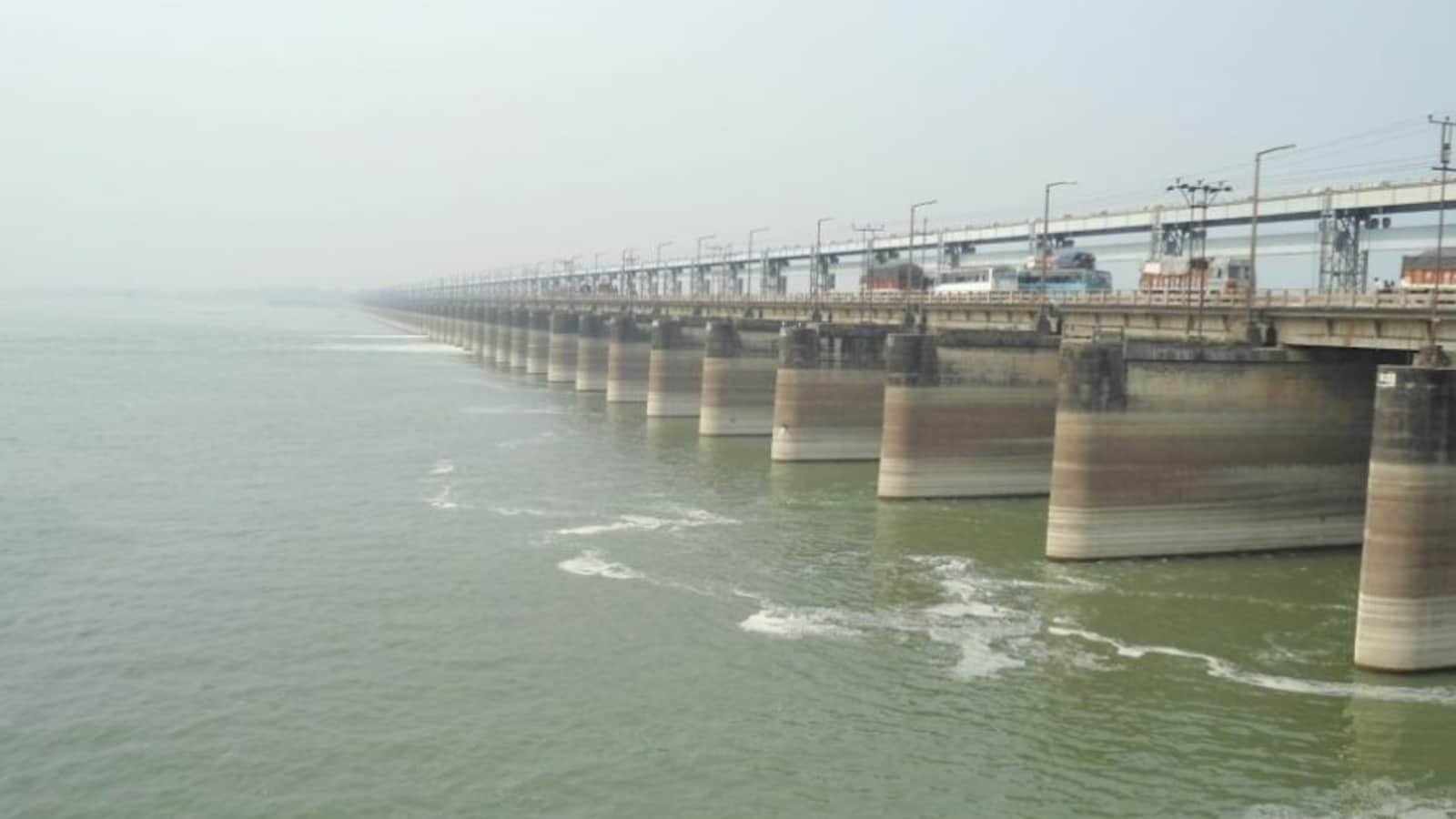
Bangladesh wants to renew the Ganga Water Sharing Treaty with India before December 12. Water Resources Minister Shahiduddin Chowdhury Anee said, "We must conclude a new Ganges water treaty before December 12." Both nations are working through the Joint Rivers Commission to finalise the agreement before the current deal expires.
The treaty governs the sharing of the Ganges River waters during the lean season from January 1-May 31.
With around two months to go before the Ganga Water Sharing Treaty expires, Bangladesh's Water Resources Minister Shahiduddin Chowdhury Anee has expressed hope that a new treaty with India will be signed before December 12. The renewal of the 30-year India-Bangladesh Ganga Water Sharing Treaty is a critical bilateral and domestic issue in Bangladesh and a diplomatic issue between the two nations.
"Restoring the guarantee clause, as in the 1977 agreement, is one of Bangladesh's top priorities in the new treaty," Anee told reporters after a seminar titled "Rethinking the Future of Water: Youth Leadership, Justice and Cooperation," organised by the Bangladesh Institute of International and Strategic Studies (BIISS), United News of Bangladesh (UNB) reported.
Based on meetings between the two countries, Bangladesh is optimistic that the new treaty will be finalised ahead of the deadline, Anee added.
"We must conclude a new Ganges water treaty before December 12," Anee said, adding that Bangladesh and India are working regularly through the Joint Rivers Commission (JRC), which is the bilateral mechanism for discussing bilateral water cooperation between the two countries.
The Ganga Water Sharing Treaty is a 30-year bilateral agreement between India and Bangladesh signed on December 12, 1996, by Prime Ministers HD Deve Gowda and Sheikh Hasina. It governs the sharing of the Ganges River waters at the Farakka Barrage in West Bengal during the lean season from January 1 to May 31 every year.
If an agreement is reached before the treaty expires in December this year, sources have confirmed to NDTV that Bangladesh Prime Minister Tarique Rahman will make it the highlight of his proposed visit to India and Prime Minister Narendra Modi and Prime Minister Rahman will sign the renewed treaty, making it a key moment in the reset of ties between India and Bangladesh.
The Ganga River is known as the Padma as soon as it enters Bangladesh, around 22 km downstream from the Farakka Barrage in Murshidabad district of West Bengal. It enters Bangladesh through the northwestern Chapai Nawabganj district. It is a major river system in the lower riparian deltaic nation, criss-crossed by hundreds of rivers, including 54 originating in or flowing through India.
According to studies in Bangladesh, nearly one-third of the country's 170 million people depend on the river system for livelihoods, biodiversity and water supply through several distributaries.
Bangladesh is likely to bargain hard given its plans to construct the Padma barrage further downstream from Farakka in West Bengal even though the Padma barrage has faced internal scrutiny and concern in Bangladesh. The 2,240-metre-long Farakka Barrage was built to divert water from the Ganga into the Hooghly River to flush sediments and maintain navigability at Kolkata Port.
The Ganga Water Treaty currently allocates water flowing through the river during the dry season. If the water level at Farakka is less than 70,000 cusecs, the two nations share it equally. If the level of water is between 70,000 and 75,000 cusecs, Bangladesh receives 35,000 cusecs and India gets the remaining water. According to the treaty, if the water level falls below 50,000 cusecs in a 10-day period, both governments, through the existing bilateral mechanisms, immediately consult with each other to adjust allocations on an emergency basis.
A clause in the agreement ensures a minimum of 35,000 cusecs to each side in alternate 10-day periods between March 11 and May 10.
According to Bangladesh, the guarantee clause ensured that if the water flow of the Ganges at the Farakka Barrage fell below 80 per cent, Bangladesh would receive 80 per cent of its share.
Indian hydrology experts have argued that the insertion of such a clause in the Ganga Water Sharing Treaty will put India at a disadvantage as the reduced flow would only affect India. To mitigate this, the 1996 treaty included a provision of 35,000 cusecs. From the second 10-day period of March, alternately, Bangladesh and India would receive 35,000 cusecs of water. When India receives 35,000 cusecs, the flow for Bangladesh becomes much less, even close to 20,000 cusecs. Such a situation becomes critical for the environment and ecology.
The guarantee clause does not exist in the 1996 Ganga Waters Treaty, but it was a provision in the earlier 1977 India-Bangladesh Water Sharing Treaty. Bangladesh has argued that the treaty does not adequately address ecological and environmental flow considerations, nor does it include factors such as climate change. Several experts in Bangladesh have also raised the issue of including Nepal in the treaty, thus making it a trilateral agreement. The basis for this suggestion is based on the assumption that during the lean months the Ganga receives a lot of snow melt water from the Gandak and Koshi rivers that flow in from Nepal.
India has argued that it prefers separate, direct bilateral frameworks for its neighbours rather than merging them into a single regional treaty. India already cooperates with Nepal through the Mahakali Treaty (1996) and projects based on the Kosi and Gandak Agreements, while its water-sharing of the mainstream Ganga at Farakka is strictly governed by the Ganga Waters Sharing Treaty (1996) with Bangladesh.
The emergency clause in the 1996 Ganga Waters Treaty (Article II) dictates that if the water flow at the Farakka Barrage drops below 50,000 cusecs in any 10-day period, both India and Bangladesh must immediately enter into consultations to negotiate emergency adjustments to water flow.
How may i help you today
Show full article
Track Latest News Live on NDTV.com and get news updates from India and around the world