
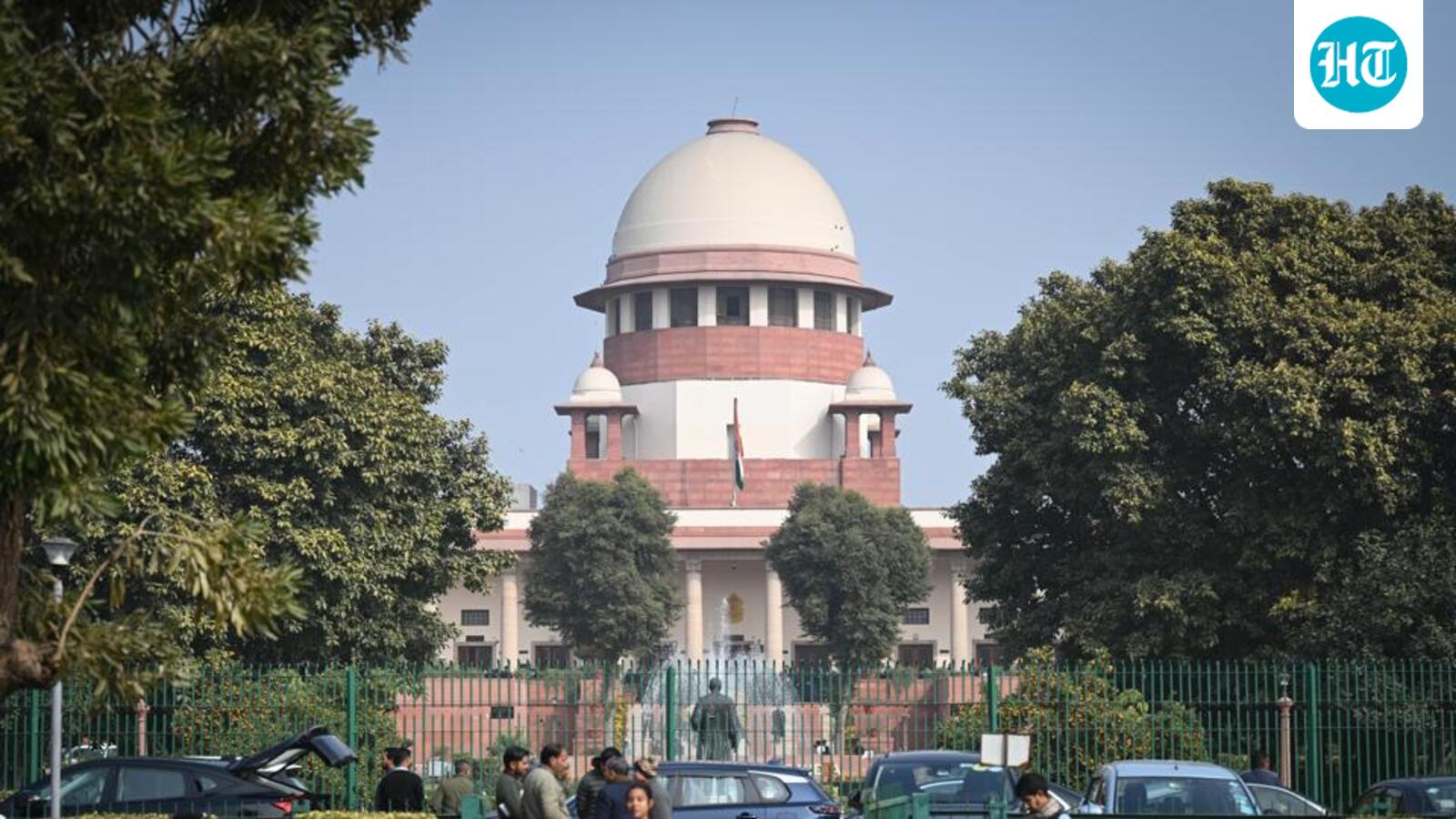
The Supreme Court on Friday dismissed the Andhra Pradesh government's appeal against a high court verdict setting aside its 34% Backward Classes quota in local polls. The bench said the state failed to provide enough empirical data to justify reservation beyond the 50% ceiling, as required by earlier court judgments.
The Supreme Court on Friday dismissed the Andhra Pradesh government's appeal against a high court verdict setting aside its decision to restore 34% reservation for Backward Classes in local bodies, holding that the October 1 judgment correctly found a lack of the empirical data required to justify reservation beyond the 50% ceiling.
A bench of Justices Dipankar Datta and Sheel Nagu remained unimpressed by senior counsel Mukul Rohatgi's submissions that the state's decision was backed by demographic and empirical material, pointing out that the high court had examined the government's arguments in detail before concluding that the exercise did not meet the requirements laid down by the Supreme Court.
The bench underlined that the high court correctly found that the state's reliance on data from a unified family survey could not, by itself, provide the basis for granting the enhanced quota without the requisite empirical exercise to establish backwardness in the context of local body representation.
The state government challenged the high court's October 1 decision, arguing that the exercise undertaken in 2026 was a fresh one and could not be equated with the reservation framework struck down six years ago. It maintained that the enhanced quota was based on a statewide survey, community validation through gram and ward sabhas, local-body-wise data and the work of an independent dedicated commission.
According to the state, the survey estimated the Backward Classes population at 50.42% across Andhra Pradesh, with their share at 48.84% in rural areas and 54.35% in urban areas. The government contended that population figures were only one of several inputs considered while determining political reservation and were not the sole basis for its decision.
The Supreme Court declined to interfere with the high court's findings based on whether the state had fulfilled the conditions laid down in earlier judgments for reserving seats for Backward Classes beyond the overall 50% limit on vertical reservation for Scheduled Castes (SCs), Scheduled Tribes (STs) and Backward Classes.
In March 2020, the Andhra Pradesh High Court struck down the then YSR Congress government's law providing 34% reservation for Backward Classes in local bodies. The court found the combined reservation for SCs, STs and Backward Classes would reach 59.85%, exceeding the 50% ceiling laid down by the Supreme Court.
The high court directed the state to bring Backward Classes reservation within the overall limit and undertake a detailed exercise to establish backwardness through relevant data, in keeping with the Supreme Court's ruling in Vikas Kishanrao Gawali Vs State of Maharashtra (2021) that held a data-driven, contemporaneous, rigorous empirical inquiry into the nature and implications of backwardness qua local bodies within the state was mandatory.
The issue resurfaced this year after the state government sought to restore the enhanced quota ahead of local body elections. In August, it issued two government orders, one providing 34% Backward Classes reservation in rural local bodies and another restoring 33.33% reservation in urban local bodies.
These orders were challenged before the high court, which on October 1 set them aside to the extent that the aggregate vertical reservation for SCs, STs and Backward Classes exceeded 50%. A division bench of Chief Justice Lisa Gill and Justice Challa Gunaranjan held that the state had not produced the empirical material required under the Supreme Court's judgments to justify such a departure from the ceiling.
The high court noted that an independent dedicated commission headed by a former bureaucrat submitted its report on August 14, 2026. It added that the report remained under consideration and had not been accepted by the state government. The court rejected the state's reliance on the unified family survey as a sufficient basis for declaring reservation beyond 50%.
The high court clarified that its decision did not permanently bar the state from considering a higher Backward Classes quota. It left the government free to revisit the issue after completing the required data-gathering exercise in accordance with the Supreme Court's previous judgments.