
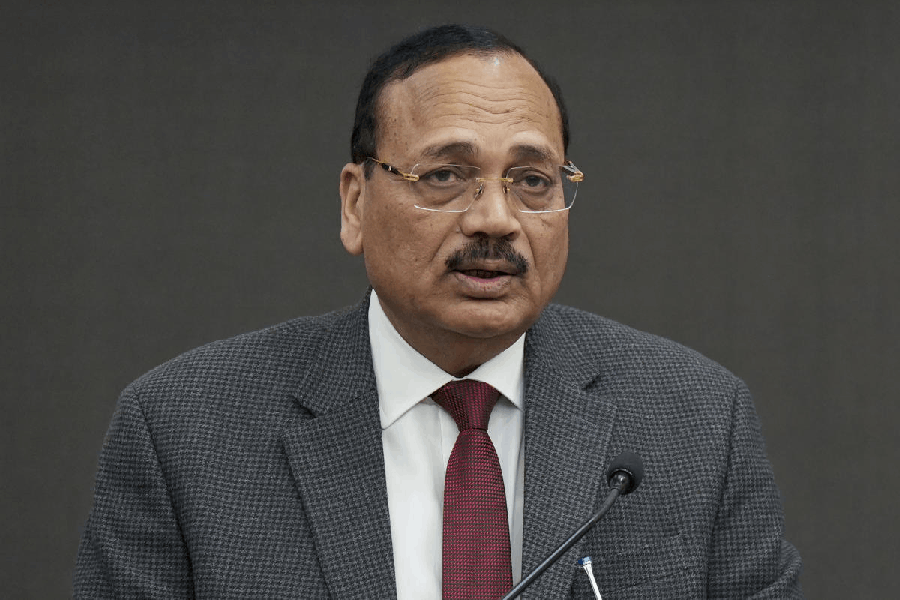
Chief Justice of India Surya Kant said AI can only assist the judicial process, but ultimate decision-making power rests with judges. Speaking in Samarkand on Thursday, he noted that digitisation aims to help citizens. He added, "AI may supplement judicial research, but can never replace judicial acumen or decision-making."
CJI Kant said the digitisation of justice raised a question of profound importance, anchored in three constitutional promises
Chief Justice of India Surya Kant has said artificial intelligence (AI) can only assist the judicial process, but ultimate decision-making power rests solely with the judges.
The CJI made the remarks at an event titled "Digitising Justice: Charting the Supreme Court of India's Course", hosted by the Constitutional Court of the Republic of Uzbekistan in Samarkand on Thursday night.
CJI Kant said the digitisation of justice raised a question of profound importance, anchored in three constitutional promises.
The first is the fundamental right to life and liberty secured by Article 21 of the Constitution. The second is equality before the law guaranteed by Article 14 to every person, regardless of status, income, or gender. The third is access to justice under Article 32, which enables anyone to approach the top court for the enforcement of their fundamental rights.
"Our approach has consequently been to treat digitisation not merely as computerisation of existing processes, but as an opportunity to reengineer them around the citizen," the CJI said.
He said e-filing of cases and virtual court hearings had reduced the burdens of distance and cost while digital case management had eased delay.
Draft regulations for the use of AI in courts released by the apex court's AI panel make it clear that "AI may supplement judicial research and support the court's processes, but can never replace judicial acumen or decision-making, which must always remain with the judge", the CJI said.