
മഹാരാഷ്ട്രയിലെ സ്കൂളുകളിൽ ദുരന്തനിവാരണ പാഠങ്ങൾ കുട്ടികൾക്ക് എളുപ്പത്തിൽ മനസ്സിലാക്കാൻ 'ഡിസാസ്റ്റർ എബിസി' അക്ഷരമാല അവതരിപ്പിച്ചു. പ്രകൃതിക്ഷോഭങ്ങളെക്കുറിച്ചും രക്ഷാപ്രവർത്തനങ്ങളെക്കുറിച്ചും ലളിതമായി വിവരിക്കുന്ന ഈ ചാർട്ടുകൾ പാഠ്യപദ്ധതിക്ക് പുറമെ ഒരു സഹായകരമായ പഠനവിഭവമായി ഉപയോഗിക്കുന്നു. ഇതിനകം പല ജില്ലകളിലെയും സ്കൂളുകളിൽ ഈ മാതൃക നടപ്പിലാക്കി കഴിഞ്ഞു.
Kadam, who studied disaster management as part of his policy and management education, said he consulted a United Nations climate dictionary while selecting the terms.
What the alphabet teaches
Each letter pairs a term with a short explanation. Some cover natural hazards: F for Flood, L for Landslide, G for Glacier Melting and Z for Seismic Zone, which explains that regions differ in their vulnerability to earthquakes. E for Environmental Degradation links damage to forests, soil and water to higher disaster risk.
Others introduce the people and systems that respond to emergencies: N for National Disaster Response Force, O for Operation Centre, P for Public Address System, Q for Quick Response Team and V for Very High Frequency, the radio band used by emergency teams. U stands for United Nations Office, and W for World Meteorological Organization.
The chart also covers the ideas behind preparedness, such as D for Disaster Management Cycle, H for Hazard, M for Mitigation and R for Risk Reduction. K for Know Your Strengths asks children to understand their abilities and limits so they can act safely and seek help.
Some letters are more specific. I is for Isolation Ward, J for Jumping Net, a safety net used in rescues from heights, X for Xylene, which introduces chemical hazards, and Y for Yachting Accident, on water safety while boating.
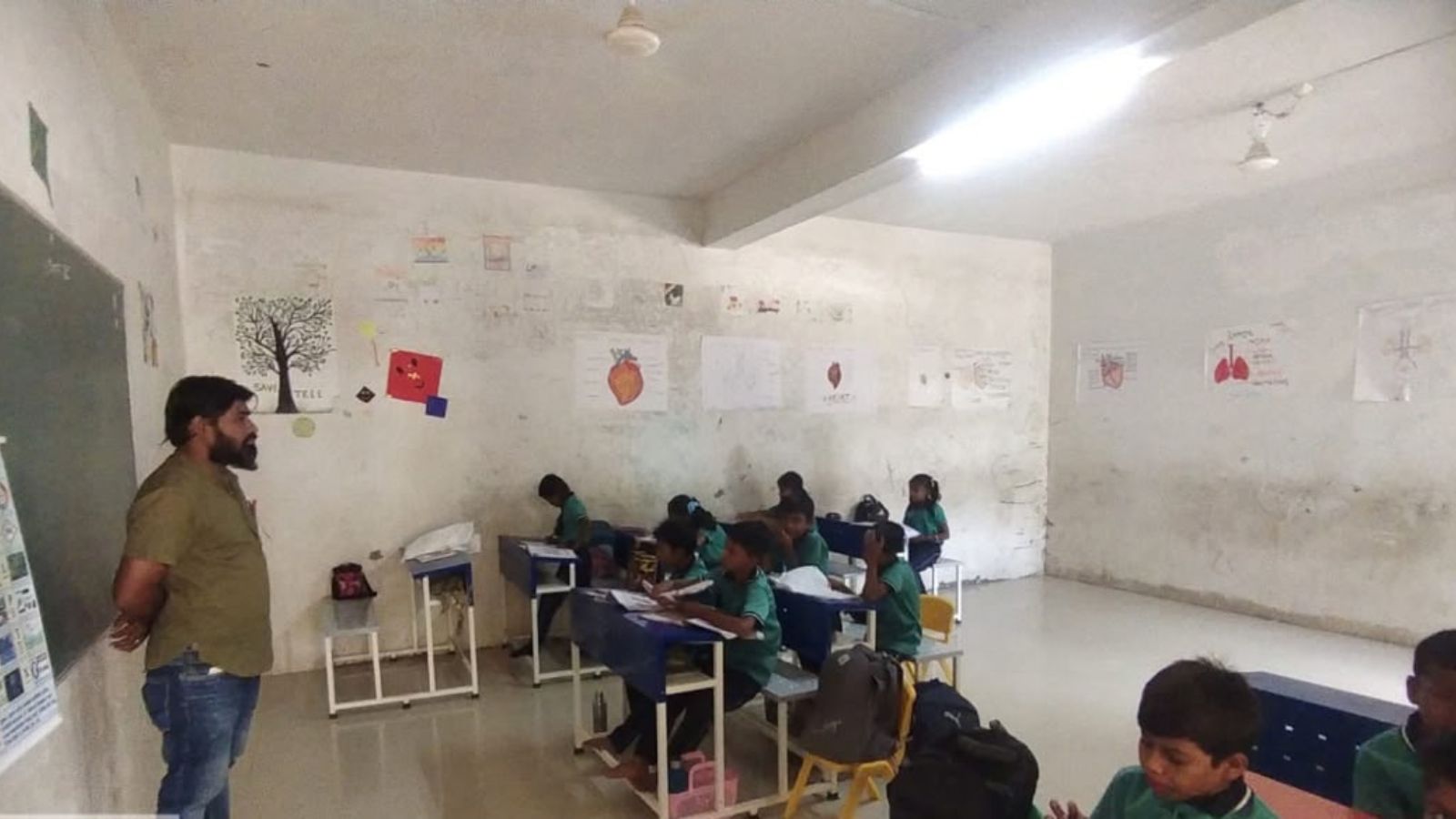
The alphabet is not part of the formal syllabus. It is used as a supplementary resource, with teachers explaining the terms in Marathi.
Other districts have taken it up. Parbhani District Disaster Management Officer Pawan Khandke said the charts had been distributed in 50 Zilla Parishad primary schools. Children are given homework and assignments based on the alphabet, and those who do well are recognised, he said.