
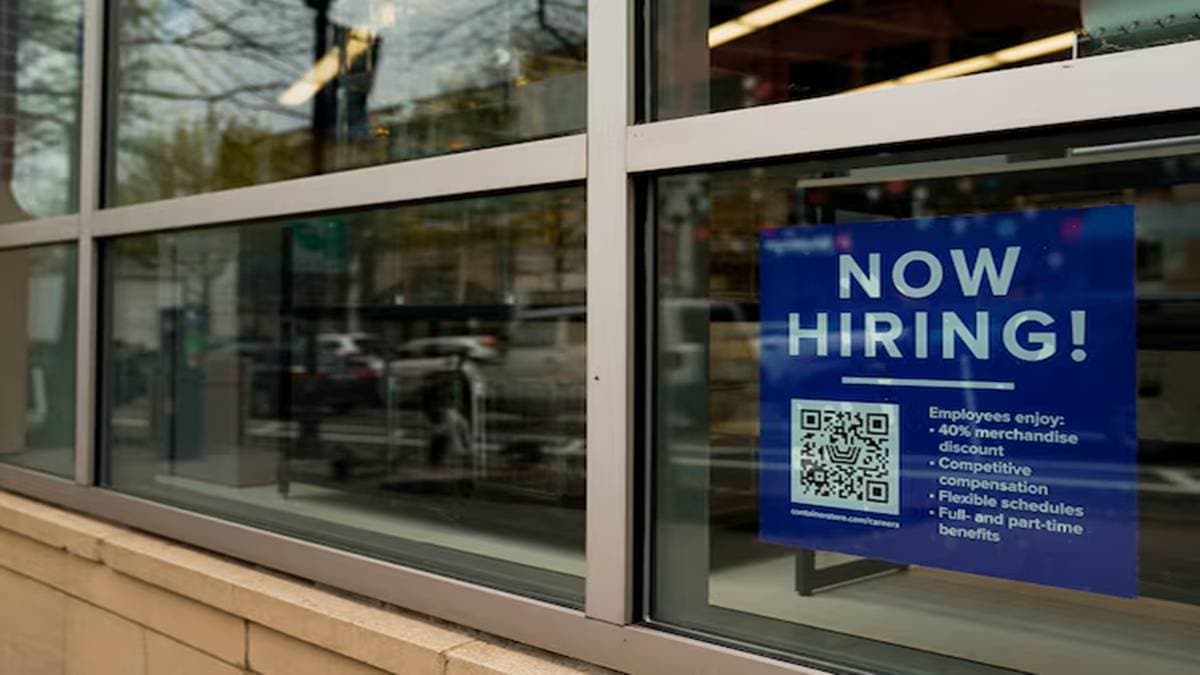
The US economy added 29,000 nonfarm jobs in September, missing expectations. The Labor Department said the unemployment rate rose to 4.2% from 4.1% in August. Olu Sonola of Fitch Ratings said, "This is a disappointing jobs report and a reminder that the low-hire, low-fire labor market never went away."
The US Federal Reserve has less reason to raise interest rates again this month after September's jobs report showed sharply slower hiring, contained wage gains and weaker employment growth in the previous two months. But with inflation still above its 2% target, another increase in borrowing costs remains a possibility later this year.
The jobs report strengthens the case for holding rates steady at the Fed's October 27-28 meeting, just weeks after the central bank raised its benchmark rate for the first time in three years.
The US economy added 29,000 nonfarm jobs in September, the Labor Department said on Friday. Economists polled by Reuters had expected an increase of 90,000 jobs. The unemployment rate also rose to 4.2% from 4.1% in August as more people entered the workforce and looked for jobs.
"This is a disappointing jobs report and a reminder that the low-hire, low-fire labor market never went away," said Olu Sonola, head of US economics at Fitch Ratings. "Weak job growth, a slightly higher unemployment rate, contained wage gains and downward revisions to earlier payroll estimates give the Fed little reason to keep an October rate hike on the table."
Financial markets initially cut the chances of an October rate hike to 13% after the report, before raising them to around 23%, according to CME Group's FedWatch tool. The odds were little changed from Thursday. Expectations for an October rate increase had already fallen sharply from around 70% at the start of the week after inflation data for July and August came in cooler than expected.
The jobs report therefore reinforced an existing shift in expectations, rather than triggering the entire week's decline in rate hike bets.
The Federal Reserve raised its benchmark overnight interest rate by 25 basis points last month to a range of 3.75%-4.00%. It was the first rate increase in three years, and the central bank had indicated that more increases in borrowing costs could follow.
With inflation still above the Fed's 2% target, economists continued to expect another rate hike in December. Wall Street stocks moved higher after the report. The US dollar weakened against a basket of currencies, while Treasury yields rose after initially falling.
September job growth misses expectations
Nonfarm payrolls increased by 29,000 in September after a downwardly revised gain of 133,000 in August, according to the Bureau of Labor Statistics. The August figure was earlier reported as a 162,000 increase. Estimates in the Reuters poll ranged from 35,000 to 180,000.
The government also revised July's figures. The economy was now estimated to have lost 10,000 jobs in July, making it the second month this year when payrolls turned negative. Overall, the US economy added 60,000 fewer jobs in July and August than previously estimated.
Speaking to Reuters, economists said part of the weakness could be linked to the seasonal adjustment model used by the government. Payroll data can also be weaker when the Labor Day holiday falls relatively late in September, as it did this year.
Despite the weak September number, job growth averaged 51,000 a month over the past three months. That compares with an average of 23,000 during the same period last year.
Economists estimate the US needs to add around 50,000 jobs each month simply to keep pace with the growth in the working-age population. That break-even level has fallen sharply because of retirements and the Trump administration's crackdown on immigration, which has reduced the supply of workers.
Slower wages ease pressure on Fed
Wage growth also slowed in September, giving the Federal Reserve another reason to remain cautious about raising rates. Average hourly earnings increased 0.1% in September after rising 0.3% in August. That brought annual wage growth down to 3.0% from 3.1% in August.
The slower rise in wages suggests that the labour market is not adding much pressure to inflation. But it has also raised questions about whether strong consumer spending and economic growth can continue.
Wages are growing more slowly than inflation, while consumers have been saving less and using some of their savings to keep spending.
Together, weaker hiring and slower wage growth complicate the case for another immediate rate increase, even as the Fed remains concerned about inflation.
Hiring slows, but layoffs remain low
However, the report did not point to a sudden collapse in the US labour market. There have been no clear signs of a broad rise in layoffs, while first-time applications for unemployment benefits have remained near 57-year lows. Strong corporate profits and steady domestic demand have also continued to support the economy.
Economists said the report showed that the labour market remains in a "low-hire, low-fire" phase, where companies are hiring fewer workers but are also not cutting large numbers of jobs.
The household survey used to calculate the unemployment rate showed that employment increased by 406,000. But that was not enough to absorb the 485,000 people who entered the labour force. The labour force participation rate rose to 61.8% from 61.6% in August.
More Americans were working part-time for economic reasons, while long-term unemployment also increased. The median length of time people remained unemployed rose to 11.5 weeks from 11.4 weeks in August, bringing it close to a 4.5-year high.
At the same time, a broader measure of unemployment fell to 7.6% from 7.7% in August. This measure includes people marginally attached to the labour force, as well as workers who are working part-time because they cannot find full-time jobs.
Healthcare remains biggest job creator
Healthcare continued to account for much of the job growth in September, adding 17,000 positions. However, that was well below its average monthly gain of 33,000 over the past year.
Most of the healthcare gains came from ambulatory healthcare services and hospitals. Employment at nursing and residential care facilities fell by 9,000. Economists said that decline could be linked to the end of Temporary Protected Status for hundreds of thousands of Haitian immigrants.
Construction companies added 11,000 workers, mainly among nonresidential speciality trade contractors. Some of the hiring could be linked to infrastructure being built to support the rapid expansion of artificial intelligence.
Manufacturing employment also increased by 9,000, likely helped by the AI spending boom. Factory employment has now risen by 72,000 jobs since reaching a low point last December.
Leisure and hospitality companies added 10,000 jobs. There were also smaller increases in wholesale and retail trade, as well as transportation and warehousing.
But several sectors lost jobs. Information employment fell by 10,000, while financial activities lost 7,000 jobs. Professional and business services employment declined by 9,000, including a 10,900 drop in temporary help services.
Mining and logging employment also fell. Government payrolls dropped by 17,000 jobs, mainly in local government excluding education.
The share of industries reporting job growth fell to an 11-month low of 49.0%, compared with 57.6% in August. The average workweek, however, remained unchanged at 34.4 hours.
Inflation risks keep further hikes in play
While the jobs report gives the Fed room to wait in October, energy prices and tariffs remain risks to the outlook.
Economists are also watching the possible impact of the US-Israeli war with Iran on the labour market. Higher energy prices and strained supply chains are expected to create more pressure on businesses towards the end of this year and into 2027. Diesel prices are already at record highs and could start affecting industries beyond transportation and agriculture.
Tariffs are another concern. A survey by the Institute for Supply Management showed on Thursday that manufacturers were becoming increasingly worried about the trade war with Canada.
For the Fed, the question is whether easing pressure from hiring and wages will be enough to offset those inflation risks before it raises borrowing costs again.