
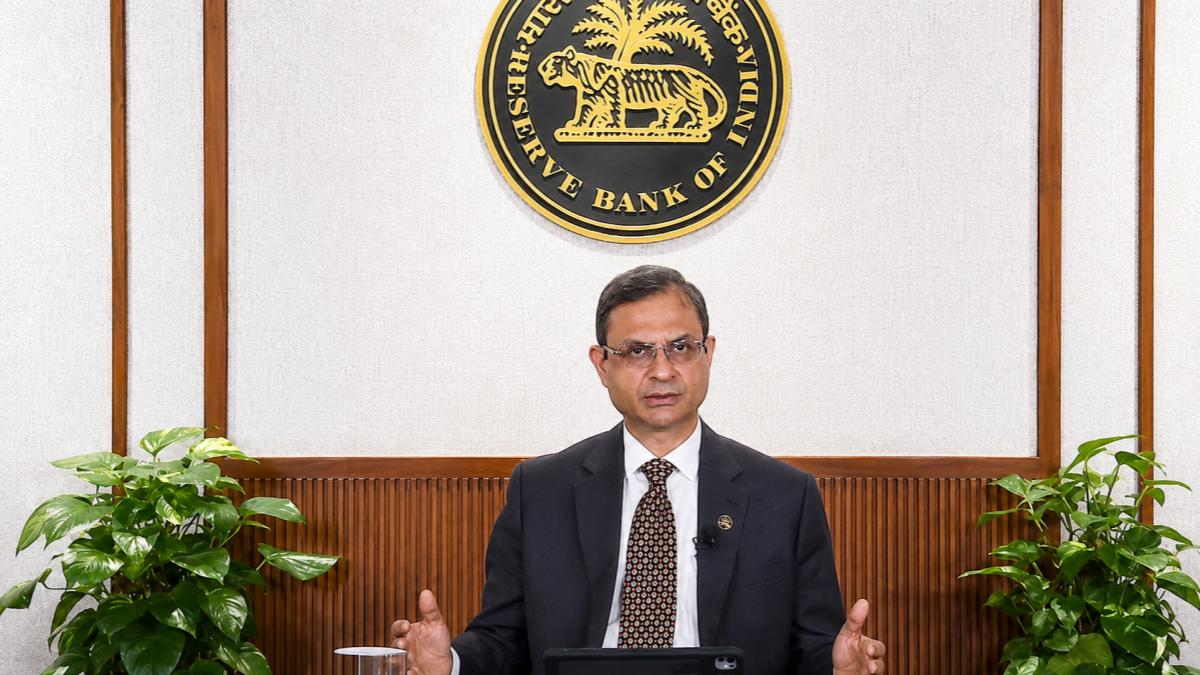
RBI Governor Sanjay Malhotra cautioned against complacency regarding the Indian financial system on Saturday. He said, "today's resilience may not necessarily imply tomorrow's immunity." While banks remain strong, he warned that global debt, cyber threats, and artificial intelligence risks mean we must stay alert to avoid future financial stress.
Reserve Bank of India (RBI) Governor Sanjay Malhotra on Saturday cautioned against complacency over the strength of the Indian financial system, saying that "today's resilience may not necessarily imply tomorrow's immunity", as new risks emerge from geopolitical shocks, elevated global debt, stretched artificial intelligence-related valuations and cyber threats. "Overall, therefore, the Indian financial system is assessed to be very resilient, supported by healthy balance sheets of banks and NBFIs," Malhotra said at the Kautilya Economic Conclave. "At the same time, I would like to mention that today's resilience may not necessarily imply tomorrow's immunity."
Malhotra said prolonged periods of financial stability can themselves encourage greater risk-taking and leverage. "Fading memories of past crises can weaken the appetite for prudence," he said, adding that while he did not see "any imminent signs of stress", there was a need to remain alert to risks. He identified five major global financial stability risks -- elevated global debt, stretched asset valuations particularly around AI, high leverage, private credit and cyber risks compounded by AI.
On AI, Malhotra warned that any slowdown in investment or earnings as the investment cycle matures could trigger a sharp repricing of financial assets, particularly those linked to the AI value chain. Higher leverage, along with declining cash flows among major AI firms, could amplify market corrections and volatility. Cyber risk was the "most immediate concern", he said, as sophisticated AI tools with greater autonomy and problem-solving capabilities heighten cyber and model risks, third-party dependence and the erosion of human oversight. "Each of these five risks individually...may not be a matter of concern as of now, but simultaneous occurrence of these shocks can put significant pressure on the global financial architecture," Malhotra said.
India, however, was navigating the current environment from a "position of strength", he said. Banks' common equity tier-1 ratios remain comfortable even under adverse scenarios, while NBFCs have average capital adequacy of over 25%, against the regulatory requirement of 15%.
Malhotra outlined five priorities for policymakers to safeguard financial stability. First, policymakers must accept that shocks are inevitable and focus on building a financial system capable of absorbing them. Second, they need to prepare for a new generation of systemic risks that are increasingly cross-border and interconnected. "The next financial crisis may not originate in a bank or even in the world of finance," he said. "It may begin with a geopolitical event, a cyberattack, or a technological failure that affects the financial system through multiple channels."
Third, monitoring and assessment frameworks need to improve through better and more granular data, particularly on NBFIs, interconnected exposures, technology and cross-border positions. Fourth, resilience must extend beyond banks to financial markets, payment systems, technology infrastructure providers and critical third parties. Fifth, innovation must strengthen rather than fragment trust in the financial system.
Responding to questions, Malhotra said the hardening of global bond yields reflected higher government spending and private investment, including AI-led spending, amid scarce money. While monetary policy remains primarily driven by domestic growth-inflation dynamics, global interest rates could have implications for interest rates and real rates in India, he said.
On cryptocurrencies, Malhotra reiterated the RBI's cautious approach, while supporting underlying technologies such as distributed ledger technology and tokenisation. Crypto raises concerns around the singleness of money, monetary policy and capital-flow restrictions in emerging markets, he said. "Our approach has been to promote the underlying technologies... but so far as crypto is concerned, it has been a cautious approach," he said.