
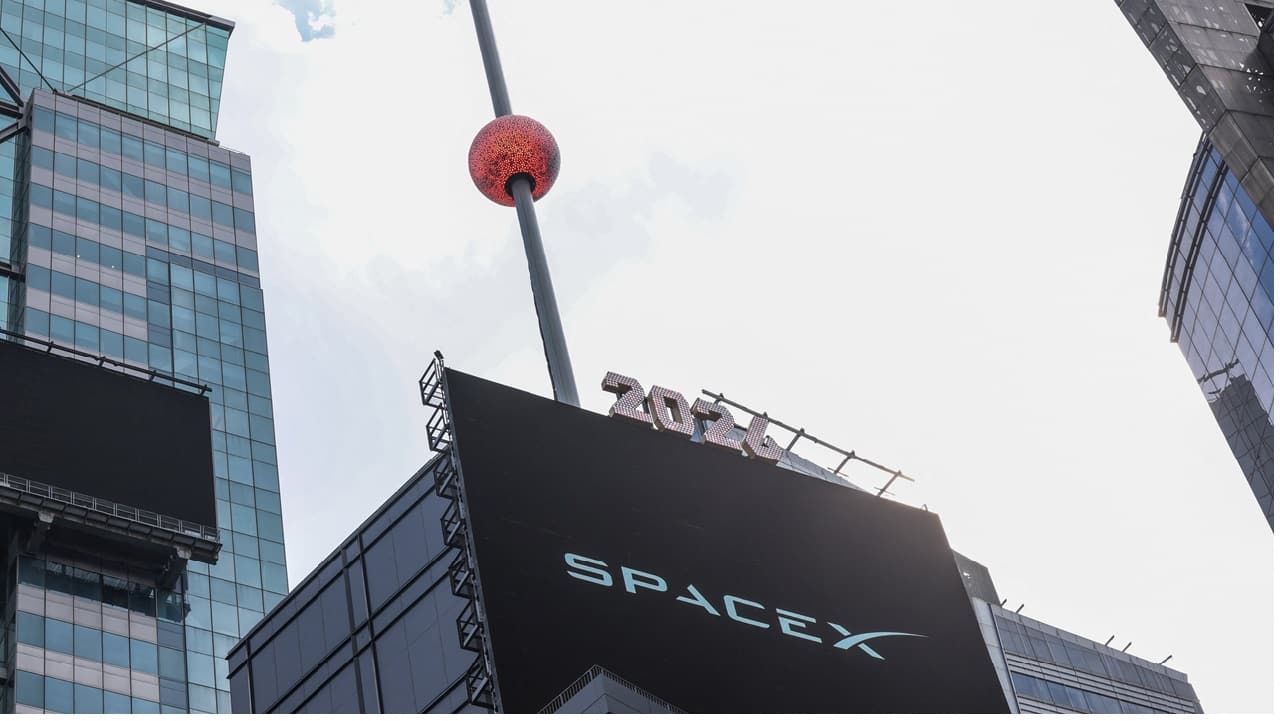
SpaceX shares rose above $160 this week, marking a strong recovery after a volatile period following the June IPO. The stock jumped 48% since August, helped by new spectrum gains. Nancy Tengler said, “This company has enormous potential.” Insiders kept their stakes, showing confidence despite risks from future debt plans.
Market Mastery
Webinar by Vishal Malkan
Find the weak links
in your portfolio by Vishal Malkan
SpaceX investors are finally getting some reprieve after months of being whipsawed by volatility as the Elon Musk-led company’s stock breaks above the level it’s been stuck below since July.
Space Exploration Technologies Corp. shares have been trading above $160 all week, a level they closed at on July 6 but hadn’t returned to since. The stock has jumped 48% in just three months after hitting a low on Aug. 5. Shares extended those gains Friday, rising as much as 3.6% after SpaceX acquired a crucial batch of spectrum that will allow it to offer “complete phone coverage in America.”
It’s a stark reversal from the extremely volatile trading investors endured following SpaceX’s blockbuster initial public offering in June. The shares hit the market at $135, soared above $200 in their first few days of trading and then plunged to $108 by late July, erasing $1.2 trillion in market value. The rebound since August has added back more than $750 billion in value.
“This is a long play and there’s a little bit of aura and hidden-ness, you know, Elon Musk-ness in it, and I think that’s what it’s trading on,” Bloomberg Intelligence analyst George Ferguson said. “There’s a bunch of believers in this thing.”
The stock had been trading in a tight range since mid-August, as lockups banning early investors from selling their shares expired, boosting the total float, or shares available to trade, to about 33% of the company’s outstanding shares from roughly 7.5% in the IPO. Wall Street had been concerned that the expirations would trigger a wave of selling, but the steadiness in the stock price indicates that insiders aren’t unloading their stakes.
“A lot of the SpaceX insiders want to hang on,” said Nancy Tengler, chief investment officer at Laffer Tengler, who holds SpaceX shares. “They aren’t necessarily selling into the lockup (expiration). This company has enormous potential.”
In addition, the stock likely got some buying support from the rebalancing of the Nasdaq 100 Index in September, which gave SpaceX a larger weight in the index due to its increased float, meaning funds that track the gauge would have to buy more shares.
“Supply comes on, but also index weights go up as the supply goes on,” said Bob Gruendyke, portfolio manager at Allspring Global Investments, which has sold the SpaceX shares it held in the IPO.
All of which set up the shares for a breakout that started at the end of September, just as the company’s massive Starship rocket reached orbit for the first time, a key milestone.
The post-IPO selloff helped make SpaceX one of the cheapest ways to play the space and intelligence economy, according to Morgan Stanley analyst Adam Jonas, who has a buy-equivalent rating on shares. The stock is priced at 111 times earnings expected over the next 12 months, down from more than 540 times in July. And the shares look even less expensive when adjusted for year-over-year growth, Jonas wrote in a note to clients on Monday.
“We expect developments over the next few months will help investors better appreciate the role of SPCX in addressing the critical bottlenecks of power and chip making, potentially unlocking earnings growth and multiple expansion for the stock,” he wrote.
Of course, there are risks to an investment in a company like SpaceX. For example, it’s looking to raise $40 billion in debt so it can buy chips from Nvidia Corp. That would be one of the biggest debt deals for the AI buildout, and it comes as long-dated Treasury yields are around the highest levels in decades.
The news sent the shares down 6.6% over the last two sessions and pushed the price of five-year credit default swaps on SpaceX’s debt to a fresh high.
And the stock could face more pressure ahead. There’s a lockup expiration this week, in which another 7% of the company’s shares will become available to trade. Then, SpaceX is scheduled to release its second quarterly earnings report as a public company in November, alongside another major lockup expiration.
Which explains why so many investors are trying to ignore the near-term gyrations and focus on the stock’s long-term potential.
“SpaceX is just a leap of faith,” said Larry Tentarelli, founder of Blue Chip Daily. “You’ve got to buy it and hold it for two, three, four years, and don’t look at the volatility. Because fundamentally there’s no reason to buy SpaceX right now.”