
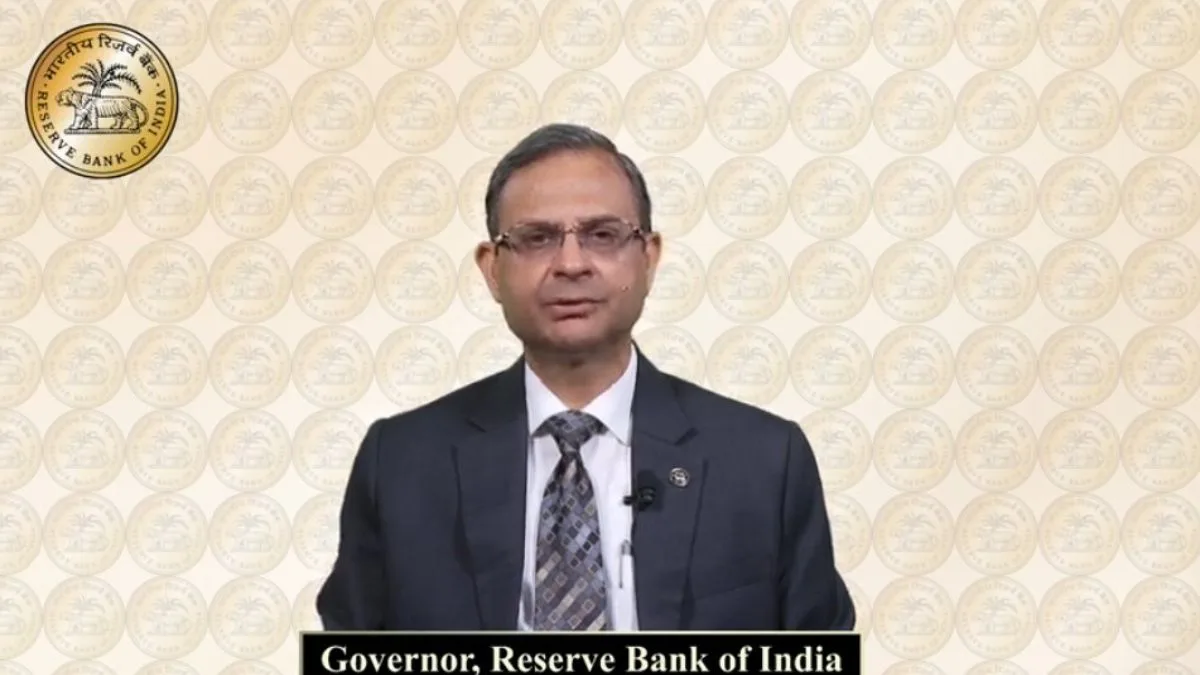
RBI Governor cautioned that prolonged financial stability can encourage excessive risk-taking. He said the international economic order is undergoing significant changes, with geopolitical and geoeconomic fragmentation, trade restrictions, supply shocks, technological disruption and climate change interacting in unpredictable ways. India remains exposed to global developments but is navigating from strength.
Reserve Bank of India (RBI) Governor cautioned that prolonged periods of financial stability can encourage excessive risk-taking and leverage, stressing the need for continued vigilance as geopolitical fragmentation, technological disruption, climate change and other global shifts create a new generation of interconnected financial risks.
However, he warned that fading memories of past crises could weaken prudence. Drawing on India's experience, he noted that financial vulnerabilities could build rapidly but take years to resolve, citing the legacy of excessive lending and non-performing assets from the early 2000s.
The Governor said the international economic order is undergoing significant changes, with geopolitical and geoeconomic fragmentation, trade restrictions, supply shocks, technological disruption and climate change interacting in unpredictable ways.
Against this backdrop, he stressed that financial stability was fundamental to price stability and effective monetary policy transmission.
He said the RBI's regulatory and supervisory responsibilities, including oversight of banks, NBFCs and payment systems, its role as lender of last resort, and the depositor insurance framework, provided the tools to identify vulnerabilities and respond to emerging risks.
The central bank's approach was not to prevent every shock but to ensure that the financial system acts as a "shock absorber" through prudent regulation, risk-based supervision, macroprudential measures, liquidity support and effective resolution mechanisms.
Looking at the global outlook, the Governor identified five major areas of concern: elevated global debt, stretched asset valuations linked particularly to artificial intelligence, rising leverage among non-bank financial intermediaries, vulnerabilities in private credit and growing cyber risks amplified by AI.
He warned that higher global debt and bond yields could strain sovereigns, corporates and banks, while a slowdown in AI investment or earnings could trigger sharp asset-price corrections.
Rising leverage among hedge funds and other non-bank entities could amplify market volatility, while weaknesses in private-credit lending standards and growing cyber risks could pose wider threats to interconnected financial systems. Although these risks may not individually pose an immediate threat, their simultaneous occurrence could put significant pressure on the global financial architecture.
On India, the Governor said the country remained exposed to global developments and higher commodity prices but was navigating the challenges from a position of strength, supported by strong macroeconomic fundamentals and a resilient financial system.
He highlighted measures such as diversifying import sources, strengthening energy security, building strategic petroleum reserves, improving domestic manufacturing competitiveness, deepening global value-chain integration and expanding market access.
The Governor said India's financial system remained resilient, with banks maintaining comfortable capital ratios under adverse scenarios and NBFCs reporting average capital adequacy of more than 25 per cent against the regulatory requirement of 15 per cent. However, he cautioned that "today's resilience may not necessarily imply tomorrow's immunity".
He outlined priorities including stronger systemic resilience, a better understanding of cross-border and interconnected risks, improved data and scenario analysis, system-wide resilience covering banks, NBFCs, markets and payment systems, and innovation that strengthens trust in the financial system.
He said building resilience would require stronger institutions, better data, deeper markets, credible safety nets, effective resolution mechanisms and proactive, forward-looking and proportionate regulation.
If these measures succeed, financial stability would remain largely invisible -- which, he said, could be the most meaningful measure of success in central banking.