
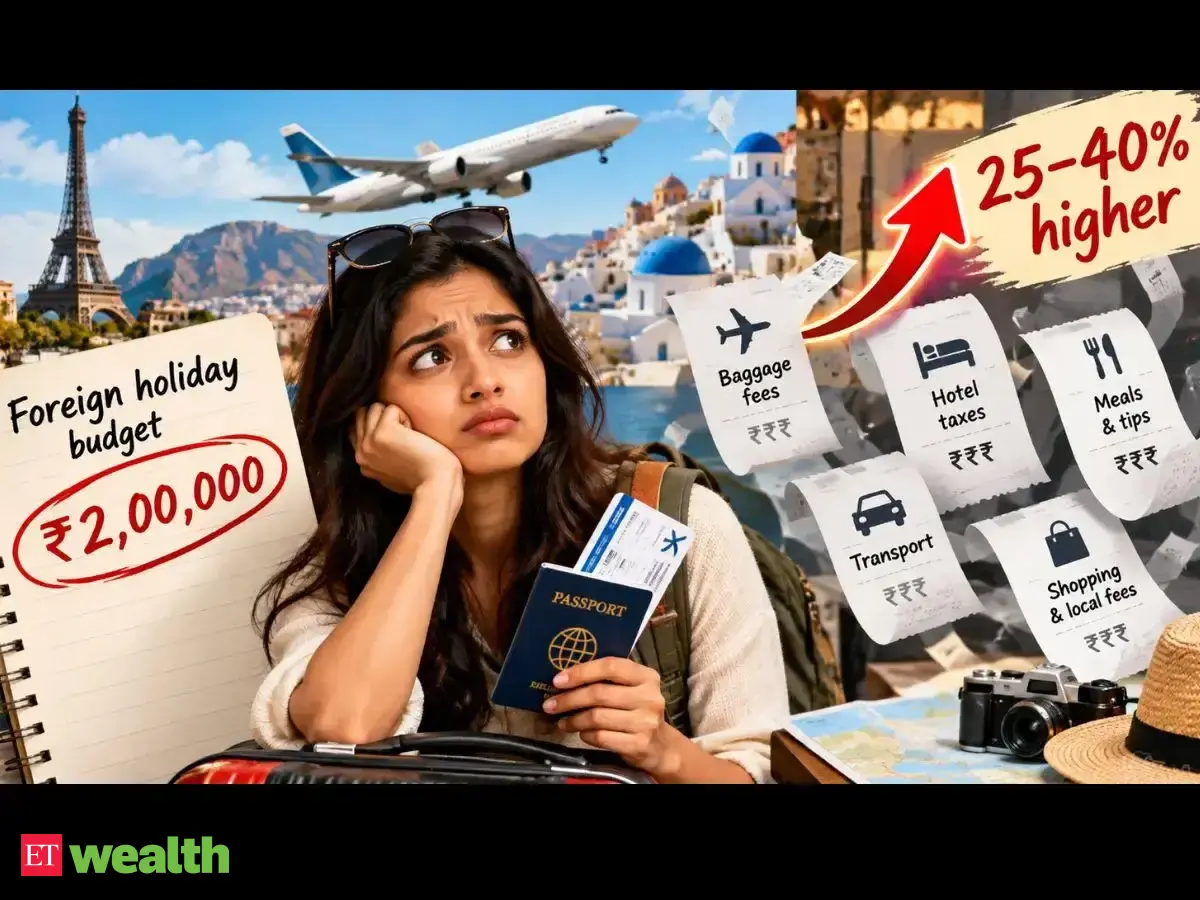
Planning a ₹2 lakh foreign holiday can cost 25-40% more than expected due to hidden expenses. Experts said that airfare, visa fees, insurance, and local transport often get overlooked. Using credit cards abroad also adds extra charges. Always budget for these small costs to avoid a big shock later on.
Planning a ₹2 lakh foreign holiday? These hidden costs can push your trip budget up by 25-40%
1/9
Your ₹2 lakh foreign trip could cost much more than planned
An overseas holiday can become significantly more expensive once you add costs that are easy to overlook. Flights and hotels may dominate your initial budget, but food, local transport, currency conversion, visa fees, sightseeing, insurance and tips can quickly add up. Travel experts estimate these "small" expenses can increase the planned holiday cost by 25-40% if you don't budget for them upfront.
2/9
Flight ticket booked? Your airfare may still rise
The fare you see while booking may not be your final airfare. Seat selection, excess baggage, airport charges and booking fees can add substantially to the ticket price, particularly for families. Currency movements can also change the effective cost when you plan months ahead. One traveller's planned UK trip, for instance, rose from ₹4 lakh to more than ₹5 lakh after airfare increased unexpectedly.
3/9
Your credit card could quietly add 4-5% to spending
The card you use abroad can make a major difference. A conventional credit card charging a 3.5% forex markup on ₹2 lakh of overseas spending would add ₹7,000, plus ₹1,260 GST on the markup, ₹8,260 in extra cost before considering the exchange rate. Zero-forex cards can be cheaper, while forex cards may have different markups depending on the currency used.
4/9
Never choose "₹" at an overseas card terminal without checking
Dynamic currency conversion can make a foreign transaction costlier than expected. When a merchant or ATM asks whether you want to pay in the local currency or Indian rupees, paying in rupees may involve an exchange rate and markup set by the merchant's conversion provider. ATM withdrawals can also attract fees from your card issuer, GST and the ATM operator.
5/9
A ₹1.98 lakh tour package may actually cost ₹2.47 lakh
The advertised package price may exclude several everyday expenses. In one Amsterdam-Paris example, a package priced at ₹1,97,624 had additional costs of about ₹48,952 for food, visa fees, optional sightseeing, local transport, tips, tourist taxes, insurance and TCS. The actual outgo therefore reached around ₹2,46,576, nearly ₹49,000 above the headline price.
6/9
Food, cabs and sightseeing can become your biggest budget leaks
Travellers often underestimate everyday spending after reaching their destination. Food, bottled water, alcohol, local cabs and attraction tickets can quickly stretch the budget. In Europe, food alone can cost around ₹15,000-25,000 per person for 2-3 days. Local transport can also add thousands of rupees, while premium excursions and adventure activities can cost much more than expected.
7/9
Don't forget visa fees, insurance and TCS
Visa costs are only one part of the paperwork-related expense. Travellers may also pay service-centre, documentation, photograph and other ancillary charges. Travel insurance adds to the upfront cost but can protect against potentially large medical, cancellation, baggage and delay expenses. TCS is another cash-flow cost: overseas tour packages attract 2% TCS, while certain other overseas spending can attract 20% above the applicable threshold.
8/9
Package holidays can cost 20-30% more than the advertised price
Don't compare overseas tour packages only on their headline price. Mandatory taxes, meals, airport transfers, sightseeing tickets, optional experiences and tips may sit outside the advertised amount. Travel experts estimate the final spend for a 7-10-day overseas trip can be 20-30% higher than the package price. Europe and premium packages can have particularly large gaps between advertised and actual costs.
9/9
Keep a 10-15% buffer for your foreign holiday
A realistic travel budget should include a contingency reserve rather than treating every rupee as available for spending. Experts recommend keeping around 10-15% of the planned holiday budget as a buffer for unexpected transport, food, currency movements and other incidental expenses. Also set daily limits for meals, local travel and sightseeing, and track spending during the trip so small expenses don't derail your finances.