
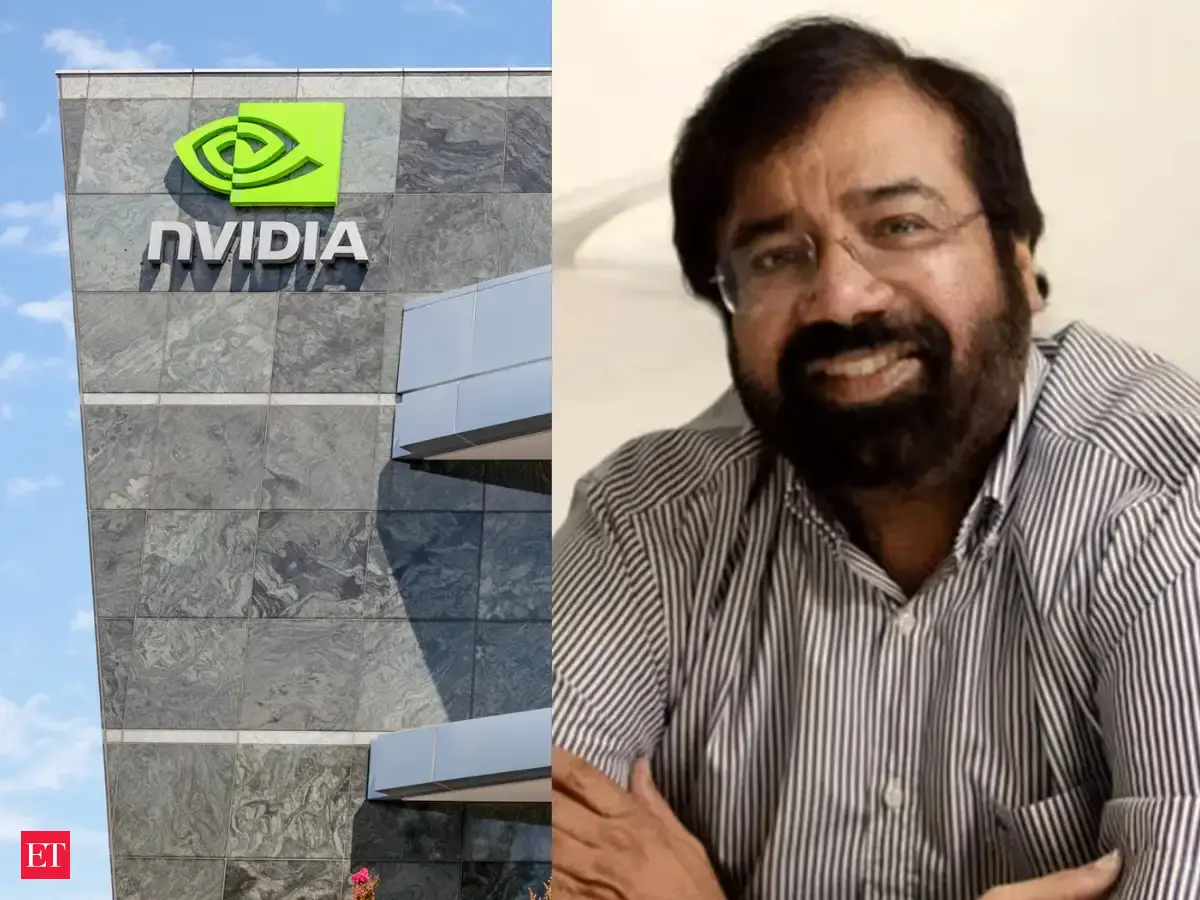
Industrialist Harsh Goenka shared a post showing Nvidia is worth more than India’s entire stock market. The infographic showed Nvidia at $5.5 trillion against $4.4 trillion for all listed Indian companies. Goenka said, “One company versus the stock market of the entire country!” Many users discussed these massive financial figures.
Synopsis
Industrialist Harsh Goenka has shared a comparison showing Nvidia’s $5.5 trillion market capitalisation exceeding the combined $4.4 trillion value of all listed Indian companies. Users pointed out the comparison and differences in valuation dates and market fluctuations.
Billionaire industrialist Harsh Goenka shared a comparison showing Nvidia’s market capitalisation at $5.5 trillion, higher than the $4.4 trillion combined value of listed Indian companies cited in the infographic. The post drew a lot of attention. However, the figures refer to different dates, making the timing of the comparison important.
What did Harsh Goenka share?
Harsh Goenka has drawn attention to the size of Nvidia by comparing the American semiconductor company with the entire Indian stock market. In a post on X, Goenka shared an infographic showing Nvidia’s market capitalisation at $5.5 trillion, compared with $4.4 trillion for all listed companies in India.
He captioned the post, “One company versus the stock market of the entire country!” and added a surprised emoji.
His comparison shows the scale of a single American technology company relative to the combined market value of companies listed on Indian stock exchanges. According to the figures in the infographic, Nvidia’s valuation was $1.1 trillion higher than the total cited for India Inc. prompting discussion about the growing financial weight of companies involved in artificial intelligence and semiconductor manufacturing, sectors that have attracted considerable investor attention.
How much is Nvidia worth compared with India Inc?
According to the infographic shared by Goenka, Nvidia had a market capitalisation of $5.5 trillion as of October 9, 2026. The combined market capitalisation of listed Indian companies was shown at $4.4 trillion as of March 31, 2026.
Live Events
Market capitalisation refers to the total market value of a company's outstanding shares.
For a stock market as a whole, the combined market capitalisation represents the value of the listed companies included in the calculation. It does not represent the country's GDP, government revenue, total wealth or the amount of money held by its companies.
Why has Nvidia become so valuable?
Nvidia designs graphics processing units (GPUs), chips widely used in artificial intelligence, data centres, gaming and other computing applications.
Its chips have become important to companies developing and operating AI models because training and running these systems require substantial computing power. Demand for data-centre infrastructure has therefore become a major factor in investor interest in Nvidia.
The company's position in the AI hardware market has made its financial performance and valuation closely watched indicators of investor expectations for the technology sector.
Dates are important in this comparison
One detail in the infographic shows that Nvidia's market capitalisation is dated October 9, 2026, while India's combined market capitalisation is dated March 31, 2026.
The figures therefore do not provide a same-day comparison. Stock prices move throughout trading sessions, changing the market capitalisation of individual companies and the stock market as a whole.
Readers should account for the different dates before drawing conclusions from the gap between them.
Social media users react
One user pointed to Apple as another company worth considering in such comparisons, wrote, "Not just Nvidia but Apple as well." Another user wrote, "We are happy comparing us with pakistan and Bangladesh".
One user commented, "Comparing Nvidia’s October 2026 market cap to India’s entire listed market as of March 2026. Markets move. Try matching the timelines."
(You can now subscribe to our Economic Times WhatsApp channel)
Brinjal, buffalo, bacteria: Inside India’s pay-for-nature system
Homebuyers wait as NCLT panel picks holes in unfinished Jaypee projects
The NBFC saga - Part 3: How one default in 2018 changed the way RBI reads risk
Four rules made HDFC Bank a compounder. All four have stopped. Can the new CEO rewrite them?