
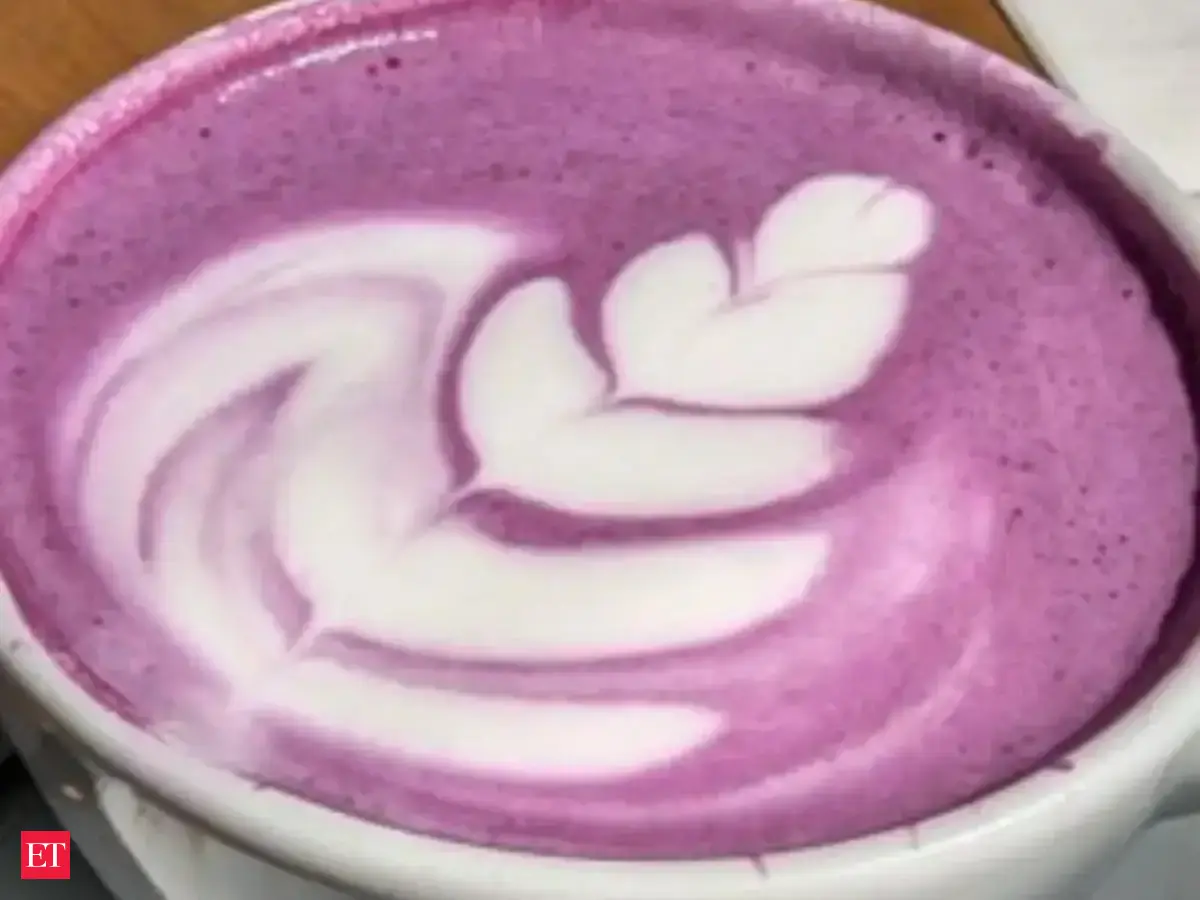
Ube, a purple yam from the Philippines, is gaining popularity in Indian cafes among younger consumers. Starbucks introduced ube products in India in August. Sous chef Kripasha Miniya said, "Ube fits the brief -- striking colour, subtle flavour and a very Instagram-friendly appeal." Many cafes now use this vibrant ingredient.
Ube, a purple yam from the Philippines, is gaining popularity in Indian cafes among younger consumers. Its vibrant color and unique flavor are attracting attention across various demographics. Chains like Starbucks have introduced ube products, expanding the flavor options available. However, challenges in sourcing fresh ube may affect consistency for cafes. Despite this, ube's versatility suggests it is here to stay in the market.
The ube is made for the internet -- and the young. The purple yam from the Philippines appears in lattes and desserts, picture-perfect, bursting with likes and a flavour that is intriguing without being intimidating. Indian cafes are betting that consumers would want more of it. This is matcha 2.0. And not since the pumpkin landed in a coffee has a kitchen staple tantalised cafes like this.
Supa San, a Japanese izakaya in Mumbai's BKC, introduced the ube because it offered a combination that is difficult to beat: global relevance, an unusual visual identity and a flavour that is accessible to the Indian palate.
Says sous chef Kripasha Miniya: "Ube fits the brief -- striking colour, subtle flavour and a very Instagram-friendly appeal. The response has been strong since we added it to the menu," she says.
At Tokyo Matcha Bar & Cafe in Bandra, cofounder Meher Kohli saw the tuber as a natural extension of its approach to Asian flavours. She says that after matcha "ube felt like a natural next addition". The response has been strong: customers are initially drawn to its vibrant purple colour before discovering its flavour. "It feels familiar enough to be approachable, but different enough to feel exciting," she says.
That balance between familiarity and novelty is increasingly important as cafes compete for consumers who want something new without necessarily wanting something challenging.
Large chains are taking notice, too.
Starbucks introduced the ube in India in August through its Ube Coconut Latte and Ube Coconut Iced Shaken Espresso. Adrit Mishra, COO, Tata Starbucks, says Indian consumers are becoming increasingly open to global flavours and Gen Z, in particular, is actively seeking new tastes and experiences.
In the Starbucks playbook, ube is not positioned as a replacement for matcha. It is another choice. "A customer may choose matcha on one occasion and ube on another depending on the mood, the occasion or who they are with," says Mishra. That makes ube less about dethroning an existing favourite and more about expanding the cafe's flavour vocabulary.
YOUNG LOVEThe strongest demand is coming from Gen Z and millennials, although Miniya says customers beyond these groups are also asking for ube after encountering it online. "They are drawn by the novelty and the visual -- its violet hue and the mildly sweet and nutty flavour."
At Jacob's Brew House, Jaipur, the interest is driven by younger consumers, but cofounder Sagar Nagpal says ube has the potential to appeal to a much broader demographic when presented in familiar formats. He says customers have responded with "curiosity and excitement about trying something different".
HUE DID THISIn the cafe economy, shaped as much by the camera as the palate, ube has an immediate advantage. Its purple is a break from the greens of matcha and the browns of coffee.
Miniya says their ube cheesecake and gelato are being shared noticeably more than other bestsellers on Instagram reels and stories.
At Tokyo Matcha Bar & Cafe, ube always presents camera-eats-first moments for customers, says Kohli.
The visual factor plays directly into how younger consumers discover food and drink. According to GlobalData's Q1 2026 survey, covering 21,000 respondents across 42 countries, more than 60% of Gen Z and millennials use social media to discover products in new flavours, while more than half say that when they find a new flavour they like, they enjoy sharing it on social media. Its consumer analyst Jessica Butler is quoted as saying that ube is an ingredient that is "Instagrammable in every sense".
COLOUR ME PURPLEThe growing interest is trackable on Google Trends, where searches for ube in India started accelerating in April and reached an all-time high in August.
Between June and August, Telangana, Karnataka, Gujarat, Chandigarh and Goa recorded the highest search interest.
Searches for "ube matcha", "ube coconut" and "ube dessert" surged, while "what is ube" saw breakout interest in August. Queries for "ube drink", "ube latte" and "ube cafe" have also registered growth as consumers look for ways to consume it.
Cafes, aware of how matcha established itself over time, want to keep ube on the menu. "We are treating it as a permanent fixture rather than a passing trend. Its versatility gives it staying power beyond a seasonal special," says Miniya.
Ube's rise, however, comes with a side of complication. The production of ube in the Philippines reached 5,660 tonnes in the first half of 2026, up 17% from the same period last year, because of booming global demand. By mid-September, though, the Philippines indefinitely suspended exports of fresh ube and propagative planting material, to conserve plant resources and expand domestic production. Processed and frozen ube can still be exported.
For Indian cafes, this could make sourcing and consistency difficult. If demand continues to move from curiosity to repeat consumption, brands will need more than a photogenic ingredient; they will need reliable supply, consistent flavour and formats that give consumers a reason to return.