
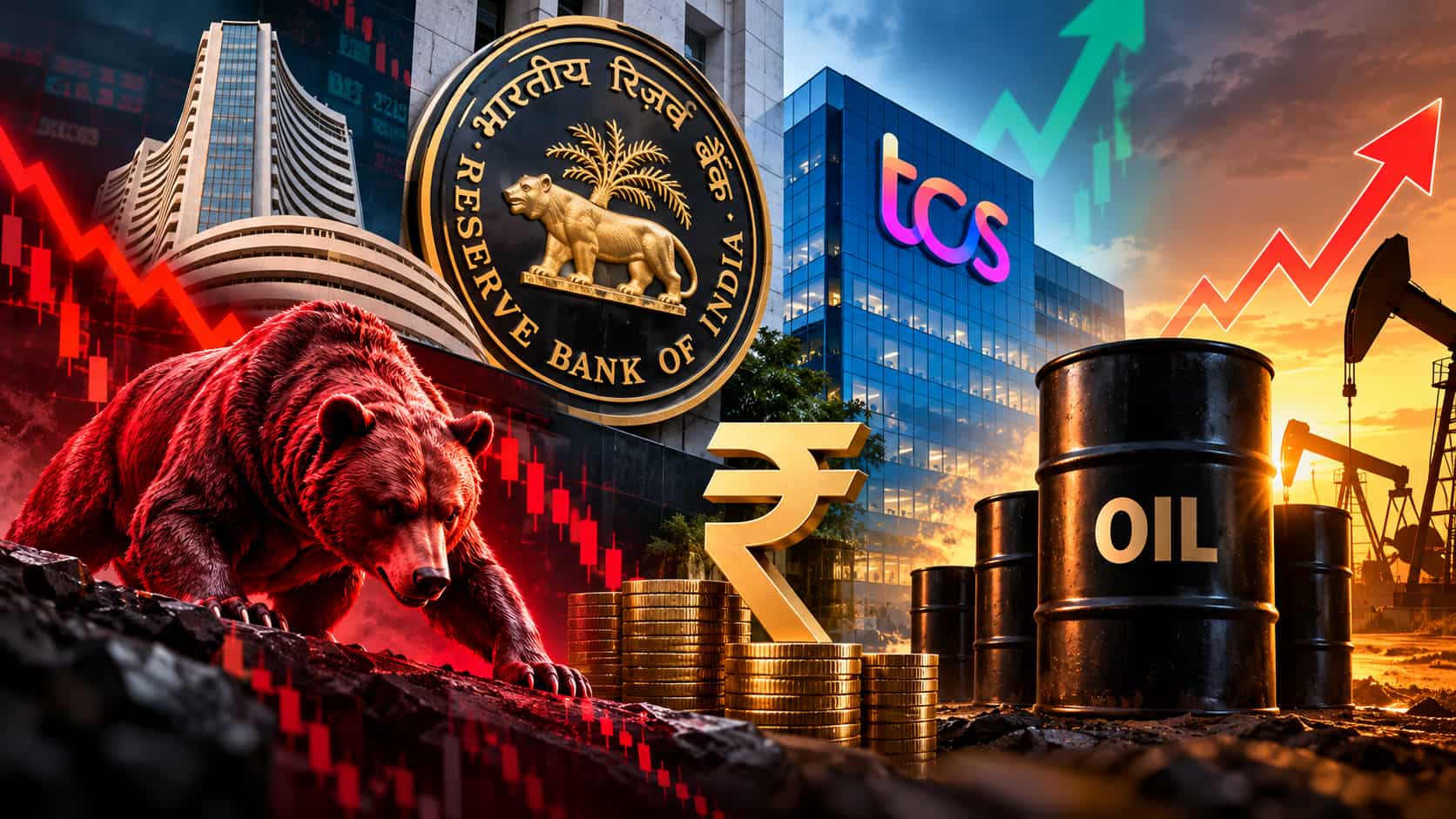
Indian stock markets fell nearly 3 per cent last week as heavy selling hit all sectors. Investors now watch for the RBI policy decision on October 7 and TCS results on October 8. Anu Jain said, "Crude oil prices, the US-Iran situation, inflation and global interest rates will be key."
Indian stock market was under pressure last week as heavy selling and FII flight took over. Sensex and Nifty pulled back nearly 3 per cent in the last five sessions, panicking all sectors.
Sensex fell 1690 points or 2.30 per cent in the past five sessions to close the week below 72,000, while Nifty closed 3 per cent lower or 694 points to 22,421, the level it was in March 2026.
Indian stock market erased most of the gains it had made in the past few months after a shake-up following the start of the Iran-US war. They are at the same level as March.
The sudden jump in crude oil prices crossing $100 per barrel and record-high US treasury bond yield were the main reasons for pulling back money from India's secondary market.
RBI policy decision: The RBI's Monetary Policy Committee will announce their decision on October 7. Investors will look out for the repo-rate decision, and more importantly the guidance on inflation, crude prices and future rates from the central bank.
Q2 earnings season kicks off: TCS is scheduled to announce its September quarter results on October 8, an important start to the large-cap IT earnings season. Investors will follow revenue growth, margins, deal wins, AI related demand and management guidance.
Foreign investor selling: FPIs sold more than Rs 25,000 crore of Indian equities in September. Investors will look out for whether the outflows continue, or ease, particularly with high yields globally.
US bond yields: High US Treasury yields are a pressure point for emerging markets. Further increase can weigh on Indian equities and the rupee, while a cooling off could help.
Crude oil prices: Brent crude hovering around the $100-a-barrel mark are a concern for India as higher oil prices can increase inflation and put pressure on the current account and rupee.
US Fed minutes: Minutes from the US Federal Reserve's September meeting are due on October 7. Investors will look out for signals on the US rate outlook and how policymakers view inflation and the labour market.
Indian equities could rally 8-10 per cent if tensions between the US and Iran ease, but the broader macro economy will be challenging in the coming few months, according to 360 ONE Wealth President Anu Jain.
Jain said crude oil prices, the US-Iran situation, inflation and global interest rates will be key factors for the domestic market.
She said the Nifty has limited downside from current levels but mid-cap and small-cap stocks could see sharper corrections if global uncertainties continue.
"If the Iran issue is not sorted, three to six months could show a difficult situation," Jain said in an interview with Zee Business.
Jain anticipates the ongoing earnings season to be mixed with higher raw material costs putting pressure on companies despite good revenue growth.
She said the previous quarter had seen several upgrades and positive management commentary, but the current quarter may not match that.
Weak crop conditions and fertiliser shortages could affect rural consumption, she said, adding that inflationary pressure from agricultural commodities remains a concern.
According to Jain, even if the US-Iran situation improves, any market rally could then be followed by a period of consolidation as higher interest rates and inflation weigh on equities.