
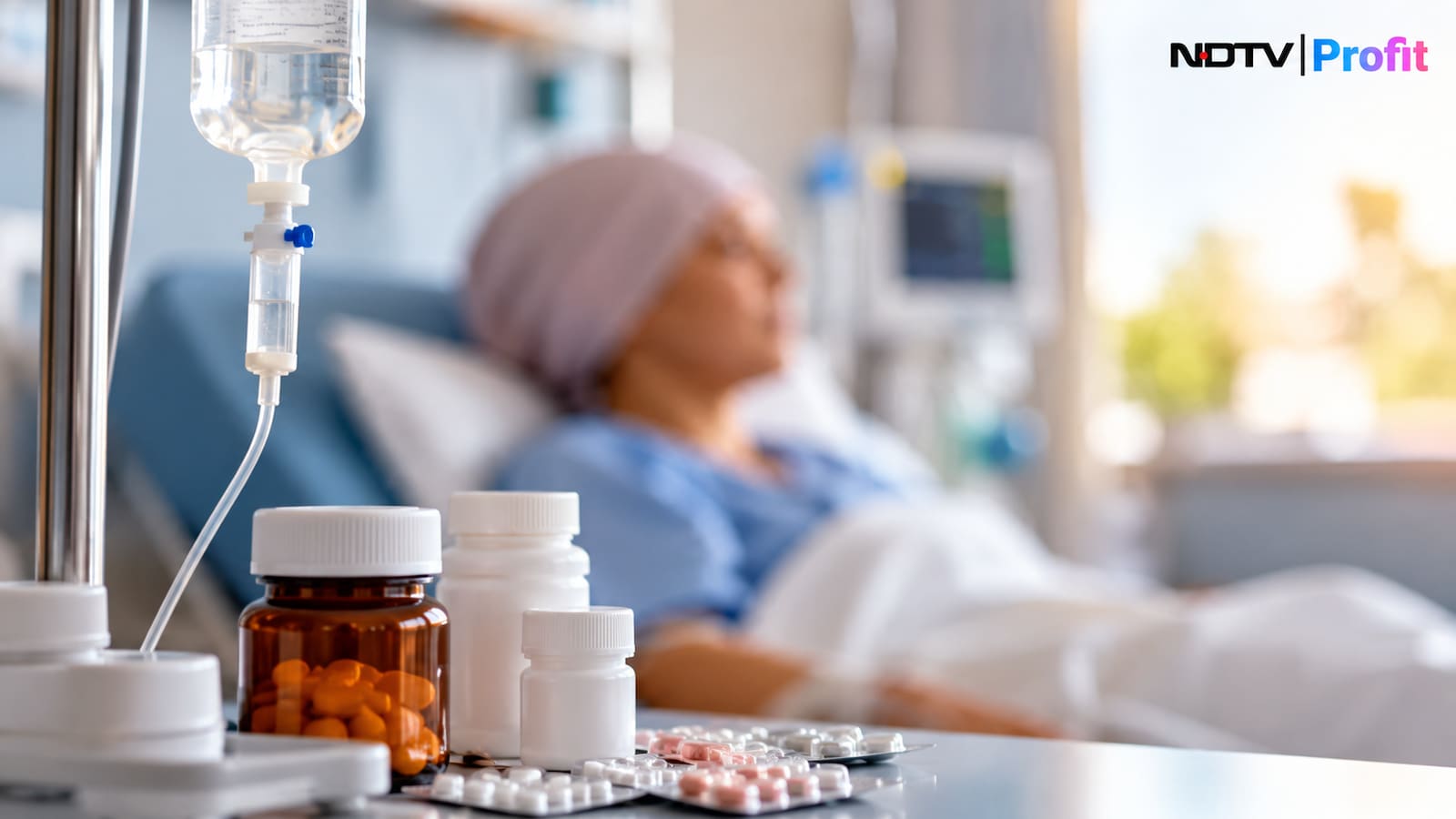
The government decided to cap trade margins on non-scheduled anti-cancer drugs at 30% of the maximum retail price. Analysts said this move will have a limited impact on hospital earnings. Goldman Sachs noted, "Hospital EBITDA impact could stay below 2%." Many hospitals may recover losses by adjusting other service charges.
Hospital Stocks In Focus: Analysts expect the government's decision to cap trade margins on non-scheduled anti-cancer drugs at 30% of maximum retail price (MRP) to have a limited impact on the earnings of most multi-specialty hospital chains, even as the move is expected to provide substantial relief to cancer patients.
Goldman Sachs estimates that oncology medicines account for less than 5% of revenue and less than 2–2.5% of earnings before interest, taxes, depreciation and amortisation (EBITDA) at hospitals, limiting the potential financial impact of the price controls. Its analysis suggests that even in a bear-case scenario, the EBITDA impact could remain below 2%.
Jefferies, meanwhile, believes that any near-term margin pressure from the government's decision is likely to be transitory. The brokerage also highlighted that the move could ease regulatory uncertainty for now, although concerns around mark-ups on hospital consumables remain.
The government's decision is aimed at addressing excessive trade mark-ups on cancer medicines and improving affordability. The measure is expected to help patients save Rs 2,500 crore annually, with medicine prices projected to fall by up to 70%.
Goldman Sachs: Hospital EBITDA Impact Could Stay Below 2%
Goldman Sachs' discussions with hospitals and industry participants suggest that the impact of the new price controls is likely to be minimal across most multi-specialty hospital chains.
Oncology medicines account for less than 5% of hospital revenue and less than 2–2.5% of EBITDA, according to the brokerage. Max Healthcare and Fortis Healthcare could have slightly higher exposure, Goldman Sachs noted.
The brokerage's checks suggest that hospitals earn average margins of 30–50% on oncology drugs. However, it believes hospitals could recoup some of the losses through marginal repricing of services, including drug administration charges.
Goldman Sachs' analysis indicates that the potential EBITDA reduction could remain below 2% even under a bear-case scenario, suggesting that the direct financial impact on hospital operators may be limited.
Jefferies: Near-Term Margin Pressure Likely To Be Transitory
Jefferies said the government's plan to extend 30% price caps to non-scheduled cancer drugs could affect hospital margins in the near term, but it expects the impact to be transitory.
The brokerage also believes the move eases regulatory uncertainty for now. However, mark-ups on hospital consumables remain an area of concern, even though Jefferies expects any resulting EBITDA impact to be manageable.
The assessment suggests that while hospitals may face some pressure on margins from the regulation, the impact on overall earnings is unlikely to be major, according to the brokerage.
What Is The Government's 30% Cancer Drug Margin Cap?
The government has approved a cap on trade margins for non-scheduled anti-cancer drugs, limiting the margin in their supply and sale to 30% of MRP.
The measure extends price protection to cancer medicines that are not included in the scheduled list of drugs already subject to government-set ceiling prices.
The decision is expected to reduce medicine prices by up to 70% and help cancer patients save Rs 2,500 crore annually, easing their out-of-pocket treatment expenses.
An expert committee under the Directorate General of Health Services will finalise the list of medicines to be covered. The National Pharmaceutical Pricing Authority (NPPA) will then take a decision and issue the notification.
Why Has The Government Expanded Cancer Drug Price Controls?
NPPA's analysis of market data found that non-scheduled anti-cancer medicines carried an average price mark-up of approximately 170%, with mark-ups reaching 700% or more in some cases.
Prices also vary depending on whether medicines are purchased through retail pharmacies, hospital pharmacies or online pharmacies. State authorities, including those in Maharashtra, Rajasthan and Karnataka, as well as patients and civil society groups, have raised concerns about excessive medicine prices.
The new cap is intended to curb excessive trade mark-ups and reduce the financial burden on patients, particularly those requiring expensive cancer treatments.
What Happened In 2019?
In February 2019, the NPPA capped trade margins on 42 selected non-scheduled anti-cancer drugs under Paragraph 19 of the Drugs (Prices Control) Order, 2013.
That intervention reduced maximum retail prices by up to 91%, with reported annual savings of Rs 984 crore across 526 brands. The latest measure builds on that intervention by extending margin controls to a wider range of non-scheduled cancer medicines.
Will The Price Cap Affect Cancer Drug Availability?
To safeguard supplies, manufacturers of non-scheduled anti-cancer drugs will be required to maintain their current production levels.
The measure will cover branded and generic medicines, domestically produced and imported drugs, and patented and non-patented medicines. The government aims to reduce prices while ensuring that patients continue to have access to the medicines they need.