
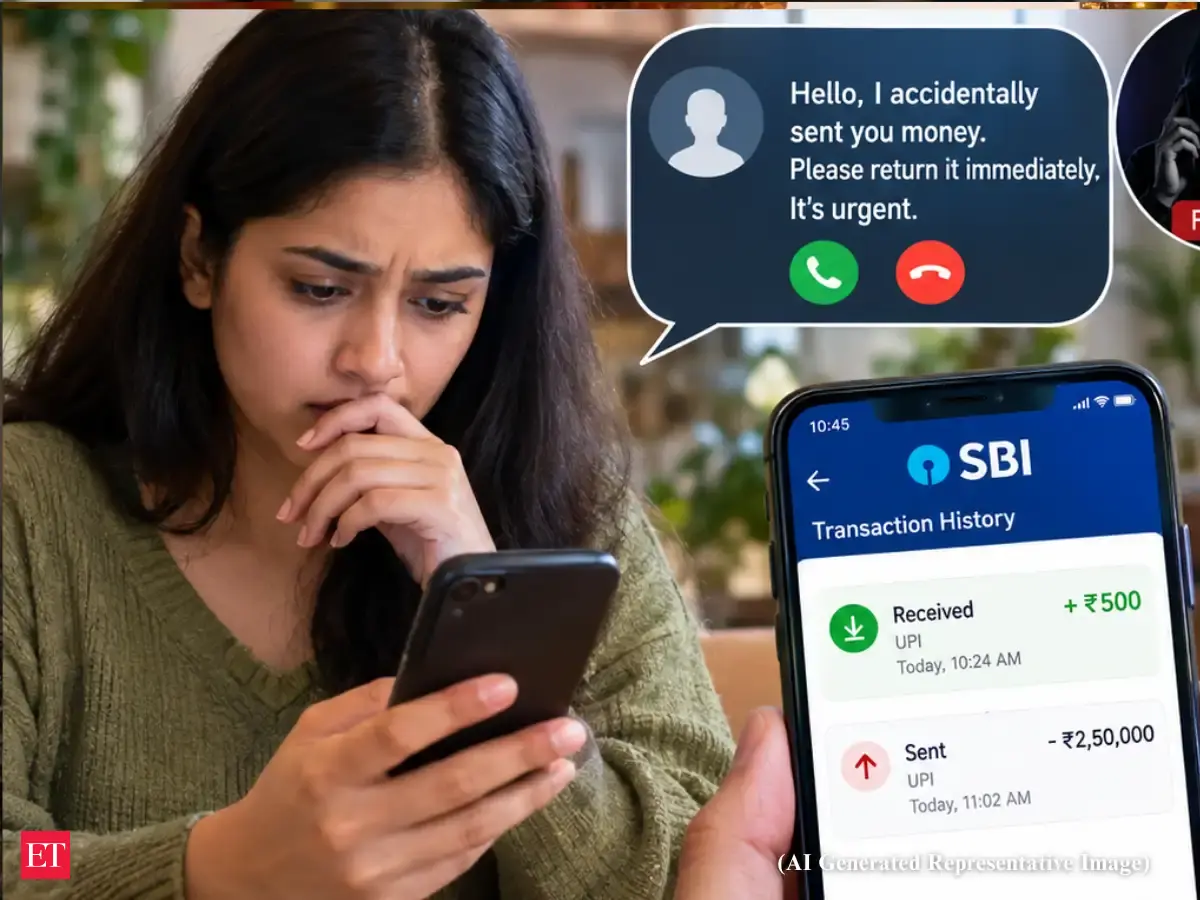
State Bank of India (SBI) warned customers about the 'Jumped Deposit Scam' where fraudsters use fake credits to pressure people into approving large UPI payments. The bank said, "An unexpected deposit in a bank account followed by a phone call demanding an immediate refund could be a warning sign."
State Bank of India (SBI) has warned customers about the 'Jumped Deposit Scam', in which fraudsters use unexpected bank credits and urgent refund calls to pressure people into approving larger UPI payments. The bank has advised customers to verify transactions, avoid suspicious payment requests, block suspected callers and report incidents promptly.
An unexpected deposit in a bank account followed by a phone call demanding an immediate refund could be a warning sign of a UPI fraud, the State Bank of India (SBI) has cautioned customers. In its warning about the 'Jumped Deposit Scam', the bank said fraudsters use small, unexpected credits to gain a recipient's trust before trying to get them to approve a much larger payment.
The scam exploits a situation in which a person wants to return money they believe was transferred accidentally. A caller claims to have sent the money by mistake and insists it must be returned immediately. The recipient may then be pressured through urgent demands, emotional appeals or claims of an emergency. The risk is that the person ends up approving a payment for a much higher amount than the money originally credited to the account.
SBI's warning, as reported by The Times of India, comes as part of the bank's message during the National Cyber Security Special Campaign 6.0.
How the 'Jumped Deposit Scam' worksSBI has warned that fraudsters may first deposit a small amount into a bank account. The recipient notices the credit and, when contacted by someone claiming to have made a mistake, may agree to return the money.
The caller then uses the situation to push the recipient towards making a payment. The demand may come with pressure to act immediately, leaving the customer with little time to check the transaction carefully.
The crucial difference is between the money already credited to the account and the new payment the recipient is being asked to approve.
A person who believes they are simply returning a small amount could therefore be exposed to a much larger loss if they approve a payment without checking the amount displayed on the screen. SBI has cautioned customers against falling for such tactics, including emotional blackmail and urgent payment requests.
Why an urgent refund call should raise suspicionAccording to SBI's warning, fraudsters may use urgency or emotional pressure to persuade customers to act without proper verification. A caller may insist the money must be returned immediately, making the recipient feel responsible for resolving the supposed mistake.
However, an unexpected credit alone does not establish that the caller is the person who sent it, nor does it make a separate payment request safe. Customers should not rely solely on the caller's explanation when deciding whether to authorise a transaction.
SBI has advised customers to block suspicious callers and report such incidents to their bank promptly. The bank's warning also urges customers to remain cautious about requests involving emergencies or emotional pressure.
What should customers do if unknown money enters their account?Customers who notice an unexplained credit should first check the transaction through their official banking app or bank statement. If the transfer cannot be identified, they should contact their bank through an independently verified customer-care channel and ask how to proceed.
They should not send money to an unknown caller simply because the caller claims to have made a mistake. Nor should they approve a UPI request without checking the recipient and the exact amount. If the displayed amount is higher than the amount the caller claims to have transferred, the customer should not authorise the payment.
Customers should also remember that receiving money and sending money are different actions. A credit appearing in the account does not, by itself, require them to enter their UPI PIN. They should never enter the PIN to approve a payment they do not intend to make.
SBI has also referred to the 1600 number prefix in its guidance on identifying genuine bank calls. Customers should nevertheless verify the purpose of a call and must not share their UPI PIN, passwords or other confidential banking credentials with callers.
SBI advises customers to verify before making paymentsThe bank's warning centres on a simple precaution which is, do not let an unexpected credit and a caller's demand push you into making an unverified payment. Customers should check the transaction, independently contact their bank when necessary and avoid authorising unfamiliar UPI requests under pressure.
If a customer suspects they have been targeted or has already approved a suspicious payment, they should contact their bank immediately and report the incident through the appropriate cybercrime reporting channel.
SBI's warning shows how fraudsters can use a seemingly minor bank credit to create a reason for contact and then pressure recipients into taking a risk with a much larger payment. Verifying the credit and carefully checking every outgoing transaction can help customers avoid falling into the trap.