
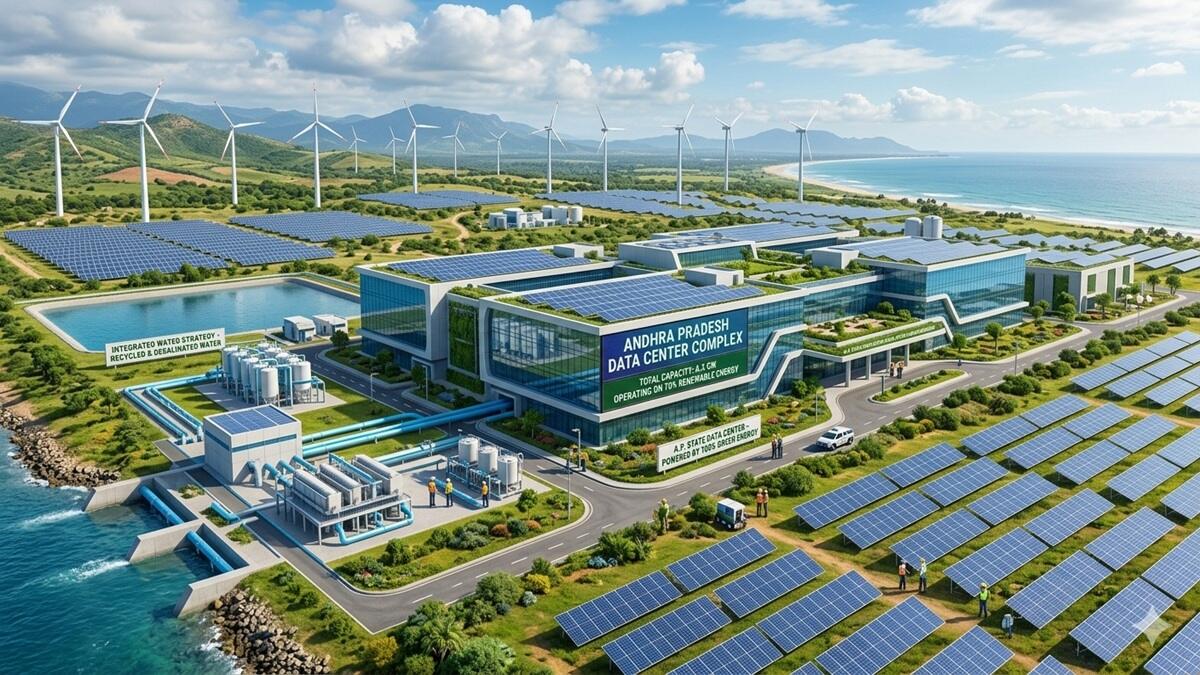
ഇന്ത്യയുടെ ഡാറ്റാ സെന്റർ മേഖല 2030-ഓടെ 12 ജിഗാവാട്ടിലേക്ക് വളരാൻ ഒരുങ്ങുന്നു. ആർട്ടിഫിഷ്യൽ ഇന്റലിജൻസ്, 5ജി എന്നിവയുടെ വളർച്ചയ്ക്കായി ബാങ്കുകളും വൻകിട വ്യവസായികളും കോടിക്കണക്കിന് രൂപയാണ് നിക്ഷേപിക്കുന്നത്. 2025-ഓടെ ഈ മേഖലയിലെ നിക്ഷേപം കുതിച്ചുയർന്നതോടെ ഡിജിറ്റൽ അടിസ്ഥാന സൗകര്യ വികസനത്തിൽ ഇന്ത്യ ആഗോളതലത്തിൽ ശ്രദ്ധേയമായ മുന്നേറ്റം കാഴ്ചവെക്കുന്നു.
The Indian data centre market is growing at a rapid pace -- projected to reach up to 12 GW by 2030. International companies have poured billions of dollars into building cloud storage infrastructure across the country over the past few years. Both government and private banks have now joined the AI boom with multi-billion-dollar green credit facilities and long-term infrastructure loans.
Preliminary data published by UN Trade and Development in January reveals data centres captured more than one fifth of global greenfield investment in 2025. Announced foreign direct investment in the sector had reportedly exceeded an estimated $270 billion -- driven by surging demand for AI infrastructure and digital networks. The race to build large-scale data centers had also pushed global FDI up 14% to an estimated $1.6 trillion in 2025.
India has seen its data center capacity surge more than 4x since 2020 -- reaching 1,575 MW in 2025 -- as cloud adoption, 5G, data localisation and artificial intelligence led a rapid expansion. According to a new discussion paper by the Policy Consensus Centre, the sector attracted around $95 billion in cumulative investment commitments between 2019 and 2025.
Banks pour billions into data center loans
The artificial intelligence push has also spurred massive investment in digital infrastructure -- with Axis Bank planning to double its exposure to data centers over the next three years. The details (shared during an interview with Bloomberg this week) follow similar plans outlined by several leading banks and financial institutions in India.
Billionaire businessmen Gautam Adani and Mukesh Ambani have also outlined plans to invest more than $200 billion over the next few years. The Adani Group had announced in February that it would invest $100 billion by 2035 in data centers powered by renewable energy supplied by his Adani Green Energy. Weeks later came a similar announcement from Ambani -- pledging to "dramatically reduce the cost of intelligence" and invest $110 billion over seven years in new data center and AI initiatives.
"Data-related investments in India are growing. The growth is strong and companies have to resort to borrowings apart from bringing in equity to be able to meet their ambition of larger capacities," Axis Bank's group head of wholesale banking coverage told Bloomberg on Wednesday.
According to Vijay Mulbagal, their exposure to the sector is a little over 2% of its corporate loan book at present. First-quarter earnings data from Axis Bank puts this figure at more than Rs 8,688 crore -- with Mulbagal adding that the country's third-largest private-sector lender by assets has financed about a dozen data center clients.
A separate report by Bloomberg report noted that the National Bank for Financing Infrastructure and Development has also seen its data center loan portfolio exceed Rs 10,000 crore. The country's top state-run infrastructure financier has reportedly sanctioned loans upwards of Rs 3,000 crore each to at least four data centers. NABFID estimates that the sector will need approximately Rs 1 trillion in funding through March 2031. The Bloomberg report published in mid-September also noted that the bank had readied its maiden dollar bond after the US Federal Reserve raised interest rates last month.
"Considering the fact that Indians are one of the largest consumers of data in the world, and the data is pretty cheap, I think we have a need for a lot more data centers, which is why the demand is there," State Bank of India MD Ashwini Kumar Tewari told Bloomberg Television in an interview last month.
The bank had previously outlined plans to increase its total lending exposure Rs 4,000 crore (in the sector) by March 2025 -- a steep rise from the Rs 2800 crore reported in October 2025. SBI also became the first public sector bank in India to establish its own functional Global Capability Centre after setting up a Bengaluru facility in January. SBI follows an Active-Active Data Center Design wherein the bank operates multiple data center facilities in disparate locations and actively processes live customer transactions.
'12 GW data center expansion by 2030'
According to a recent Wood Mackenzie report, the country will see its operational data centre capacity will increase from 2.2 GW in 2025 to 12 GW by 2030 at a compound annual growth rate of approximately 40%. The global research and data analytics firm noted that "convergence of hyperscale capital, AI workload growth and a decade of policy support" had created the conditions for India to rival any market in Asia-Pacific.
The India's Data Centre Landscape: Powering the Digital Economy report predicted that data centre electricity demand would also grow 20-fold by 2040 -- from 10 TWh in 2025. It is expected to account for 7% of the total electricity demand. It also added that states with "liberalised open-access frameworks and competitive intra-state transmission charges" were now positioning themselves as preferred hubs for new capacity, as power procurement strategy increasingly determines site selection.
A new discussion paper by the Policy Consensus Centre also noted that operators were increasingly adopting measures that covered cooling, noise control and power infrastructure. The report titled 'Living Next to the Cloud: An Evidence-Based Approach to Data Centres in Residential India' contended that the policy challenge was increasingly about managing coexistence through measurable standards rather than imposing blanket restrictions on facilities in urban areas. PCC predicted a slightly more modest growth in the sector -- estimating that capacity could rise to 4.5-9 GW by 2030.
"Land and capital are no longer the limiting factors for data centre developers in India. What determines site selection and delivery timelines now is access to firm, round-the-clock power at the node level. Developers who secure their power strategy early through captive generation or long-term renewable PPAs, will lock in a structural cost and sustainability advantage for the life of their assets," WoodMac quoted its Vice President of Research as saying.
Cooling woes
India is presently in the midst of its largest data center build-out in history. According to the India Data Center Colocation Report 2026, the market is expanding by 25.5% annually to reach $7.31 billion in 2026. But the legacy capacity was built for CPUs and air conditioners rather than the specialised graphic processing units used by AI that run hot enough to melt the older systems.
Data centres generate massive amounts of heat -- requiring complex cooling systems that often consume nearly as much electricity and water as the computers themselves. AI has made the problem worse with significantly higher resource consumption per square foot and a constraint strain on resources. According to an analysis published by the International Energy Agency, a typical AI-focused data centre "consumes as much electricity as 100 000 households". IEA warned that the the largest data centers now under construction would "consume 20 times as much".
Reports published over the past two years suggest AI data centers are straining local water supplies and exacerbating scarcity in several regions across the world. The heavy cooling demands have also led to data centers tapping fragile groundwater aquifers and municipal drinking supplies. According to data from the the Central Ground Water Board, for example, annual groundwater extraction stood at more than 270% of the recommended level in the Ghaziabad region between 2024-25.
Mapping India's growing data center landscape
The India Data Center Colocation Report 2026 predicts the market will expand from $5.82 billion in 2025 to approximately $15.22 billion by the end of 2030 -- driven by surging AI and GPU workload demand, accelerating hyperscaler capacity build-out, and sustained enterprise adoption of hybrid multi-cloud infrastructure.
Several major global tech giants and domestic conglomerates have aggressively committed to building data centres across India over the past five years. Many of these have also triggered massive protests, environmental concerns and even legal challenges.