
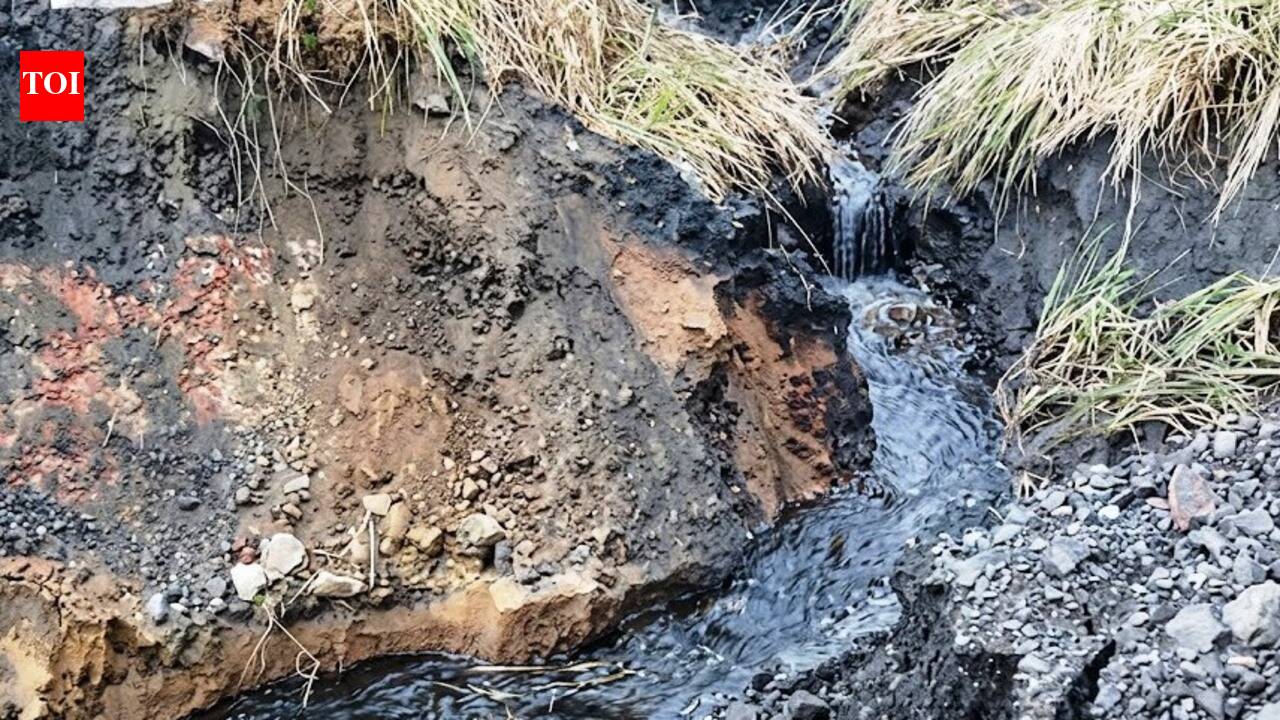
A breach in the embankment of Slurry Pond No. 5 at Central Coalfields Limited’s Kathara Washery sent coal waste towards the Damodar river. The slurry flowed out with rainwater after the embankment gave way on Wednesday evening. Repair work began on Thursday morning to plug the breach and stop further discharge.
Repair work began on Thursday morning
The slurry reportedly flowed out with rainwater
The slurry on Thursday
Repair work began on Thursday morning
The slurry reportedly flowed out with rainwater
The slurry on Thursday
Repair work began on Thursday morning
Bokaro: A breach in the embankment of Slurry Pond No. 5 at Central Coalfields Limited’s Kathara Washery has washed a large quantity of slurry coal towards Damodar river over the past two to three days, raising concerns over possible water pollution. Vivek Kujur, regional officer of Jharkhand State Pollution Control Board’s Dhanbad region, said, “We are looking into the matter.” The slurry reportedly flowed out with rainwater after part of the embankment gave way on Wednesday evening. CCL officials rushed to the site after receiving information. Around 30,000 tonnes of slurry coal was stored in the pond, the last at Kathara Washery, where slurry and water discharged from the washery are collected. CCL sources said private firms had earlier used the pond to produce briquette coal from slurry, but the activity stopped around 2010. Slurry generated by the washery had since accumulated and could not be cleared for years. Workers said the water level had been rising while seepage beneath the embankment had reportedly been noticed over the past few days. Continuous heavy rainfall is believed to have increased pressure on the embankment, causing the breach. CCL Kathara area GM AKB Singh inspected the site and directed project officials to plug the breach immediately and stop further discharge. Repair work began on Thursday morning. OBR stones are being dumped into the damaged stretch and compacted with dozers to rebuild the embankment. Singh did not comment. Officials said their priority was to seal the breach and prevent more slurry and water from reaching the river.