
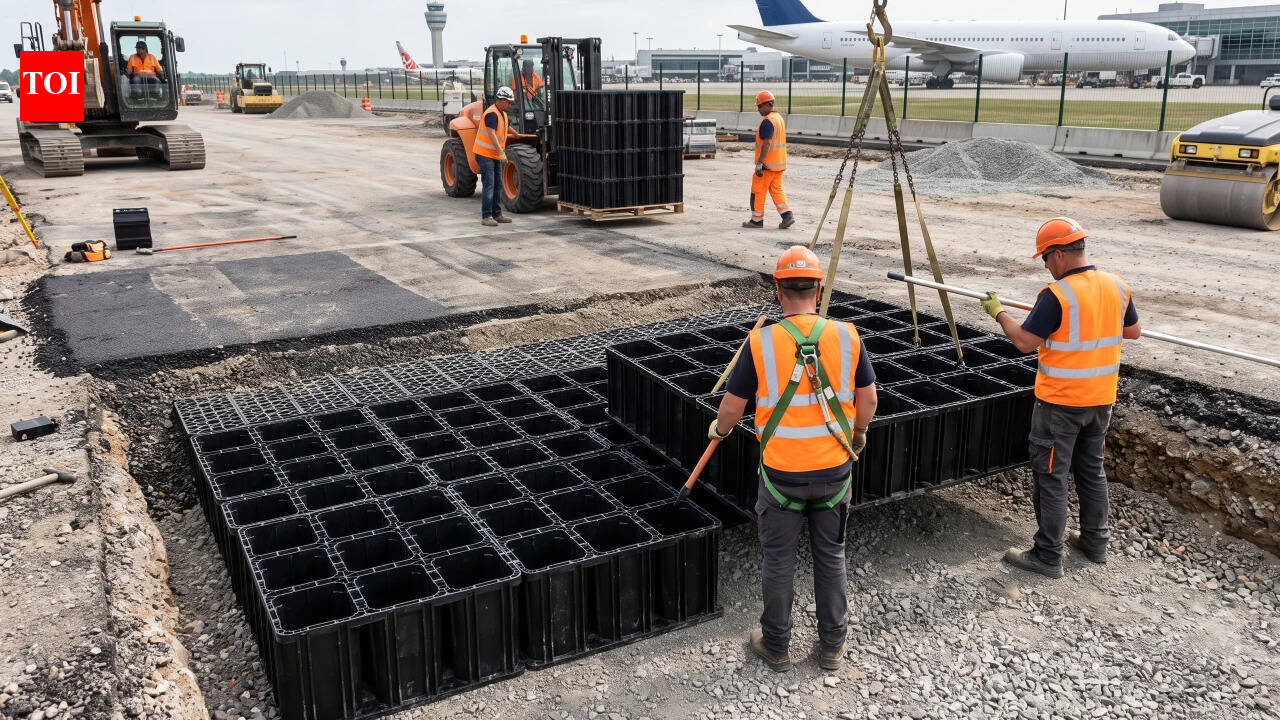
In 2022, Schiphol put 2,571 kilos of recycled plastic beneath an airport road, creating room for 43,200 litres of rainwater and an expected 30-year life. Engineers used hollow plastic parts to manage floods and store water. Schiphol said, "The surface drives like asphalt," as they tested this new, sustainable construction method.
Roads have a silent tendency to exacerbate floods. When rain strikes a sealed surface, it cannot be absorbed and rushes towards drains that were not designed to handle heavy precipitation. In the meantime, plastic trash continues to accumulate in the majority of nations, with far too little of it recycled. In the Netherlands, where water issues are a daily concern, engineers have been trying to address both problems with a single piece of infrastructure.In 2022, Amsterdam Airport Schiphol constructed a section of road and several parking bays from recycled plastic collected at the airport. The first stretch contained 2,571 kilos of recycled plastic and was designed to store 43,200 litres of water. The plastic elements were anticipated to endure roughly 30 years, according to Schiphol. In effect, Schiphol built a road that doubles as a hidden water-storage system, using recycled plastic from the airport. This is a pilot project, not a typical construction method, and the figures explain why road experts are taking notice.What Schiphol builtNear the Kaagbaan Tunnel, Schiphol, in collaboration with PlasticRoad, PreZero and VolkerWessels Infra Schiphol, constructed the road. Prefabricated plastic parts with empty gaps inside replace poured asphalt. On top of this is a thin coating of crushed stone which protects the plastic from wear and prevents the surface becoming slippery when it rains. "The surface drives like asphalt," Schiphol explains.The water-storage system begins with the hollow structure. Rain that falls on the road is collected, filtered and allowed to slowly soak into the earth. The area inside acts as a buffer in heavy weather, and Schiphol says the technique also increases groundwater levels and prevents pollution from vehicles seeping into the land beside the road.These numbers are simple enough to visualise. Storing 43,200 litres in a road made from 2,571 kilos of plastic means holding about 16.8 litres of water for every kilo of material. That is equivalent to 216 standard 200-litre drums. All of this is hidden away behind a surface that vehicles normally travel over.Why plastic is importantPlastic waste is a global challenge, and much of it is not recycled. According to the OECD's Global Plastics Outlook, plastic waste surged from 156 million tonnes in 2000 to 353 million tonnes in 2019. In 2019, the OECD estimated that 9% of global plastic waste was ultimately recycled, 19% was incinerated, almost 50% went to sanitary landfills and the remaining 22% was disposed of in uncontrolled dumpsites, burnt in open pits or leaked into the environment.A road that eats plastic looks promising in that context. Schiphol took garbage from its activities, which keeps transport short and gives the material a local use. Schiphol says the elements are expected to last around 30 years and can then be processed for reuse or, if that is not possible, used as raw material for new elements. Plastic that is sealed into a durable structure and then recycled again is a vastly different conclusion than plastic that winds up in a landfill or a river. The road is also a bigger promise. Schiphol has declared that it aspires to be a waste-free and emission-free airport by 2030, and it reuses almost 70 per cent of its demolition materials. The plastic road is one example of the airport's broader effort to reduce waste and emissions.What remains uncertainSchiphol designed the project as a one-year pilot to measure wear, maintenance needs and the general quality of the road surface, just as it does with its standard roads. The pilot was intended to help assess how the system performs under intensive airport use, while the 30-year figure remains an expected design life rather than a demonstrated service life. If the pilot is successful, the airport said it plans to develop more roadways with this type of surface.The other issue is wear. Any road that contains plastic raises fears that microscopic particles of plastic will be shed as the wheels grind over it. That is one reason for the stone layer on top of the Schiphol design. The Virginia Transportation Research Council found that field trials mixing modified asphalt with recycled plastic could match a standard mix in durability and outperform it in resistance to rutting and cracking. Researchers also developed lab methods to look for microplastics in pavement wear that could be washed away by stormwater.The work focuses on using plastic in asphalt, not on modular elements such as those used at Schiphol. But it does suggest that engineers increasingly treat wear particles as something to measure rather than ignore. The pilot shows how recycled plastic can be incorporated into airport road infrastructure while creating space for temporary rainwater storage. We will have to see how the road holds up after years of intensive use. If the pilot passes that test, plastic roads might be a valuable weapon in the fight against both flooding and waste, and until then they remain a promising experiment worth watching.