
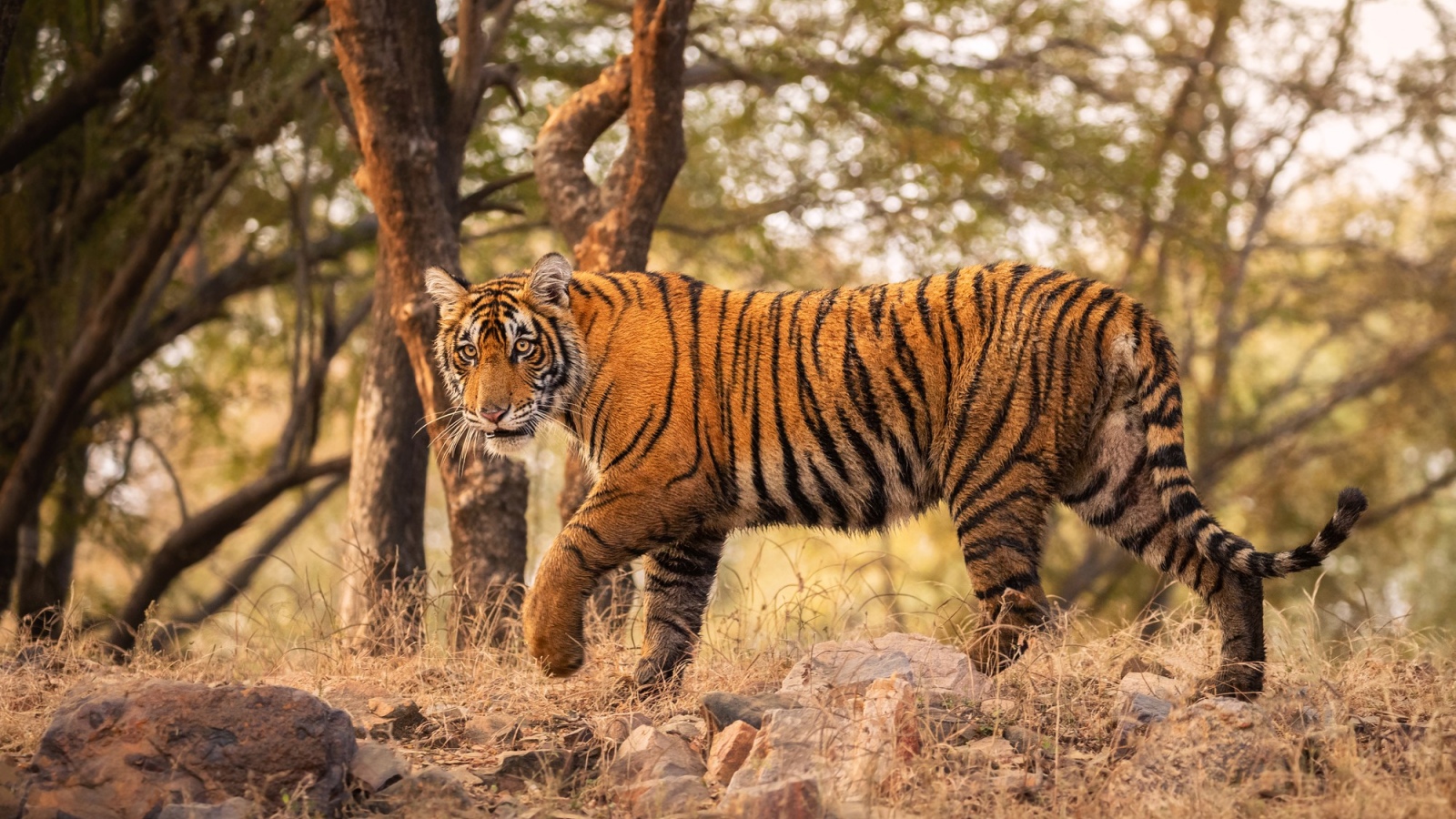
The Royal Bengal tiger got its name due to British colonial influence in Calcutta. Wildlife photographer Indrajit Ghorpade said, "The British naturalists, hunters and officials predominantly encountered and documented these big cats in Bengal and nearby forests." These tigers adapted to different habitats, which changed their size and behaviour today.
The name Bengal tiger has a strong geographical connection. During British rule, Calcutta (now Kolkata) was the capital and administrative headquarters of British India, and British naturalists, hunters and officials encountered and documented tigers extensively in Bengal and surrounding forests.
According to wildlife photographer Indrajit Ghorpade, this is one of the reasons the tiger came to be associated with Bengal. "The British naturalists, hunters and officials predominantly encountered and documented these big cats in Bengal and nearby forests, leading them to label the animal the 'Bengal tiger'," Ghorpade explains.
But where did the word "royal" come from?
Ghorpade says the honorific was added during the British colonial period, when the tiger's imposing appearance and cultural symbolism fascinated those who encountered it.
"The exotic, fierce and striking features, stripes and colour fascinated the British, who referred to them as 'royal', and from Bengal as this was the capital in Calcutta," he says.
Tiger skins and heads were also prized as trophies and were sent as prestigious gifts to British royal families and local dignitaries. This further strengthened the association between the tiger and royalty.
Are all Royal Bengal tigers the same?
"Tigers adapted to various habitats, from dense jungles and mangroves to the drier regions, evolving to adapt in size and behaviour," Ghorpade says.
This means a tiger living in the Sundarbans does not necessarily look or behave exactly like one in Ranthambore. Differences can occur in size, coat, colouration, diet and behaviour.
"Hence Ranthambore tigers and Sundarbans tigers vary and differ in size, coat, colouration and even diet," he says.
How does habitat shape a tiger?
"Habitats determine and play a role in their size and colour. Diets vary from region to region, affecting adaptation and behaviour," Ghorpade explains. The Sundarbans, for instance, are dominated by mangrove forests and tidal waterways, creating a very different environment from the dry deciduous forests of Ranthambore.
These differences don't mean that each population is a completely separate kind of tiger. Rather, they demonstrate how a highly adaptable predator can respond to very different landscapes.
Tigers beyond the Indian subcontinent
"Apart from tigers of the subcontinent, there are subspecies across the Far East, some extinct, many vulnerable. Evolution has shaped size, colour etc.," Ghorpade says.
Across their range, differences in climate, habitat and prey availability have influenced how tiger populations look and behave.
So, while "Royal Bengal tiger" is the name commonly used for India's tigers, the reality is more nuanced. Tigers across the country share the same broad identity, but their appearance, behaviour and adaptations can vary with the landscapes they inhabit.
Explore more captivating stories about pets and animals here, and make us your daily stop for the latest from the animal kingdom.